
The 38 witnesses to Kitty Genovese never watched: a neighbor shouted and the attacker ran
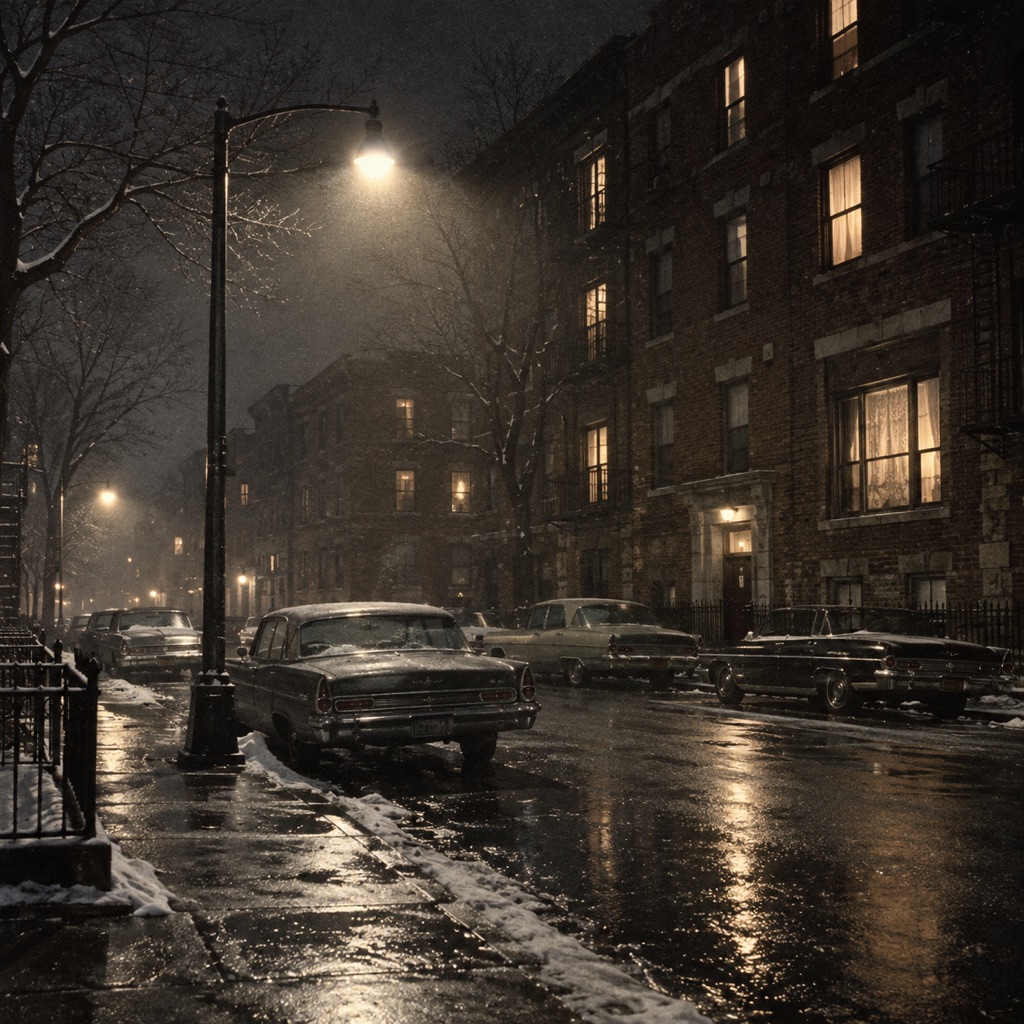
The story opens the chapter on helping and emergencies in social psychology textbooks. A young woman is stabbed on a New York street. Thirty-eight neighbors switch on their lights, settle in at their windows and watch for half an hour, and not one of them picks up the phone. She dies in front of them. The lesson is clean: the group paralyzes.
Rachel Manning, Mark Levine and Alan Collins decided to go back to the source. Their paper appeared in American Psychologist in September 2007 (volume 62, number 6, pages 555 to 562), under a title that says exactly where it is heading: "The Kitty Genovese Murder and the Social Psychology of Helping: The Parable of the 38 Witnesses". Their abstract is blunt. Nothing in the available record establishes that there were thirty-eight witnesses, that they watched the murder, or that they stayed passive. The story, they write, plays a central role in psychology textbooks, and it has become a modern parable whose endless repetition ended up narrowing the field of research on emergency helping.
The material that lets them say so is nothing secret: the transcript of Winston Moseley's trial, the killer's confession, the briefs of the Queens district attorney, the newspapers of the time.
The headline says 37, the first paragraph says 38
Catherine Genovese, known as Kitty, twenty-eight years old, is attacked on 13 March 1964 at around 3.20 in the morning, on Austin Street, in the Kew Gardens neighborhood of Queens. She has just parked her car near the train station and is running home. In his confession, Moseley puts a number on the chase himself: twenty feet, a run of about six meters. He catches up with her and stabs her twice in the back, in front of the row of storefronts of a small Tudor-style building, level with the bookstore at 82-64. That is the description the district attorney's brief to the state Court of Appeals repeats. Across the street stands the Mowbray Apartment House, at 82-67, home to the great majority of the people who would come to be called the witnesses.
The founding article appears only fourteen days after the events, and it does not come out of any fieldwork. It is the New York police commissioner, Michael Murphy, who tells the story to the metropolitan editor of the New York Times, A. M. Rosenthal, over lunch, ten days after Kitty Genovese's death. Rosenthal sends out a reporter, Martin Gansberg. The piece runs on the front page of the Times of 27 March 1964, and its headline reads: "37 Who Saw Murder Didn't Call the Police". The first paragraph, for its part, says this:
"For more than half an hour thirty-eight respectable, law-abiding citizens in Queens watched a killer stalk and stab a woman in three separate attacks in Kew Gardens. Twice the sound of their voices and the sudden glow of their bedroom lights interrupted him and frightened him off. Each time he returned, sought her out and stabbed her again. Not one person telephoned the police during the assault; one witness called after the woman was dead."
So the number in the lead already fails to match the one in the headline. That is not the awkward part. That paragraph makes four claims the trial record contradicts: that thirty-eight of them were watching, that they watched for more than half an hour, that there were three separate attacks, and that nobody telephoned during the assault.
What the witnesses said under oath
Five Austin Street residents testified on 8 June 1964, and their testimony is preserved: Robert Mozer, Andree Picq, Irene Frost, Samuel Koshkin and Sophie Farrar. Three of them saw part of the assault itself. Not one of the five says they saw a knife go in.
Irene Frost lived at 82-67 Austin Street, apartment 204. On page 63 of the transcript, she describes hearing a scream, getting up, seeing a man and a woman on the other side of the street: "I watched them for a minute. Nothing was happening, so I went back to bed. I happened to look at the clock right then. It was 3.20." On the man: "He seemed just a little taller than the girl, but they were standing very close together, not fighting or anything."
Robert Mozer, seventh floor of the same building, describes on page 58 what he makes out from his window: a girl kneeling in front of the bookstore, a guy bent over her. Then: "I hollered, Hey, get out of there, or What are you doing? And he jumped up and he ran." The judge asks him to say how. "He ran like a scared rabbit. He ran very fast. I never saw anybody get away that fast."
Andree Picq, fourth floor, is the only one of the five to describe the attacker still bent over his victim. Page 60: "I saw a girl lying on the sidewalk. At that point she was flat on the ground, and a man was leaning over her and hitting her." She talks about blows, not a knife: in the half-light she does not recognize what she is looking at. Page 61: "And then I heard the voice above, all at once the neighbor shouting something, and the man ran off very fast."
So there was an intervention, and it worked. A shout from the upper floors sent the attacker running and cut the first attack short. Picq was on the fourth floor, Mozer on the seventh: the voice she places above her comes from higher up than she is. The witnesses then see Kitty Genovese get back on her feet, move slowly away toward the drugstore, then go around the back of the building. Frost, page 64: that is where she loses sight of her.
The last two saw nothing of the assault, and what they describe is exactly what the standard version leaves out. Samuel Koshkin lived on the same side of the street as the bookstore, on the sixth floor of 82-40, above the bus stop. He saw a man walk back to a small light-colored car parked under his window, back it into 82nd Road, disappear, then return "about five minutes later", wearing a fedora where he had had a knit cap, and search the drugstore doorway, the train station, then the back of the building. Sophie Farrar, for her part, took up position at her window, could not make anything out and went back to bed. She lived at 82-70, on the same landing as Kitty Genovese and her roommate Mary Ann Zielonko. A quarter of an hour later, her telephone rings. She runs down to 82-62, finds Kitty Genovese lying in the hallway, still alive, and talks to her until the police and the ambulance arrive.
The second attack, the only fatal one, comes a dozen minutes after the first, inside the building, in a small hallway at the back of 82-62 that the Mowbray windows do not reach. None of the five trial witnesses could have seen it. One man alone glimpsed part of it: Karl Ross, whose apartment sat one flight of stairs above that hallway, and who was slow to call the police. As for the third attack, it never happened, and the Times of 10 June 1964 explains where the error came from: investigators had misread Andree Picq's statement, in which she said she had heard two last screams after Kitty Genovese turned the corner, and had inferred an extra assault near the parking lot.
The phone call
That leaves the heaviest claim in the lead: nobody called during the assault.
Michael Hoffman, a retired NYPD officer who left with the rank of lieutenant, signed a sworn affidavit on 15 July 2003, under penalty of perjury. It is a thirty-nine-year-old memory, not a piece of court record, and it has to be read as such. He was not quite fifteen that night and lived with his parents on the second floor of the Mowbray, apartment 216, one window looking onto Austin Street. Woken by raised voices, he looks out, sees a man standing over a person on the ground, makes out neither knife nor blood, takes it for a fight and shouts through the window. He wakes his father. The two of them see the woman get up, stagger, lean against the wall, disappear around the corner by the drugstore.
His father then decides to call the police, in case she is seriously hurt. Then comes the detail missing from almost every version of the story: "There was no 911 back then. Dad had to dial the operator and wait to be connected to the police switchboard." The father stays on the line a full five minutes at least, most of it on hold. He ends up reporting a woman "beaten up, but who got up and is staggering", near the drugstore by the station. Hoffman adds that when morning came, the police did not seem to have kept any trace of that call.
An isolated memory would not be enough. It is not quite isolated: in 1995, Newsday recalled that the police had admitted, in the reports drawn up immediately after the crime, receiving several calls whose authors had hung up before giving any information at all. And the switchboard story is nothing exotic. Rosenthal himself describes, in his book, a system with no single number, where you dialed the operator, gave your name before the information worked its way back down to the precinct, and where the delay could pile up at every level.
Charles Skoller, one of the assistant district attorneys who prosecuted Moseley, told the New York Times of 8 February 2004: "I don't think 38 people witnessed it. I don't know where that came from, the 38. I didn't count 38. We only found half a dozen that saw what was going on, that we could use."
The brief the Queens district attorney filed with the state Court of Appeals, for its part, mentions only three eyewitnesses. No list of the thirty-eight by name has ever been made public.
Why the number survived
The strangest part is that the correction was available right away. When the Times covers the trial itself, its wording changes: on 9 June 1964, thirty-eight people "saw or heard" the assault; on 10 June, thirty-eight people "told the police they saw or heard part" of the attack. The same wording comes back in July 1964, in 1967, again in 2001. Saw or heard is not watched. A. M. Rosenthal published the book that fixed the case in place that same year, Thirty-Eight Witnesses, and in it he writes himself: "Of the thirty-eight, about eighteen had seen or heard each of the attacks; the other twenty had seen or heard one, enough to make them witnesses in a court of law." Nothing in that sentence requires thirty-eight pairs of eyes: it would stay true if there had only been two. At a forum on the case held at Fordham University on 9 March 2004, Rosenthal denied that he or any reporter on his paper had ever written that there were thirty-eight eyewitnesses.
Manning, Levine and Collins invoke neither conspiracy nor lie. What they describe is a mechanism of writing: the story holds a central place in the textbooks, it illustrates a concept cleanly, it fits in a sidebar, and every edition copies the one before it. The phenomenon is not peculiar to this case. Ben Harris had published in the same journal, in 1979, "Whatever happened to little Albert?", which showed how textbooks had distorted a 1920 experiment from retelling to retelling. And as early as 1974, Franz Samelson devoted a paper in the Journal for the Theory of Social Behaviour to the origin myths social psychology tells about itself.
It pays to be precise about what collapses and what stands. Manning, Levine and Collins explicitly separate the story of the thirty-eight witnesses from the research tradition on the bystander effect, which they call robust. The experiments of Bibb Latané and John Darley, which vary the number of people present, have been taken up for half a century: two founding papers in 1968, a book in 1970. The meta-analysis by Peter Fischer and his colleagues, published in Psychological Bulletin in 2011, pools 105 effect sizes and more than 7,700 participants, and finds the effect again, with a g of -0.35. It brings along a nuance the parable made unthinkable: the effect weakens when the situation is perceived as dangerous, when the attacker is present, when the cost of intervening is physical. It is the founding anecdote that does not survive the archives, not the laboratory phenomenon it inspired.
The authors go further: by installing the image of the group as a pure force of inhibition, the parable narrowed the field of research on emergency helping. The opposite question, the conditions under which a group makes intervention more likely instead, took a long time to be asked. Mark Levine came back to it in 2020, in American Psychologist, with Richard Philpot and three other researchers: across 219 real public conflicts caught on surveillance cameras in the United Kingdom, the Netherlands and South Africa, somebody steps in nine times out of ten, and usually more than one person does. The more bystanders there are, the higher the probability that at least one of them gets involved.
What happened on Austin Street is still terrible. A twenty-eight-year-old woman died of an assault her neighbors failed to read in time, in the dark, through glass, with no emergency number to dial. It simply is not the story that gets taught. The number 38 never stood for thirty-eight people posted at their windows. It stood for a set of local residents who told the police they had seen or heard part of the assault. Between the two, there was a lunch with a police commissioner, a front-page headline, and six decades of textbooks.