
Undersea Cable Repairs Averaged 50+ Days to Start in 2024. Most of the Wait Came Before Departure.
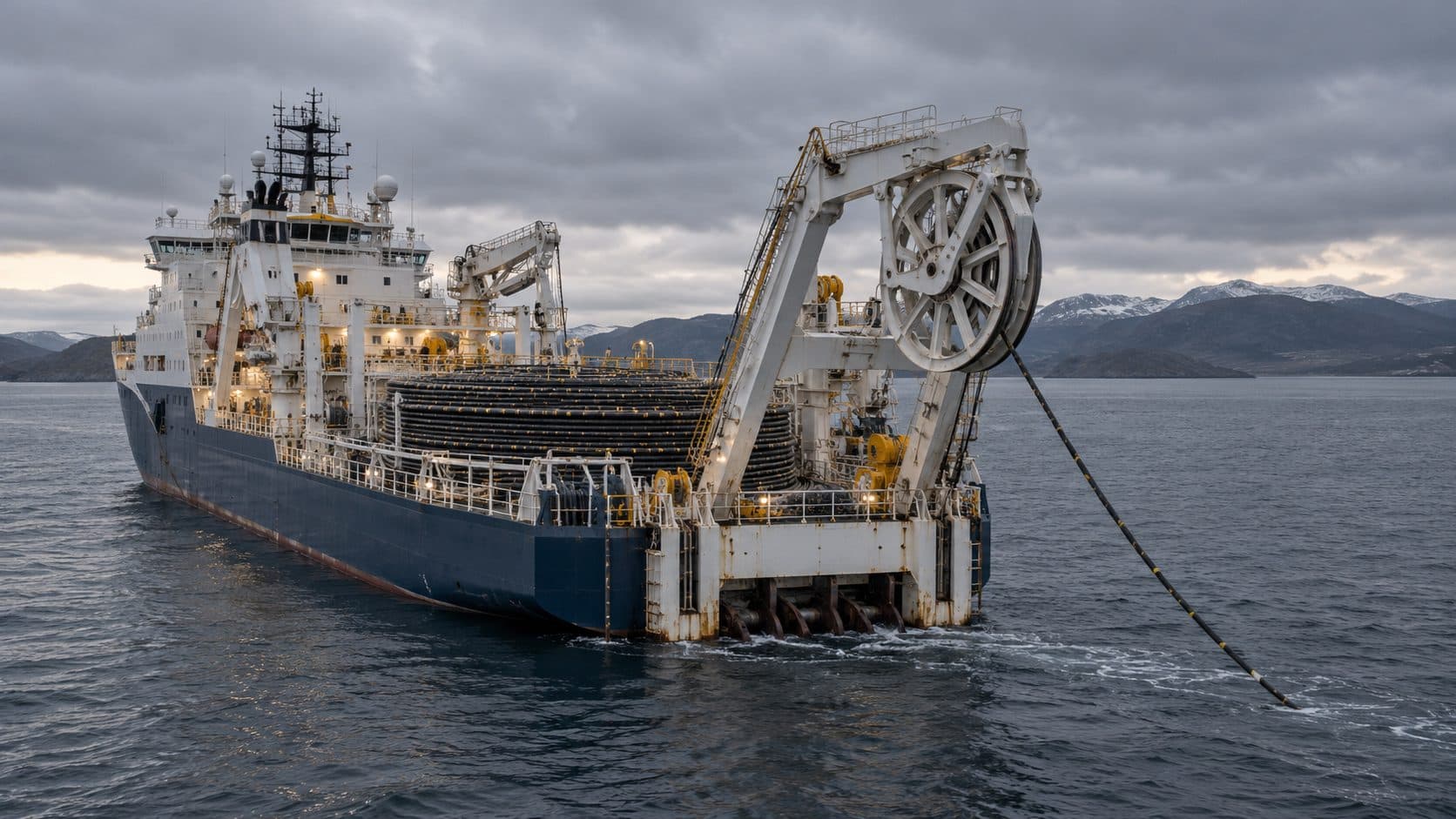
On July 10, 2026, in Geneva, the International Advisory Body on Submarine Cable Resilience approved its final report and closed its two-year work programme. The body was set up in 2024 by the International Telecommunication Union (ITU) and the International Cable Protection Committee (ICPC), the cable industry's protection body, founded in 1958. The report is a 190-page PDF, the work of three working groups and, by the ITU Secretary-General's count, 175 experts.
The number that travelled sits in its first chapter. Citing ICPC data, it says that between 2012 and 2024 "the average repair response time more than doubled, from less than 20 days to more than 50 days." Submarine cables carry over 99 per cent of intercontinental data traffic, the report says, and suffer approximately 150 to 200 faults a year.
I am not a marine engineer. I am the CTO of a LegalTech built on Claude, and I ship iOS apps and a strategy game as an indie developer. Time to repair matters in my much smaller systems too, and the first thing I ask of any duration is which clock it uses. So I read the report rather than the coverage. It answers that question three different ways.
What the 50 days measures
Figure 3, sourced to the ICPC, is a stacked bar chart, and its legend matters more than its title. Each bar adds two segments: "average notification to departure" and "average transit time." The clock starts at notification, not at the break, and it stops when the ship reaches the fault, before any cable is lifted.
The report gives no table, so these are my readings of the bars. In 2012, about 18 days: roughly 14.5 before departure and 3.5 in transit. In 2024, about 51: roughly 42 before departure and 9 in transit. The peak was 2022, at about 64. Of the roughly 33 extra days, about 27 were spent before the ship left.
The report's own step-by-step timings are much shorter. The same chapter breaks a repair into phases: fault detection and localisation, 1 to 3 days; mobilisation, typically 3 to 5; transit, 2 to 5; recovering the cable, hours in shallow water and several days in hard cases; jointing and splicing, 1 to 3 days, with the ship holding still for 24 hours or more per joint; reburial, 1 to 2 days; final testing, under a day.
Two diagnoses in one report
Why did the wait grow? According to the ICPC, the number of repairs per year and the number of repair vessels "have both remained stable." So, Working Group 1 writes, "the key reason cited for this increase was regulatory." Its list is concrete: cabotage rules written for coastal shipping and applied to foreign-flagged repair ships, local crew and visa requirements, duties on spare parts, and coastal states asking a ship to notify them, or get a permit, just to cross their exclusive economic zone on the way to international waters. In March 2024, a pan-African telecom provider reported that approvals for a Red Sea repair could take up to 8 weeks.
One chapter later, the same working group writes: "Given current demand, the global submarine cable repair fleet is insufficient." As of 2025, about 70 vessels could technically repair a cable, but only 20 to 25 were dedicated to repair or on long-term charter. A significant part of the fleet was built in the 1980s or 1990s. A new repair ship costs USD 100 million to 150 million. Africa has one permanently stationed, wholly dedicated repair ship, at Cape Town.
Working Group 3 goes further. Average repair time rose from 22 days in 2015 to 40 days in 2023, it says, "directly attributable to the shortage of available vessels." Its footnote leads to a 2025 Recorded Future report, which credits SubTel Forum for an average "repair time for the restoration of cable faults." By its wording, that is a second clock, one that runs to restored service, from another source: SubTel Forum, which tracks publicised faults, "likely a fraction" of all faults, Recorded Future notes.
Both diagnoses can be partly true, and the chart cannot choose between them. "Notification to departure" holds both. The report's own flowchart of a repair (Figure 4) puts finding a vessel, or queuing for one, and the permit application inside the same "preparation period."
The mean, the median and the tail
Working Group 2 brings a third clock. An ICPC analysis presented in 2025 covered 3,053 valid repair records across 140 countries, from 2007 to 2024. It defines commencement time as the duration between a fault occurring and a repair vessel mobilising. The global median is 8.0 days. The mean is 22.7, "a figure skewed by extreme outliers." Among the fastest responders, it names South Africa, at 1.95 days, and the United Kingdom, at 3.66. The UK appears as about 8 days in Working Group 1, on 2024 data alone.
When the mean is nearly three times the median, a minority of very long cases carries the average. So a mean that climbs from under 20 to over 50 days can mean every repair got slower, or that the slow tail got longer: a conflict zone, a remote coast, a year with several large faults at once. The report publishes neither the 2024 median nor the distribution, and the ICPC's own comparison of repair commencement times is not public: members sign in, others must request a copy. I could not tell which happened, and I will not claim either.
An analogy, and only that: in software, an average response time hides whether every request slowed down or a few of them hung. Nobody fixes those two problems the same way.
What the fast cases have in common
The report is clearer about what works, and the pattern is that the groundwork was laid before the fault.
South Africa, the Netherlands and the United Kingdom have pre-authorisation arrangements for repair vessels. On 2024 data, the report says, the UK averages about 8 days to commence repairs, against a global average of 50. Singapore's maritime authority cut repair-permit approval from 1 week to 3 to 5 working days. Malaysia granted foreign cable ships a permanent exemption from its cabotage rules. In the Yokohama Zone, ships on standby reach most faults in the zone's core area within 24 to 48 hours, against 5 to 7 days for ships that are not pre-positioned.
The best story is in Box 3. On February 21, 2023, a container ship dragging its anchor in severe weather cut four cables near the Shantou landing station in China, in water less than 15 metres deep, too shallow for conventional repair ships. The provider activated a pre-arranged rapid-response capability, drew on a pre-vetted inventory of local shallow-water assets, secured a barge within hours and had it on site on February 28. All four systems were restored within three weeks.
What I take from it
This is an advisory body, so its recommendations bind no one, and its three groups drew on different sources, which may explain why the numbers do not line up. Its chapter on public-private cooperation also contains, almost in passing, the measurement that would settle its own disagreement: routine performance indicators "such as time-to-permit, time-to-mobilize and mean time to repair."
Here is what I would copy into any system I build, run or buy:
- Write down the clock before you read the number: start event, stop event, statistic, dataset and years. This report has at least three.
- Split the wait into segments with different owners. "Notification to departure" mixes a regulator's queue with a ship's schedule. Measure them apart, and the argument becomes a measurement.
- Publish the median and a tail figure next to the mean. A mean nearly three times the median is a signal, not a summary.
- Move approvals out of the incident. Pre-clearing a vessel and its crew is, in software terms, a pre-approved runbook: the authority still decides, but once, in advance, with periodic renewal, as the report itself proposes.
- Pre-arrange the rare case too. At Shantou, the shallow-water options had been vetted before anyone needed them, and the report credits that for the speed.
On the report's own chart, the transit itself took about 9 days in 2024. Most of the days that grew came before the ship sailed, and the same report says how to find out why.
Sources
- ITU, "International Advisory Body on Submarine Cable Resilience: Report of the Working Groups 2026" (PDF dated July 10, 2026, read October 20, 2026; chapter 1 and Figure 3 on repair timelines, chapter 2 on regulatory barriers and national models, chapter 3 on the repair fleet, Box 3 and the Yokohama Zone, section 4.4 on performance indicators, Working Group 2 section 3.4 on the 2007 to 2024 ICPC analysis, Working Group 3 chapter 1 on repair time and vessel shortage)
- ITU, "International Advisory Body on Submarine Cable Resilience: Report of the Working Groups 2026", publication page (read October 20, 2026)
- ITU, press release, Geneva (July 10, 2026; final report approved, completion of the two-year work programme)
- Compare the Cloud, "ITU advisory body publishes blueprint for protecting the undersea cables that carry 99% of global internet traffic" (July 10, 2026)
- Sofia Connect, "ITU's submarine cable resilience report puts numbers on a problem the industry already knew about" (July 20, 2026)
- ICPC, "ICPC Global Comparison of Repair Commencement Times" (updated August 28, 2026; report for members or on request)
- Recorded Future, "Submarine Cables Face Increasing Threats Amid Geopolitical Tensions and Limited Repair Capacity" (2025, read October 20, 2026)