
Why the world tunes to 440 Hz — and why it drives some people mad
Strike a tuning fork in Tokyo, New York, or Berlin and the same silvery note hangs in the air: the A above middle C, vibrating exactly 440 times a second. It is the note an oboe plays to hush an orchestra before a concert, the reference baked into every digital tuner and synthesizer. It feels eternal, almost physical, as if 440 hertz were written into the bones of sound itself. It is not. There is nothing acoustically special about 440. It is a number a committee argued its way into — and the fight over it is still simmering.
A world that couldn't agree on a note
For most of music history, there was no "right" A at all. Pitch was local. A cathedral organ in one town might sound a full tone away from the harpsichord in the next. Across Europe, the A that musicians tuned to wandered anywhere from roughly 400 to 480 hertz depending on the era, the city, and the instrument maker's mood. A piece written for a particular church organ was, in a real sense, tied to that building.
Worse, pitch kept creeping upward. Brighter, more brilliant tuning made instruments ring and cut through a hall — so orchestras nudged their A higher, then higher again, each trying to outshine the last. By the mid-nineteenth century some ensembles had pushed past A=450, nearly a full semitone above what Mozart would have known. Singers, whose only instrument is their own throat, were left straining at the top of their range night after night, with no committee to appeal to.
Scheibler's forks and a French law
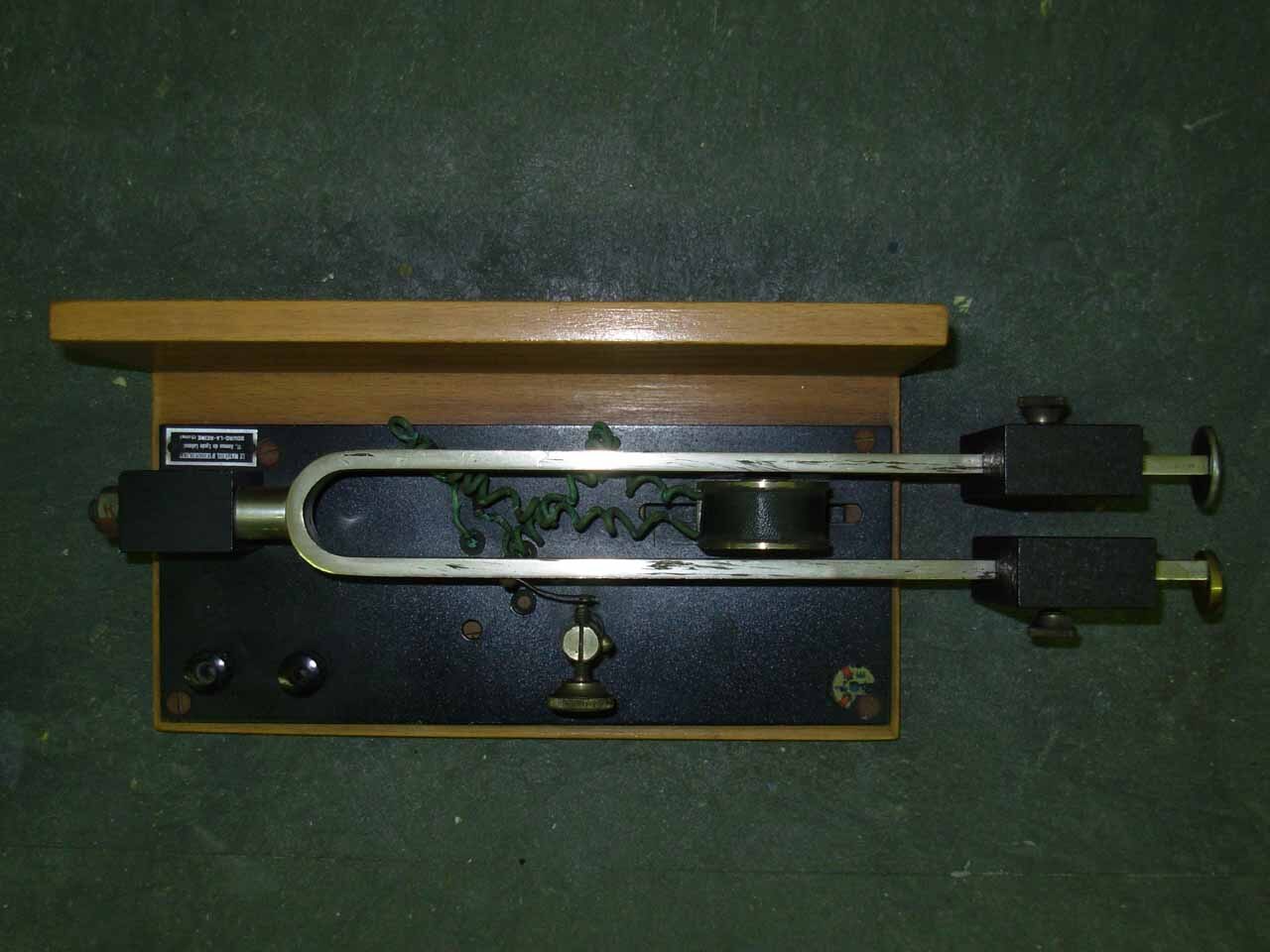
The first person to attack the chaos with real instruments was Johann Heinrich Scheibler, a German silk manufacturer turned acoustician. He built a "tonometer" — a mounted set of dozens of tuning forks, each tuned a hair apart — and used it to measure the actual pitch of forks all over Europe with unprecedented precision. In 1834, in Stuttgart, he proposed A=440 to a gathering of German scientists and physicians, who approved it. It was the first serious push for the number we use today.
Yet 440 didn't win. France did. Alarmed by runaway pitch and complaining singers, the French government passed a law on 16 February 1859 fixing A at 435 hertz — the diapason normal. To make it real, they had the instrument maker Secretan forge a master tuning fork and deposited it at the Paris Conservatory, a physical object you could go and touch. The advisory committee included the composers Rossini and Meyerbeer. For decades, 435 — not 440 — was the closest thing the world had to a standard, adopted across Austria, Italy, Russia, and beyond.
How 440 finally won
The modern number crept in through industry, not art. By 1926 the American music business had informally settled on 440, partly because it was a convenient figure for the new world of radio and recording. In 1936 the American Standards Association made it official: A above middle C, 440 hertz. After the Second World War the International Organization for Standardization took it global, first as Recommendation R 16 in 1955, then locked in as ISO 16 in 1975.
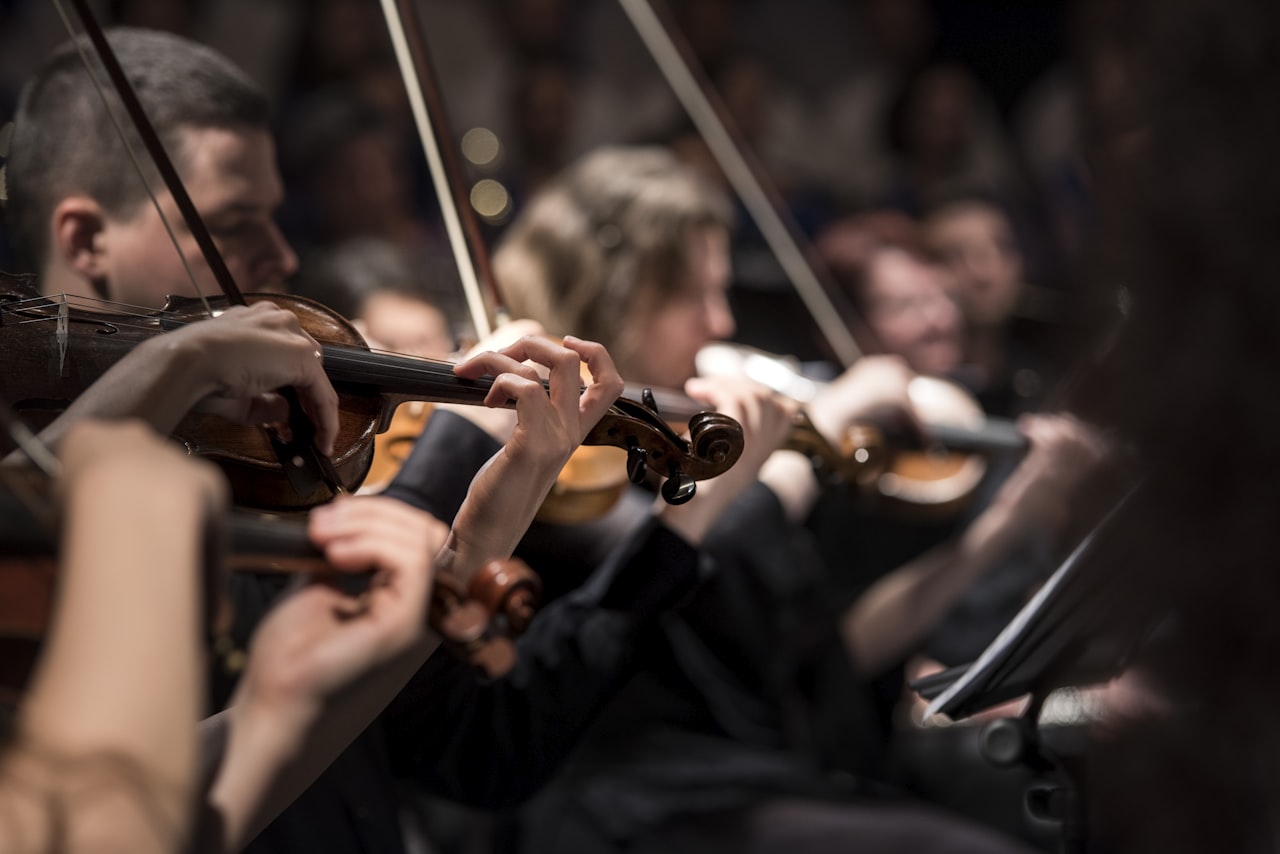
So the "universal" pitch is barely older than the electric guitar. It won not because of physics or beauty, but because broadcasters, instrument factories, and standards engineers needed one number they could all build around — and 440, sitting between the old French 435 and the sharper concert pitches some orchestras preferred, was a workable compromise. Plenty of ensembles still ignore it. Many European orchestras tune to 442 or 443 for extra brilliance; Leonard Bernstein liked to push the New York Philharmonic to 442, which reportedly annoyed the piano tuners' union to no end.
The 432 myth
Into this very human, very bureaucratic story walks the internet's favorite counter-myth: that the true, natural, cosmic tuning is A=432 hertz, and that 440 was foisted on us — sometimes the legend even drags in the Nazis — to make music subtly disagreeable. It is irresistible and it is nonsense.
There is no ancient 432 tradition; the very concept of measuring pitch in hertz didn't exist until physicists worked it out in the nineteenth and twentieth centuries, so no medieval monk or Egyptian priest could possibly have "tuned to 432." Old instruments scatter all across the spectrum precisely because nobody had a fixed reference. And acoustically, your ear doesn't perceive absolute frequencies as healing or harmful — it perceives relationships between notes and the timbre of an instrument. Shift the whole orchestra down by eight hertz and every interval, every chord, every melody stays mathematically identical. It just sounds a touch lower.
Which is the quiet punchline. The "natural" frequency of music isn't 440 or 432. It's whatever number enough people agree to point their instruments at — a treaty written in steel and air, settled by silk merchants, opera composers, radio engineers, and standards committees, and still quietly contested every time an orchestra tunes a few cents sharp to make the strings gleam.