
The Chuck Berry song that left the solar system
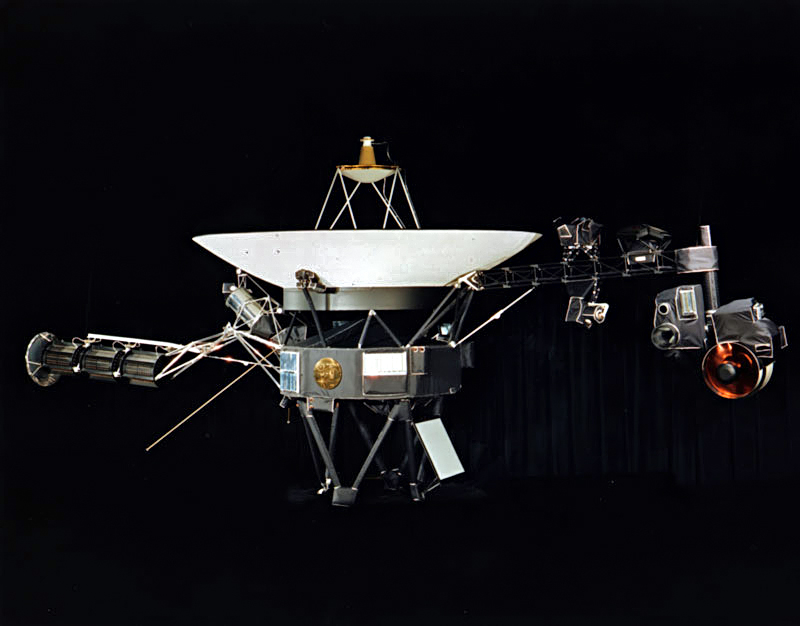
Somewhere past the edge of the solar system, in the absolute dark between the stars, a Chuck Berry guitar riff is flying away from Earth at more than 60,000 kilometers per hour. It has been doing this since 1977. In the summer of that year, NASA bolted a gold-plated phonograph record onto each of the two Voyager spacecraft and launched them toward the outer planets and beyond. Pressed into those grooves: 90 minutes of music from across the planet, 115 encoded images, and spoken greetings in 55 languages — a message in a bottle thrown into the cosmic ocean, addressed to whoever, or whatever, might one day find it.
A mixtape for the universe
The Golden Record was the idea of a small team led by the astronomer Carl Sagan, with the writer Ann Druyan as creative director. They had a strange, almost impossible brief: choose the sounds that best represent all of humanity, knowing the audience might be an alien civilization millions of years from now. And they had roughly six weeks to do it.
What they assembled is the most ambitious mixtape ever made. There is Bach's Brandenburg Concerto No. 2 and the first movement of Beethoven's Fifth Symphony. There is a Bulgarian folk song, a Navajo night chant, Peruvian panpipes, a Japanese shakuhachi flute, Senegalese percussion, and the aching Indian raga "Jaat Kahan Ho," sung by Surshri Kesar Bai Kerkar. There is Louis Armstrong, Blind Willie Johnson, and Mozart's Queen of the Night aria. Nature gets its turn too: thunder, wind, crashing surf, the song of a humpback whale, the calls of birds, even the sound of a human heartbeat and a mother's first words to her newborn.
The only rock song in the galaxy
Among all that grandeur, one track stands out for being gloriously ordinary: Chuck Berry's "Johnny B. Goode," recorded in 1958. It is the only rock and roll song on the record, and it nearly didn't make the cut.
The ethnomusicologist Alan Lomax, one of the great song collectors of the 20th century, argued against it. Rock, he said, was adolescent music — too young, too unserious, not worthy of being humanity's calling card to the stars. Sagan's reply has become legend: "There are a lot of adolescents on the planet." The song stayed. So today, three swaggering minutes of a Black American guitarist from St. Louis are the first and only rock music ever to leave the solar system — a teenage anthem about a country boy who could play a guitar just like ringing a bell, now ringing through interstellar space.
A bottle built to outlast the Sun
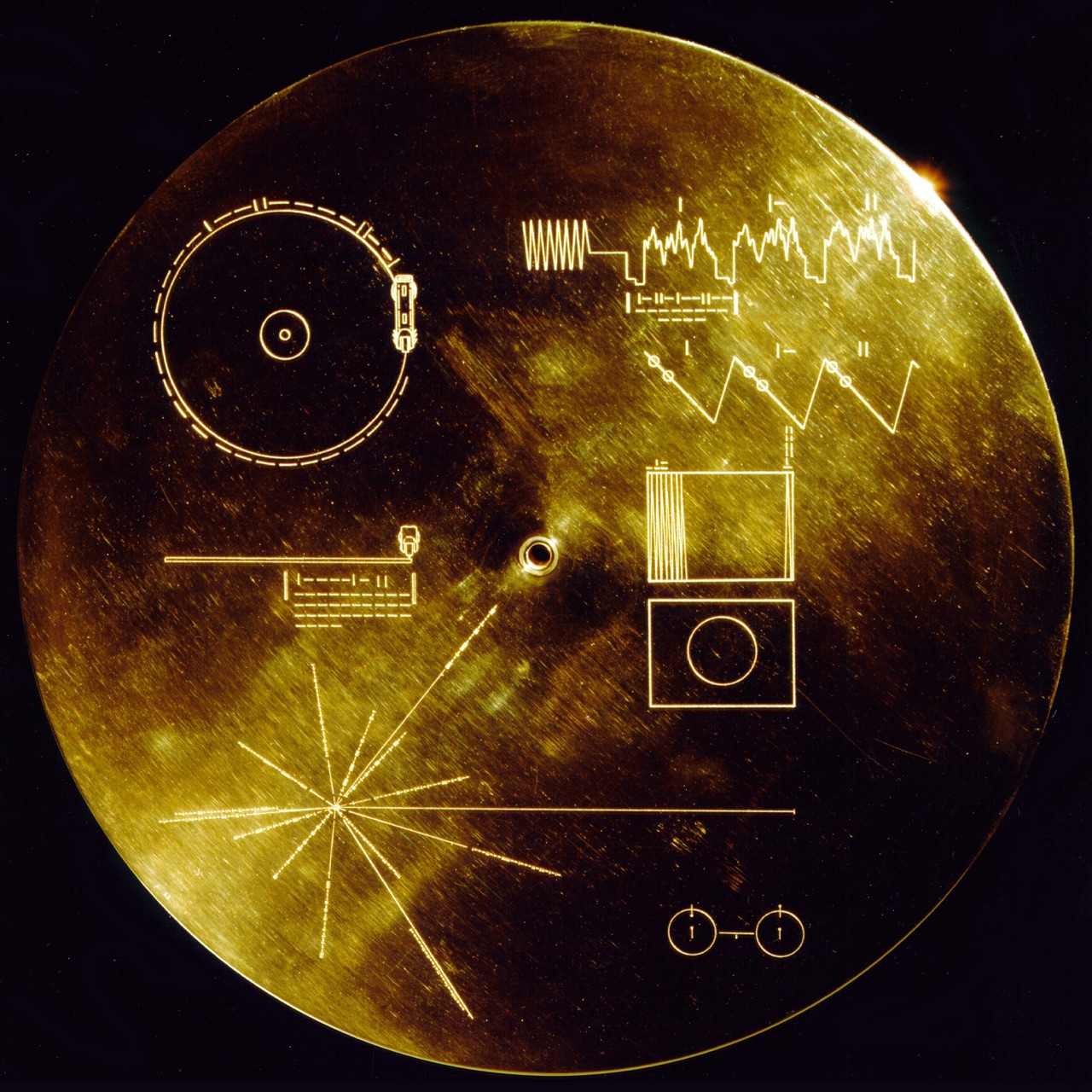
The Voyagers didn't just carry the music; they carried instructions for an audience that shares no language, no culture, and possibly no biology with us. The record's aluminum cover is etched with diagrams that work as a kind of universal manual: a drawing of the stylus in its starting position, the playback speed written in binary, and a "pulsar map" — fourteen pulsars whose flashing rhythms, read together, pinpoint the Sun's location in the galaxy like a cosmic address.
Then there is the clock. Electroplated onto the cover is a tiny sample of uranium-238, which decays at a known, steady rate. Half of it will be gone in about 4.5 billion years. Any finder who measures how much remains can read, off the disc itself, how long it has been drifting. The record was engineered to stay playable for roughly a billion years — longer than our own species has existed, longer, perhaps, than the Sun will keep Earth habitable.
Two probes, and a love story riding along
There is a tender footnote that almost nobody mentions. While making the record, Sagan and Druyan fell in love — and on impulse, they recorded Druyan's brainwaves and heartbeat onto the disc while she lay still and thought about being in love. That hour of a human nervous system in love, compressed into a minute of sound, is now soaring through the galaxy too. The record is, quite literally, a love letter.
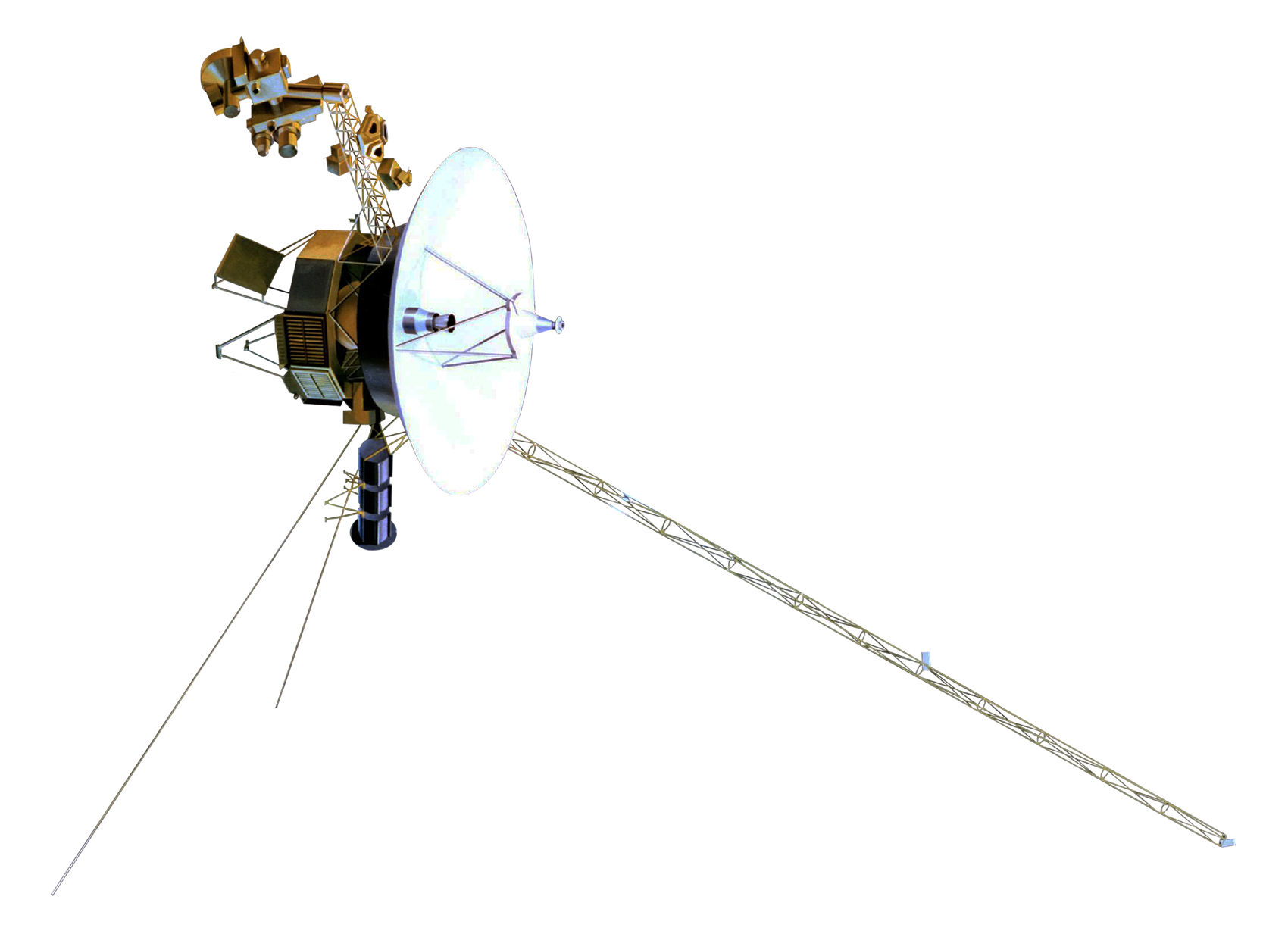
In August 2012, Voyager 1 became the first human-made object to cross into interstellar space; Voyager 2 followed in November 2018. Their plutonium power supplies are fading, and within a few years their instruments will fall silent. But the records need no power. Long after the last signal stops, long after NASA is a memory, the two discs will keep coasting through the dark, carrying Bach and whale song and a teenager's guitar.
The astonishing part is the math of it. The Voyagers won't pass near another star for tens of thousands of years. The odds that anyone ever finds and plays the record are essentially zero. Sagan knew that. The Golden Record was never really aimed at aliens — it was a mirror held up to ourselves, a way of asking who we are and what we'd want to be remembered by. We answered with Bach, with a whale, with a mother's voice, and with a kid named Johnny B. Goode. Not a bad way to be remembered, for a planet full of adolescents.