
The theremin and 'The Thing': the instrument you play without touching, and its inventor's spy bug
Wave your hands in the empty air and music pours out — eerie, vocal, hovering somewhere between a violin and a ghost. That is the theremin, the only instrument on Earth you play without ever touching it. Its inventor, a young Russian physicist named Lev Termen — Leon Theremin to the West — gave the world its first mass-produced electronic instrument. Then he gave the Cold War one of its most elegant weapons: a bug with no battery, hidden inside a gift, that sat in the U.S. ambassador's study for seven years before anyone noticed it was listening.
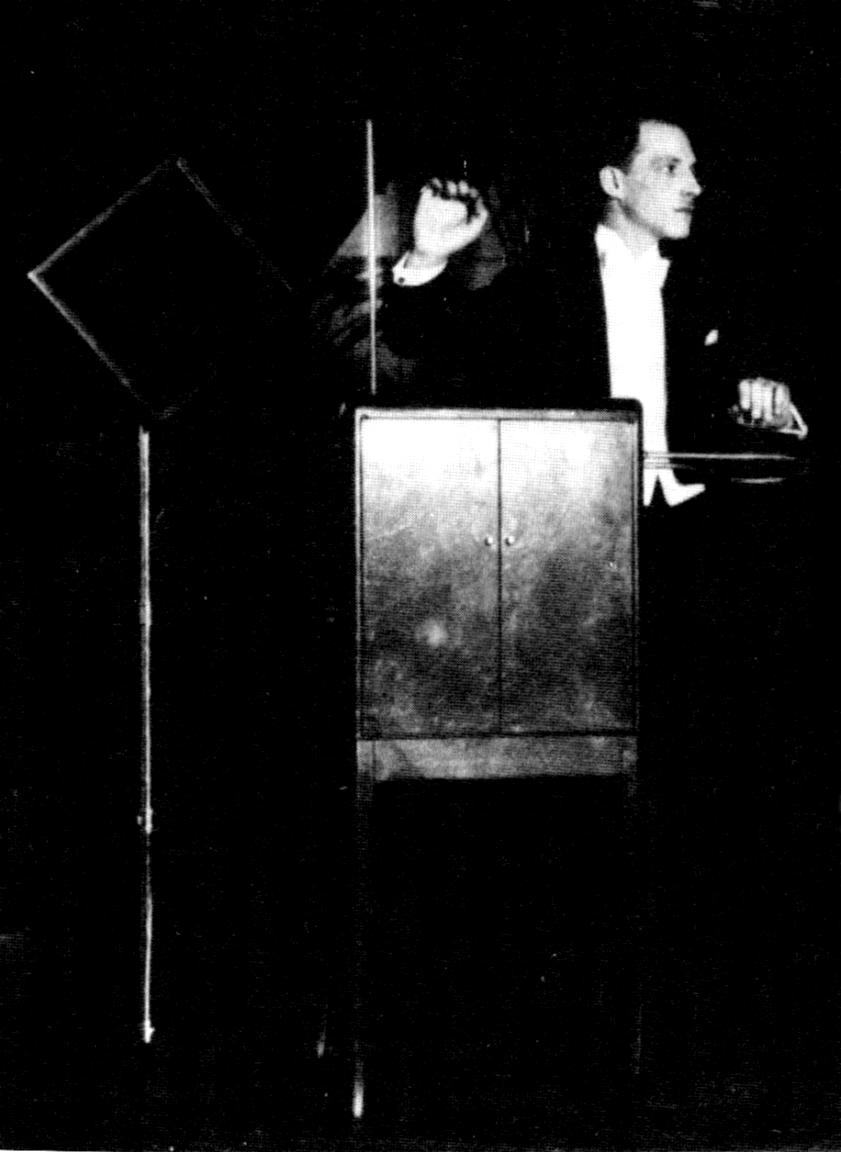
The instrument you play out of thin air
In October 1920, in a Petrograd laboratory, Theremin was tinkering with a device to measure the dielectric properties of gases when he noticed something strange: as his hand moved near the circuit, the audio tone it produced slid up and down in pitch. Most people would have filed that under "annoying interference." Theremin heard a melody. Within weeks he was giving concerts.
The trick is invisible. The instrument has two metal antennas, and your hands form the other half of a capacitor with each one. Move your right hand toward the vertical antenna and the pitch climbs; lift your left hand near the horizontal loop and the volume swells. Nothing is pressed, plucked, or bowed. You sculpt the sound in the air itself, which is exactly why a well-played theremin sounds so achingly close to a human voice — and why a badly played one wanders around like a drunk soprano.
It became the first electronic instrument to be manufactured in series; RCA licensed it in the late 1920s. You have heard its descendants without knowing it, in the wobbling dread of 1950s sci-fi soundtracks and the swooping line of the Beach Boys' "Good Vibrations."
A man the century kept moving
Theremin's life reads like a spy novel because, for a stretch, it was one. He toured the West in the 1920s and '30s, dazzled audiences in Europe and America, lived in New York, married, and ran a studio. Then, in 1938, he abruptly vanished back to the Soviet Union. For years the West assumed he was dead.
He was not. He had been swept into the Soviet system and, eventually, into a sharashka — a secret laboratory staffed by imprisoned scientists. There, instead of music, he was put to work on something the state valued far more: surveillance. And it was there that he designed the device the Americans would come to call, with grudging respect, "The Thing."
The bug that ran on nothing
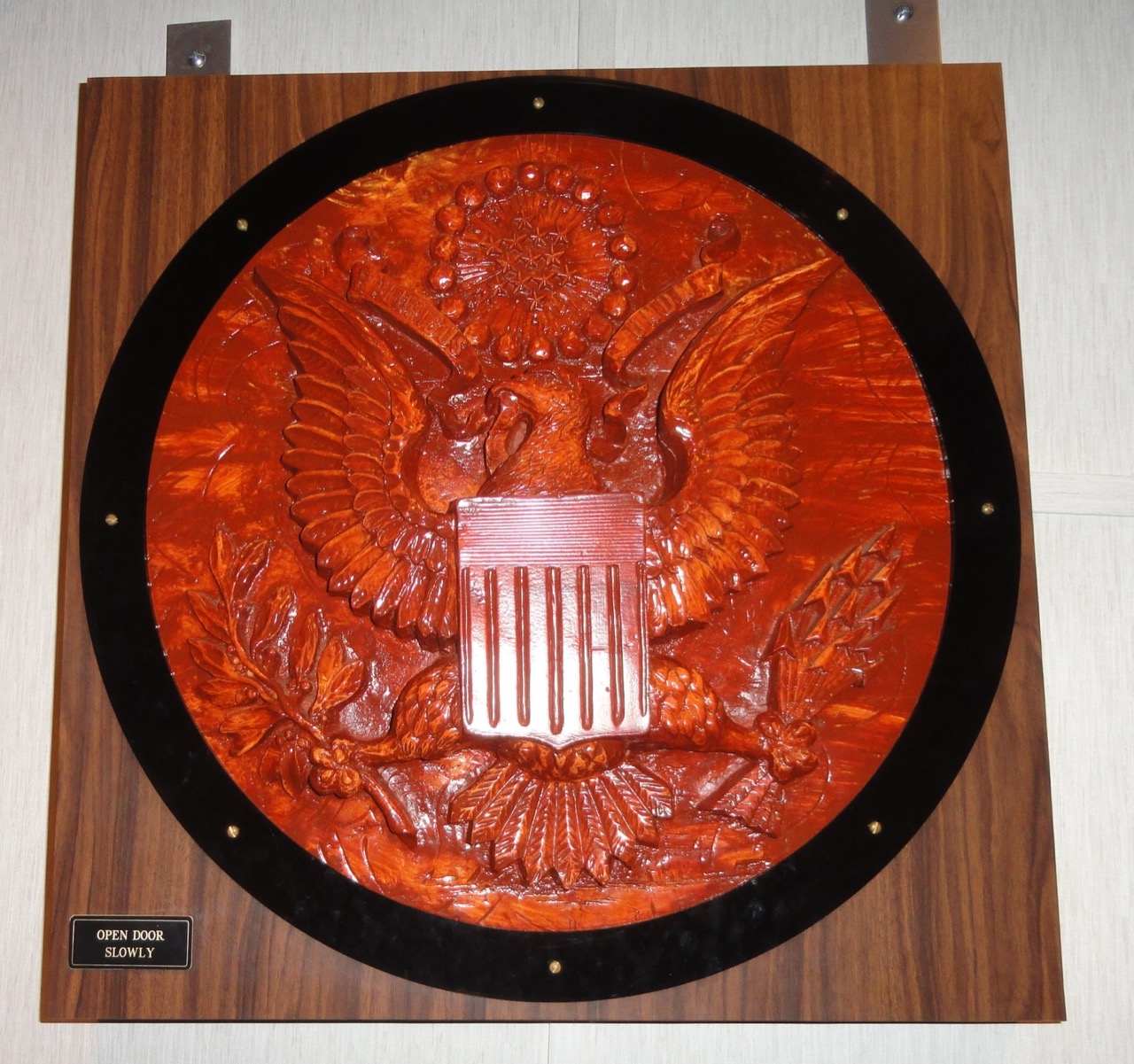
On 4 August 1945, a delegation of Soviet schoolchildren from the Young Pioneers presented the U.S. ambassador, Averell Harriman, with a beautifully carved wooden replica of the Great Seal of the United States — a gesture of wartime friendship. Touched, the ambassador hung it on the wall of his Moscow study. It stayed there, watching over the room, for seven years.
Inside was Theremin's masterpiece. "The Thing" had no battery, no wires, no power source, and no active electronics — which is precisely why it was so hard to find. It was a passive resonant cavity: a little chamber with a thin metal membrane that vibrated when someone spoke nearby. On its own it did absolutely nothing. But when Soviet operatives in a building across the street aimed a radio beam at it — around 330 megahertz — the cavity lit up, and the voices in the room modulated the reflected signal back out. Switch off the beam and the bug went dead and undetectable again. It is now considered an ancestor of the RFID chips in your passport and credit card.
Discovered by a voice in the wrong place
For seven years it worked flawlessly, because there was simply nothing to detect — no power signature, no transmission until the Soviets chose to switch it on. The discovery, when it finally came around 1951–52, was almost an accident. A British radio operator, scanning frequencies, stumbled onto American voices drifting out of an open Soviet channel — conversations that had no business being on the air. A sweep of the embassy followed, and after an exhaustive search, the technicians cracked open the innocent wooden seal and found the impossible: a listening device with no moving parts and no power, sitting quietly in a block of carved wood.
Western engineers were stunned. The design was so far ahead of anything they had that British and American intelligence reverse-engineered it for years, eventually producing their own passive bugs from the blueprint. A Soviet schoolchildren's gift had quietly outclassed the best of Western counter-espionage.
The kicker
So one restless physicist gave us two things that, on the surface, could not be more different: a haunting instrument you play by waving at empty space, and a silent bug you defeat the same way the Soviets ran it — by reaching it through empty space. Both work on the same uncanny principle: that you can shape, and be betrayed by, the invisible fields humming all around you. The next time a theremin wails in a film score, remember that the hands hovering over those antennas belong, in spirit, to the same mind that taught a wooden eagle to eavesdrop on an ambassador for seven years — without ever plugging it in.