The Cold War Over Tetris — and the Inventor Paid $0 for 12 Years
In the summer of 1984, a researcher at the Soviet Academy of Sciences in Moscow built a little game on a computer that could barely draw a picture. He had no idea he was lighting the fuse on one of the strangest corporate wars of the century — a tug-of-war that would pull in Nintendo, a media tycoon, a fugitive's son, and the Soviet state itself. The man's name was Alexey Pajitnov, the game was Tetris, and for twelve years he would not see a single ruble in royalties from the thing the whole planet was playing.
A game born on a machine that couldn't show it
Pajitnov was an artificial-intelligence researcher who loved puzzles. He'd grown up on pentominoes — the classic set of twelve shapes you can make from five squares, fitted into a wooden box like a jigsaw. He wanted to turn that into something a computer could play, but twelve shapes felt like too much. So he dropped down to four squares per piece, which gives you exactly seven shapes. He stitched together the Greek prefix tetra (four) with his favorite sport, tennis, and got Tetris.
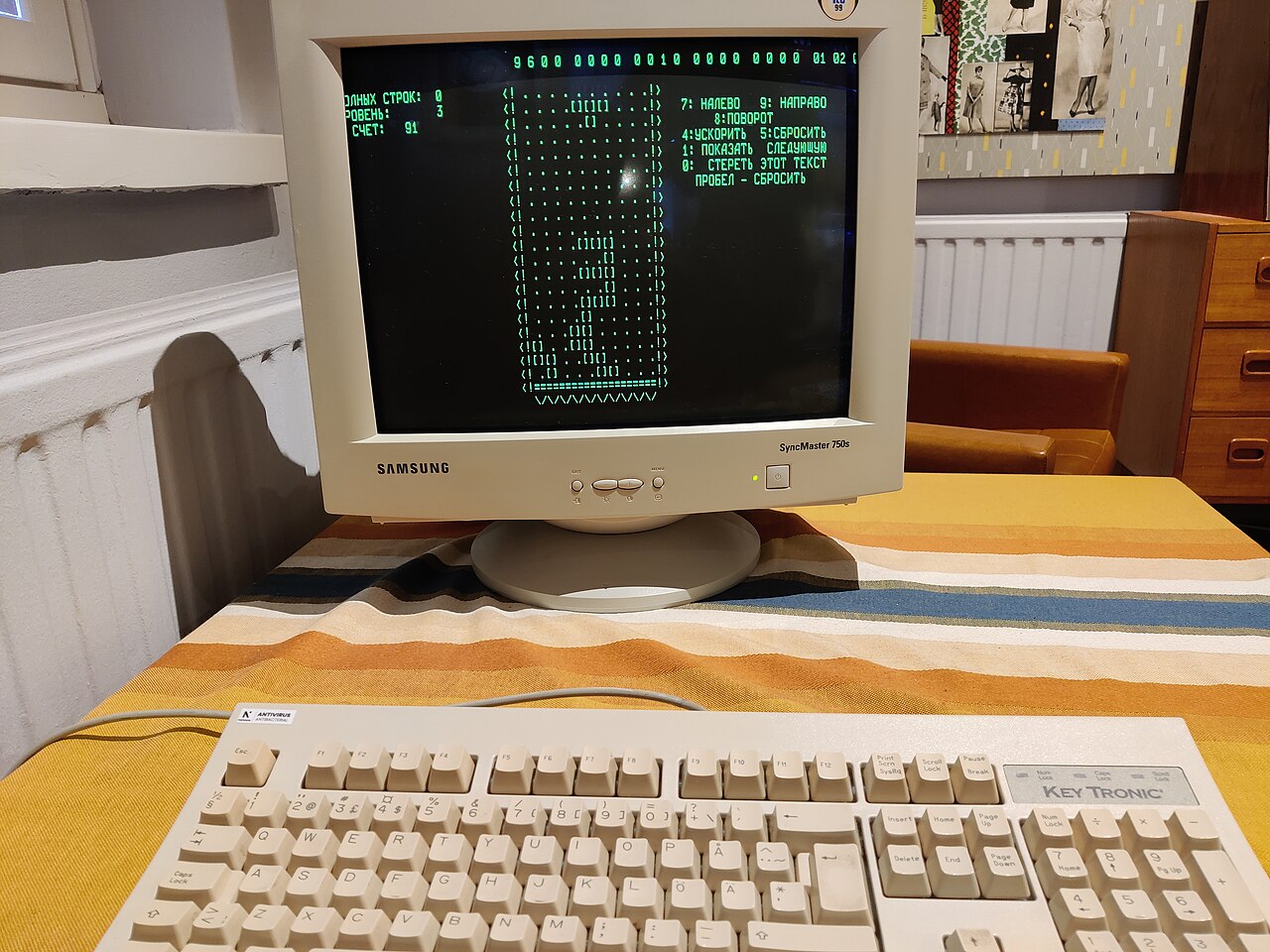
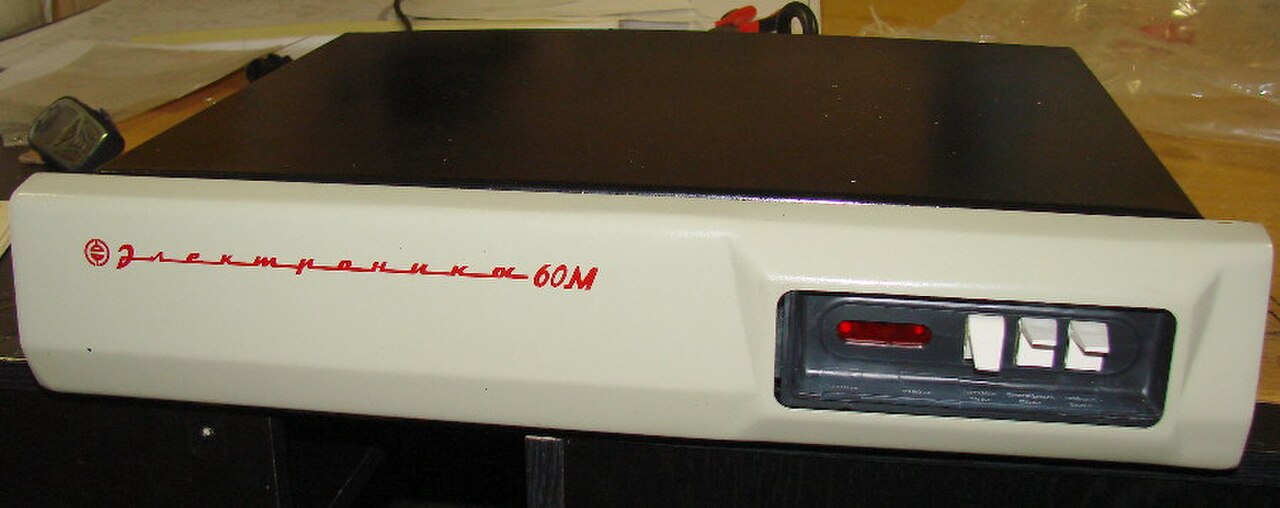
The first version ran on the Elektronika 60, a Soviet clone of an American minicomputer that had no graphics worth the name. The falling blocks weren't blocks at all — they were pairs of bracket and rubout text characters, clattering down a screen that was never meant to render a game.
It was crude, and it was instantly, dangerously addictive. Colleagues stopped working. Floppy disks of the game spread hand to hand across Moscow, then leaked west through Hungary, and within a couple of years Tetris was loose in the world — with absolutely no paperwork to say who actually owned it.
The catch nobody mentioned: the state owned it
Here's the trap. Pajitnov had built Tetris on government equipment, on government time, at a government institute. Under Soviet law that meant the rights belonged not to him but to the USSR — specifically to Elorg (Elektronorgtechnica), the state agency that held a monopoly on importing and exporting computer hardware and software.
So a game everyone wanted to license was controlled by a Cold War bureaucracy that had never sold a video game in its life. Western businessmen started signing deals for Tetris anyway — for arcade rights, home-computer rights, console rights — often with each other rather than with the people who actually had the authority to grant anything. The contracts contradicted one another. The definitions were fuzzy. The word "computer," it turned out, would become a multimillion-dollar question.
Three men, one Moscow, February 1989
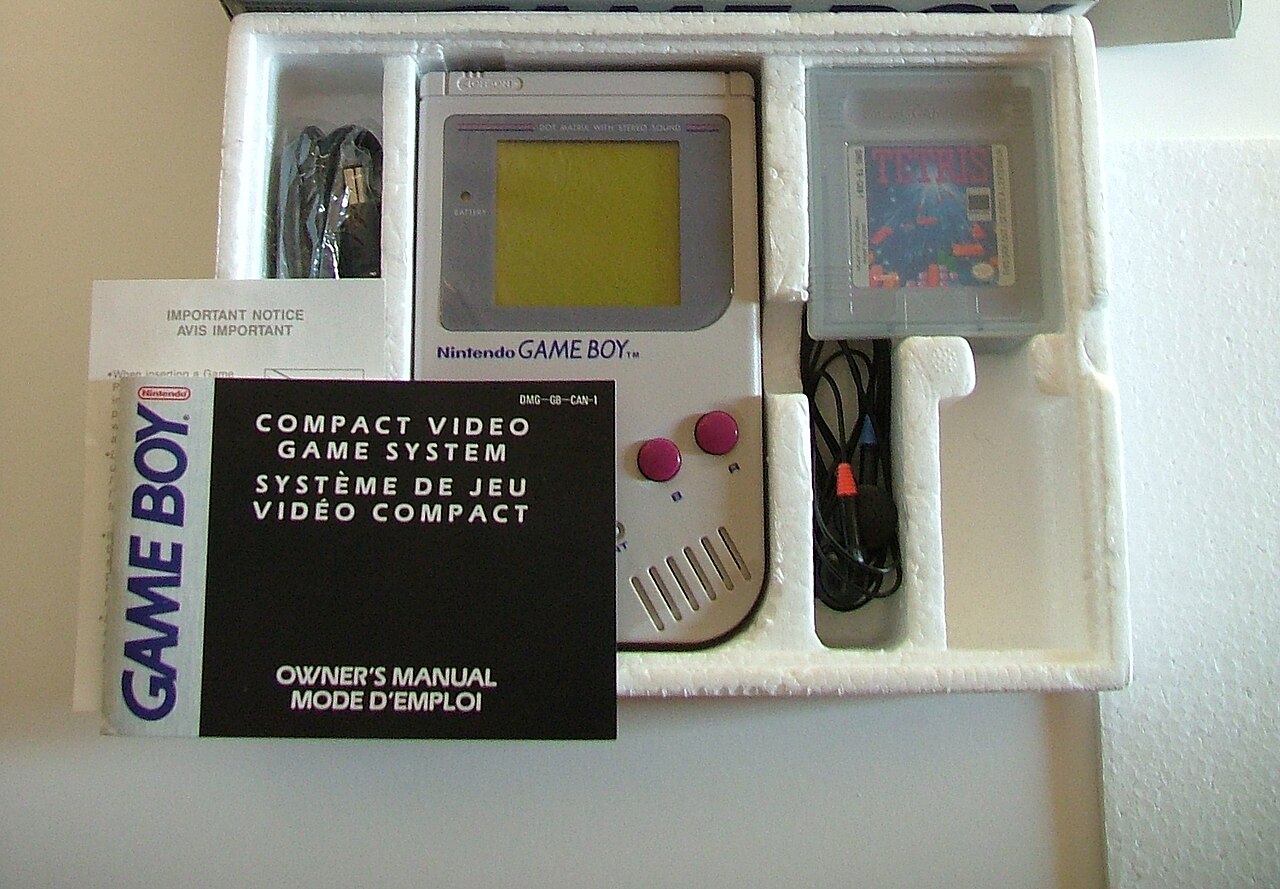
By early 1989 the mess came to a head, and it happened in person. Three rival negotiators converged on Moscow within days of each other, each convinced he held the rights to the prize everyone now wanted: the handheld rights, because Nintendo was about to launch a little gray machine called the Game Boy.
There was Robert Stein, who'd brokered the original Western deals. There was Kevin Maxwell, son of the media baron Robert Maxwell, representing the family's software arm. And there was Henk Rogers, a Dutch-born game designer flying in from Japan on Nintendo's behalf.
Elorg's negotiator, Nikolai Belikov, quietly played them against one another. He pinned Stein down on that slippery definition of "computer," and he baited Maxwell into admitting his company didn't actually hold the console rights it was claiming. Rogers, meanwhile, did something none of his rivals managed: he sat with Pajitnov, talked games designer to designer, and won the room. Nintendo walked away with both the handheld and the worldwide console rights — for $500,000 guaranteed plus fifty cents on every cartridge sold.
The lawsuit, the bonfire, and the bundle
The fallout was immediate. Atari's Tengen label had been selling its own Tetris cartridges for the Nintendo Entertainment System, certain its license was legitimate. Nintendo said the rights were now exclusively theirs and sued. Tengen had sold roughly 100,000 NES cartridges before the recall — and on November 13, 1989, a judge granted Nintendo the console rights by summary judgment. Tengen had to pull the game and destroy what was left of its stock. An estimated 268,000 cartridges went to the shredder.
Nintendo's prize paid off beyond anyone's math. They bundled Tetris free with the Game Boy, and the pairing was perfect: a simple, endless, universal puzzle on a machine you could carry anywhere. Tetris didn't just sell the Game Boy — it sold the idea of the Game Boy to people who had never bought a video game before.
Twelve years, then the rights come home
And Pajitnov? Through all of it — the smuggled disks, the dueling contracts, the Moscow showdown, the bonfire of cartridges, the tens of millions of copies — the man who invented Tetris earned nothing from it. The rights belonged to the state, and the state kept them. He once said, plainly, that he was simply happy people enjoyed his game. He emigrated to the United States in 1991.
It wasn't until the mid-1990s, after the Soviet Union itself had dissolved, that the rights finally reverted to him. In 1996 he co-founded The Tetris Company with Henk Rogers — the same man who'd flown into Moscow for Nintendo — and at long last began to collect royalties on the puzzle he'd dreamed up on a graphics-less Soviet computer twelve years earlier.
The shapes he chose were the simplest ones that still felt interesting: four squares, seven pieces, falling forever. The fight over who owned them was the most complicated thing about Tetris — and the part its inventor wanted the least to do with.