
The Iwata Myth: The "Impossible Compression" of Pokémon Gold and Silver
There's a story gamers love to tell, and it goes like this: when Pokémon Gold and Silver were being built, Game Freak wanted to do something insane — let you finish the new Johto region and then keep going, back into Kanto, the entire map from the very first Pokémon games. Two whole regions on one tiny Game Boy cartridge. Impossible. Then a programmer named Satoru Iwata, not even a Game Freak employee, looked at the code and wrote a magic compression routine that squeezed everything down to size, saving the dream. It's a beautiful legend. It's also, in the most important detail, wrong — and the real story is somehow better.
The legend everyone repeats
The myth is so widely shared because it fits the man perfectly. Satoru Iwata — who would later become president of Nintendo and the voice behind the "Iwata Asks" interviews — was a genuinely brilliant programmer, the kind of person colleagues told slightly unbelievable stories about. So when someone said he'd performed a feat of compression sorcery to fit a second region onto Gold and Silver, it sounded exactly right. The tale spread across forums, videos, and articles until it became gospel: Iwata's compression code is why you get to revisit Kanto.
The trouble is that the legend confuses what he optimized. Iwata did write a clever algorithm for Gold and Silver. But it wasn't about making the game smaller. It was about making it faster.
What Iwata actually wrote
Researchers who dug into the game's data — notably the YouTube channel DidYouKnowGaming, working with people who picked apart the code — found that the routine attributed to Iwata is a speed optimization, a tuned version of techniques already used in EarthBound and other titles from HAL Laboratory, the studio where Iwata cut his teeth. Its job is to shave off little slivers of time: the moment a battle begins, the beat when an opposing Pokémon appears on screen, dozens of tiny transitions you'd never consciously notice. Add them all up across thousands of battles and the game simply feels smoother, snappier, less laggy than earlier builds.
How much storage did this clever code free up? Only a few percent — a rounding error, not a miracle. And here's the line that quietly demolishes the myth: Kanto was added despite Iwata's algorithm, not because of it. His optimization shrank things by a hair; the second region needed vastly more room than a hair.
So how did Kanto really fit?
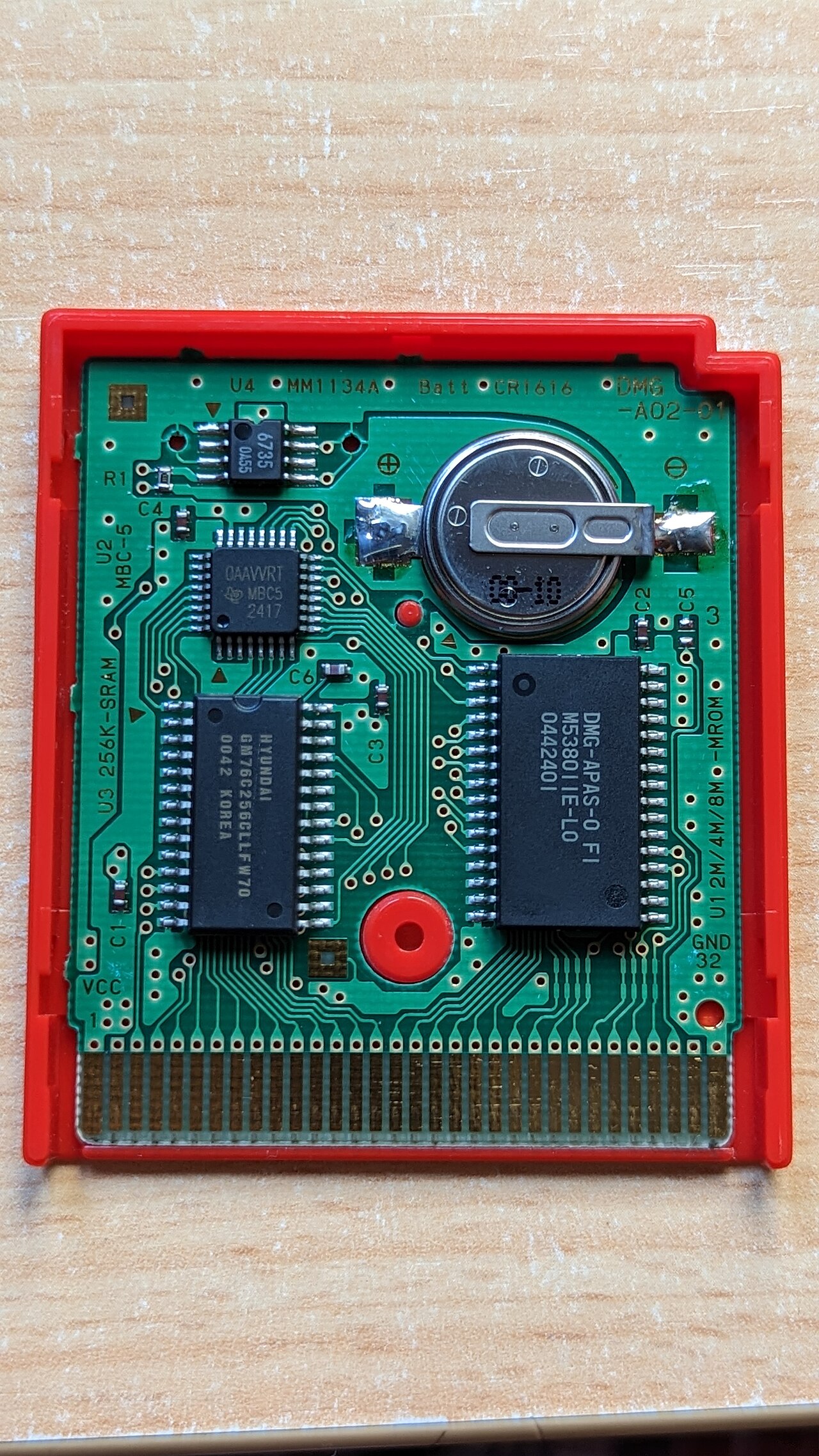
The unglamorous truth is the kind engineers nod at: they used a bigger chip. The Japanese versions of Gold and Silver shipped on roughly one-megabyte cartridges, and the international releases on about two megabytes — substantial for a Game Boy game of that era. Kanto fit because Game Freak paid for more ROM, the read-only memory that holds the game's maps, sprites, music, and text. No sorcery, just a larger cartridge and a team willing to spend on it.
That's worth sitting with, because it's a useful corrective to how we romanticize programming. We love stories where a lone genius defeats a hard limit with pure cleverness. Sometimes that happens. But just as often, the answer is a bigger budget, a slightly pricier part, and a team that decided the feature was worth the cost. Both kinds of decisions are engineering. Only one of them makes a good legend.
The real feat hiding behind the myth
Here's the twist: while the compression story is a myth, Iwata absolutely did pull off something jaw-dropping for the Pokémon series — it just got blurred together with Gold and Silver over the years.
When Nintendo wanted to bring the Game Boy battles into Pokémon Stadium on the Nintendo 64, somebody had to recreate the original battle system. The problem was that the source code for Red and Green was a tangle, and crucially there was no specification document — nothing written down explaining how the battle logic actually worked. Iwata, then running HAL Laboratory and not even on Game Freak's payroll, sat down, read the raw battle code, reverse-engineered the whole system, and got it running in Pokémon Stadium in about a week. Game Freak's Shigeki Morimoto later recalled the reaction perfectly: hearing it was already working after a week, he thought, "What kind of company president is this?"
That single week did more than impress people. The only ones who could otherwise have ported the battle system were the four original programmers — and pulling them off Gold and Silver to do it would have stolen the very time they needed to build the sequels. By cracking the port himself, Iwata effectively freed Game Freak's team to keep working on Johto and Kanto.
So the popular story has the right hero and even the right games — it just credits the wrong miracle. Iwata didn't compress a second region onto a cartridge. He did something quieter and, frankly, harder: he read a machine's mind with no manual, and bought a small studio the breathing room to finish a classic. The legend, it turns out, undersells him.