
The Broken Shark That Invented Modern Suspense
In the summer of 1974, a 26-year-old director stood on a boat off Martha's Vineyard and watched a quarter-million-dollar monster sink to the bottom of the sea. The shark was supposed to be the whole movie. Instead it rusted, leaked, and refused to work for most of the shoot. Steven Spielberg had a choice: panic, or learn to scare people without showing them the thing they came to see. He chose the second option, and in doing so he accidentally wrote the rulebook for modern suspense.
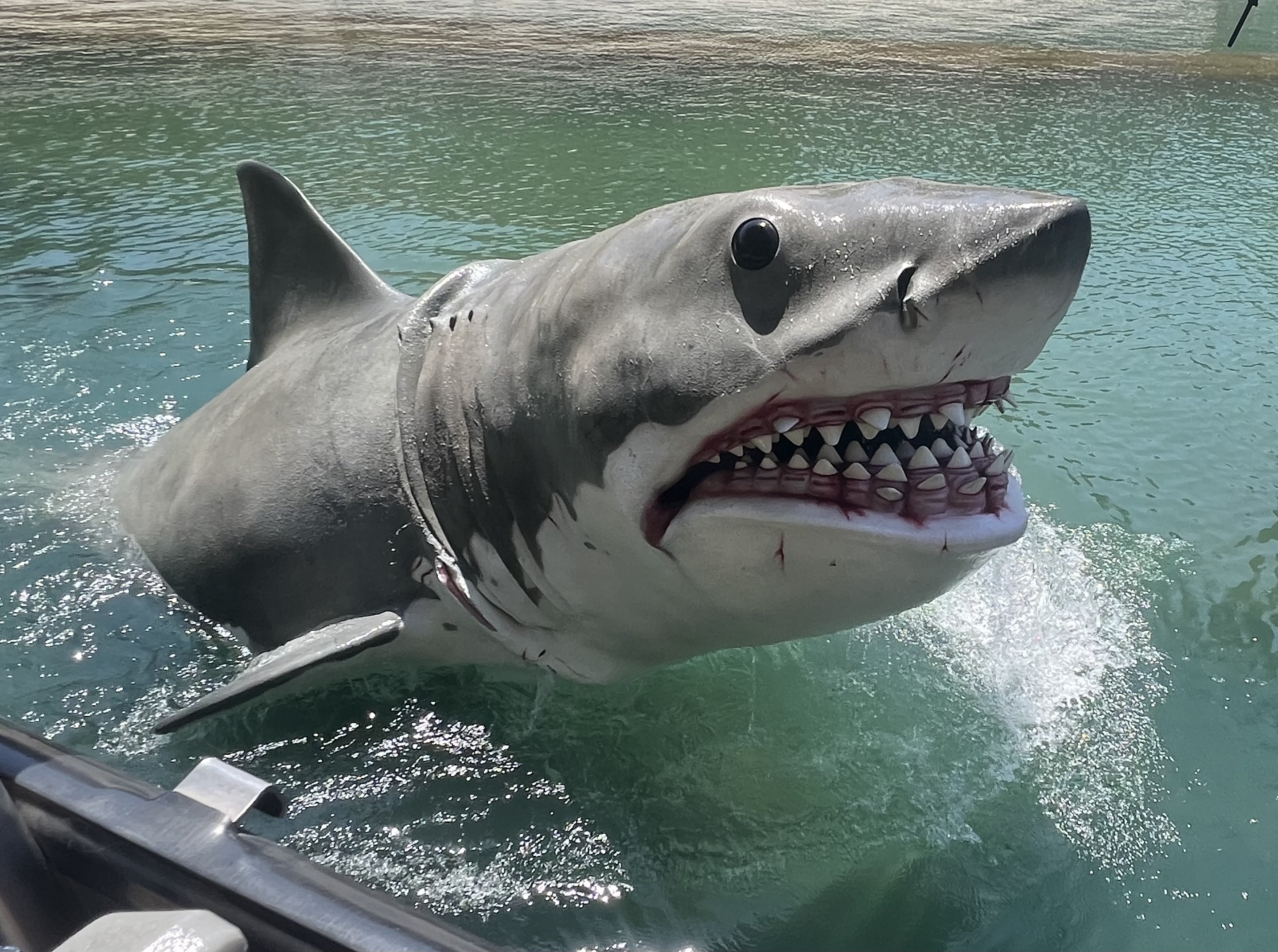
Meet Bruce, the shark that hated the sea
The shark had a name: Bruce, after Spielberg's lawyer. There were actually three of them, built by veteran effects man Robert Mattey for roughly $150,000 apiece — a fortune in 1974. They were 25 feet of fiberglass and steel, driven by a tangle of pneumatic and hydraulic hoses, and on paper they were marvels.
The problem was where they'd been tested. The crew had run Bruce through his paces in a freshwater tank back in California, where everything worked beautifully. Nobody asked the obvious question: what happens in salt water? The answer came the moment the first shark was lowered into the Atlantic. He plunged straight to the seabed. Salt water corroded him inside and out, chewed through the electronics, and seeped into the pneumatic hoses until his jaws hung slack and his skin bubbled. The crew nicknamed the contraption "the great white turd." Spielberg, less charitably, sometimes just called it broken.
A 55-day shoot that ate 159 days
What was meant to be a tidy 55-day shoot ballooned into 159 days. The budget, originally around $3.5 million, swelled past $9 million as the production sat in the water waiting for a fish that wouldn't cooperate. Filming on the open ocean made everything worse: boats drifted into frame, the horizon refused to stay level, and the temperamental shark needed constant repair between takes.
For a young director with one feature to his name, this was the kind of disaster that ends careers. Spielberg later admitted he was convinced he'd be fired. The thing he'd built the entire film around simply did not function — and the studio clock was ticking louder every day.
Turning a broken prop into pure dread
Cornered, Spielberg did the only thing left: he stopped showing the shark. If Bruce wouldn't surface, the camera would become the shark instead. He shot long, gliding point-of-view sequences from beneath the swimmers — the audience riding along with something hungry, low in the water, looking up. He cut to a yellow barrel slicing across the surface, a tug on a line, a leg dangling in dark water. The monster was everywhere and nowhere.
Then there was the sound. Composer John Williams handed Spielberg two alternating notes — E and F — and that primal dun-dun, dun-dun did the work the broken animatronic couldn't. The score told your nervous system the shark was coming long before any fin appeared. Spielberg put it best: the malfunctions turned the film "from a Japanese Saturday-matinee horror flick into more of a Hitchcock, the-less-you-see-the-more-you-get thriller."
Why your brain fills in the worst version
There's a reason this works, and it's older than cinema. A threat you can see has edges; you can measure it, locate it, decide whether you can outrun it. A threat you only sense has no edges at all — so your imagination supplies them, and imagination always overbuilds. The shark in your head is bigger, faster, and closer than any rubber prop could ever be.
Bruce gave Spielberg no choice but to weaponize that gap, and audiences in 1975 felt it in their stomachs. Jaws became the first true summer blockbuster, emptied beaches for a season, and taught a generation of filmmakers a lesson they'd repeat for decades: restraint reads as terror.
The kicker
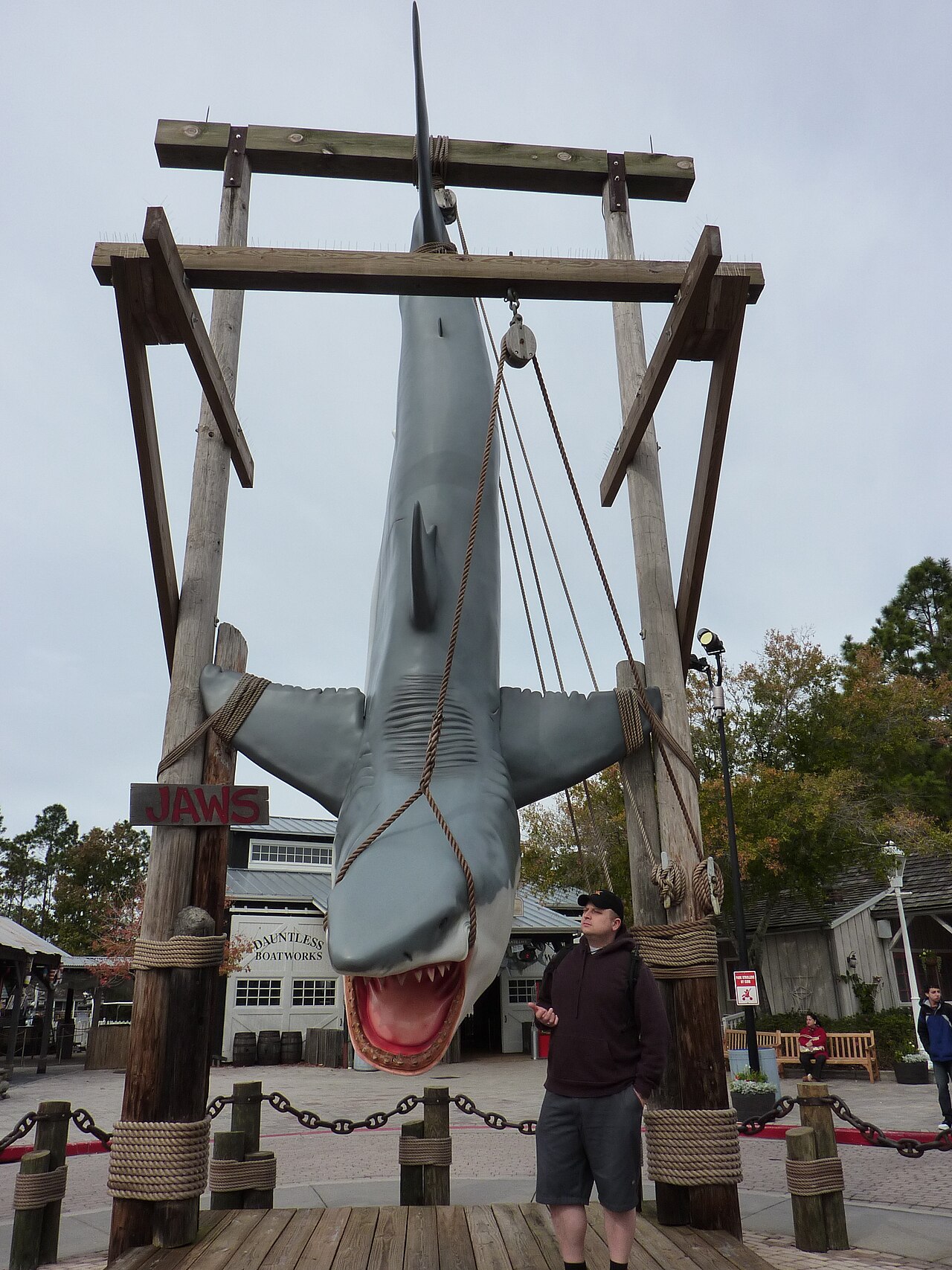
Bruce got the last laugh, sort of. The three working sharks were scrapped after filming, but a fourth fiberglass cast — built for promotional photos and never meant to act — survived. It spent fifteen years as a photo prop at Universal Studios, drifted into a Sun Valley junkyard for another twenty-five, and in 2016 was rescued, restored, and hung from the ceiling of the Academy Museum of Motion Pictures in Los Angeles, where it now floats three stories above visitors as the largest object in the collection. The shark that couldn't survive a few weeks in salt water is finally a star — kept, fittingly, completely out of the water.