
What's a 'Farfadet'? The Red Lightning That Shoots Up Toward Space
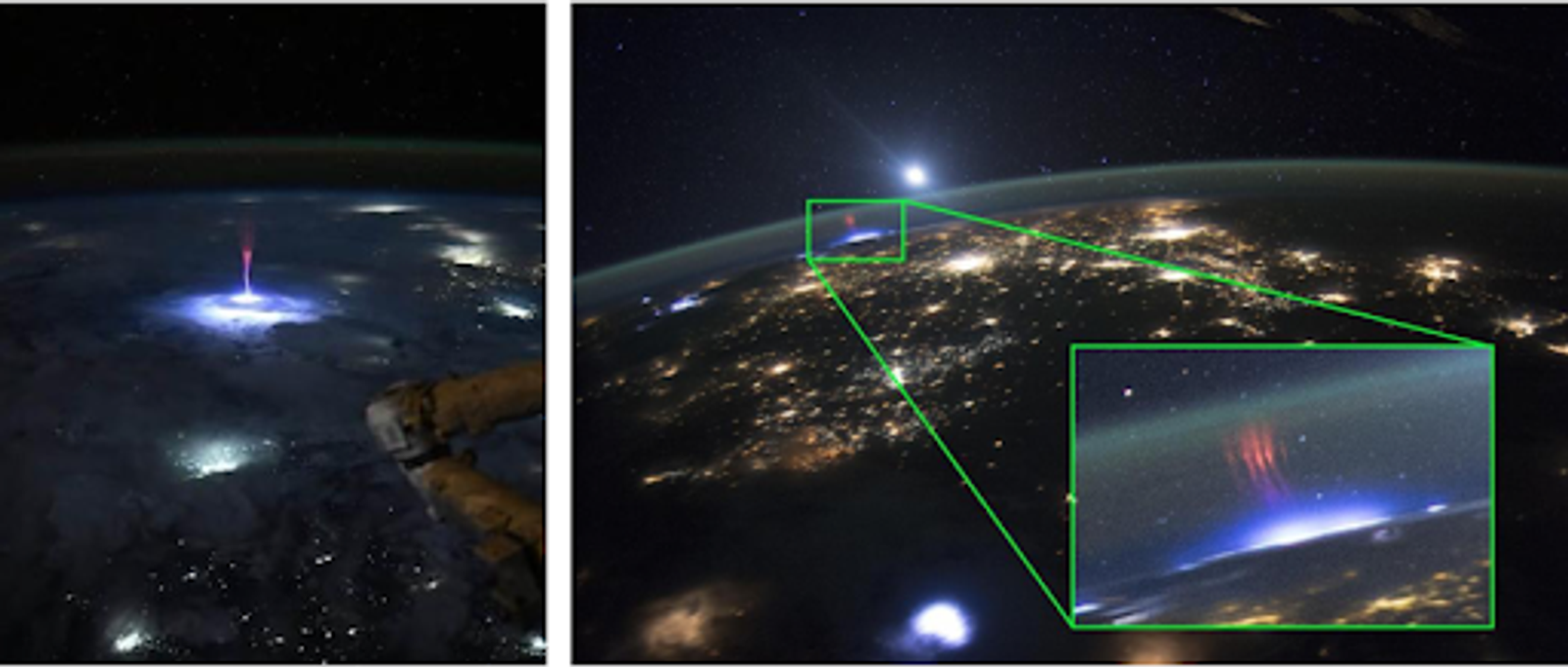
Most lightning goes down. But there's a kind that goes up — bursting out of the top of a thunderstorm and racing toward space in a flash of red — and for most of history almost nobody believed it was real. The French call them farfadets, after the mischievous little fairies of folklore. Scientists call them sprites, or more formally Transient Luminous Events (TLEs). Either way, they're one of the strangest, most beautiful things happening right over our heads.
So what actually are they?
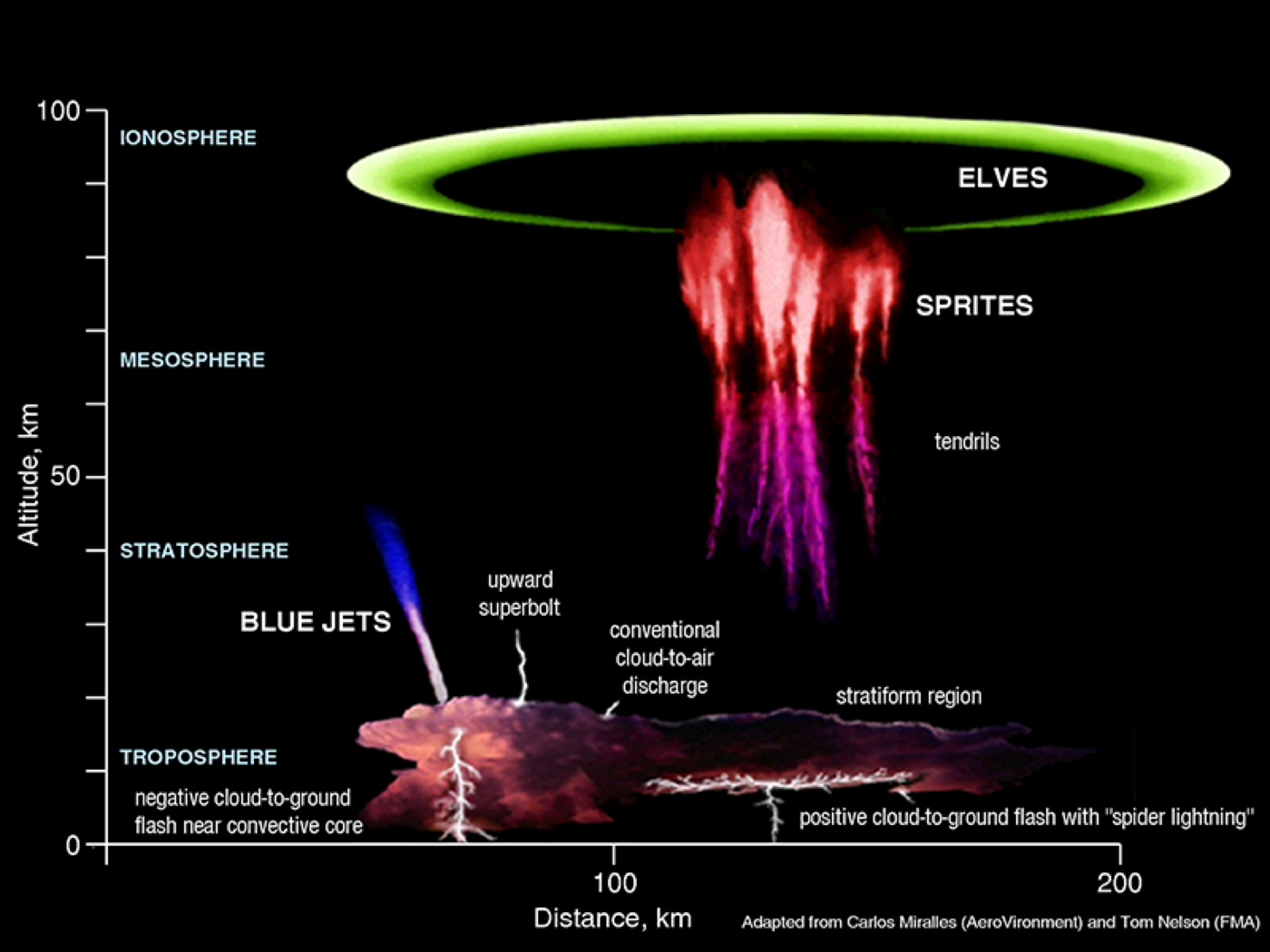
When a powerful bolt discharges from a storm down to the ground, it can momentarily leave the upper atmosphere electrically unbalanced — and that imbalance fires a burst of light upward, roughly between 50 and 90 km of altitude. That's far above the storm, in the mesosphere, near the edge of space — much higher than any airliner ever flies.
They glow red for a precise reason: up there the air is extremely thin, and the discharge excites nitrogen in that low-pressure air, which emits red light. (Down at ground level the same physics gives ordinary lightning its familiar white-blue.) Their shapes are wild — tendrils, columns, and the famous "jellyfish" with a bright bell and trailing legs.
Why almost nobody ever sees one
Two reasons. First, they're absurdly fast — a sprite lasts only about 10–100 milliseconds (a few hundredths of a second, up to roughly 300 ms), still quicker than the ~300 ms it takes you to blink, gone long before your eye could register it. Second, they happen above the storm, so from the ground you'd need to be far away, looking over the top of a distant thunderstorm, in the dark, at exactly the right millisecond.
That's why the best images come from above. Astronauts on the International Space Station, looking down on storms, are perfectly placed — the gigantic-jet photo at the top was taken by NASA astronaut Nichole Ayers from the ISS on 3 July 2025. Storm photographers on the ground hunt them too, sometimes for hundreds of hours, just to catch a single frame.
For decades, pilots reported flashes leaping above storms and were quietly not believed. Sprites were only caught on camera — by accident — in 1989.
Not just pretty — they matter
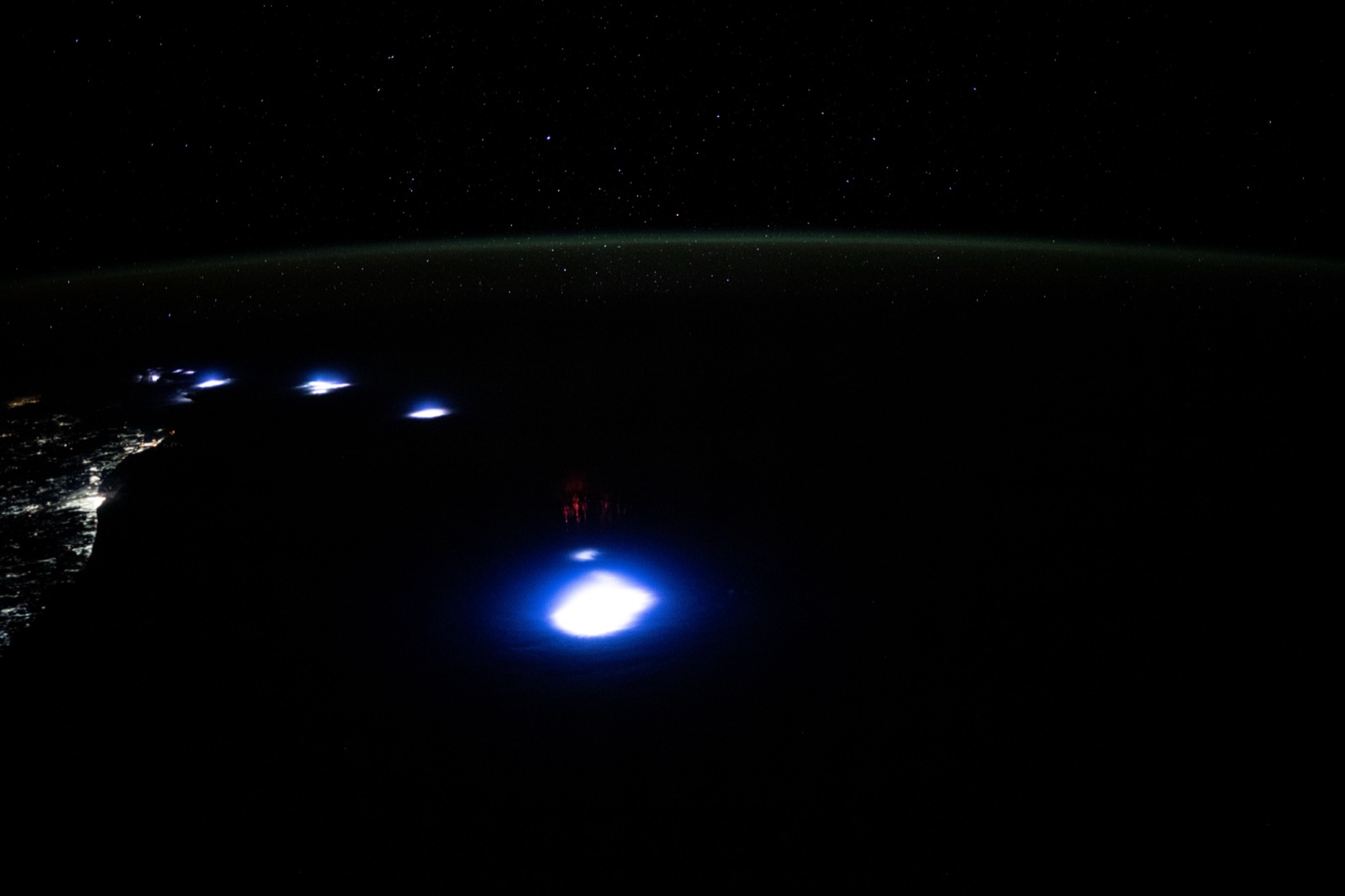
This hidden layer of the atmosphere isn't only putting on a light show. Researchers are finding that what happens up there can nudge the chemistry of the upper atmosphere, disturb radio signals, and is relevant to aircraft and spacecraft passing through. NASA even runs a citizen-science project, Spritacular, that crowdsources sprite photos from people on the ground to map them better.
And sprites have cousins: blue jets, narrow blue cones that shoot upward, and ELVES, vast expanding rings of light — each with its own physics, all part of the same secret weather happening above the weather.
Why I love this one
I think about farfadets the way I think about a good bug: something was happening the whole time, in plain sight, and we just didn't have the right instrument pointed at it. The sky above a summer storm has been firing red fairies into the dark for as long as there have been storms — and we only started seeing them in 1989.
Makes you wonder what else is flickering, just past the edge of where we usually look.
Photo: NASA / Matthew Dominick (ISS, public domain). Science via NASA and atmospheric research.