
The Beethoven Myth: Did the Ninth Symphony Really Size the CD?
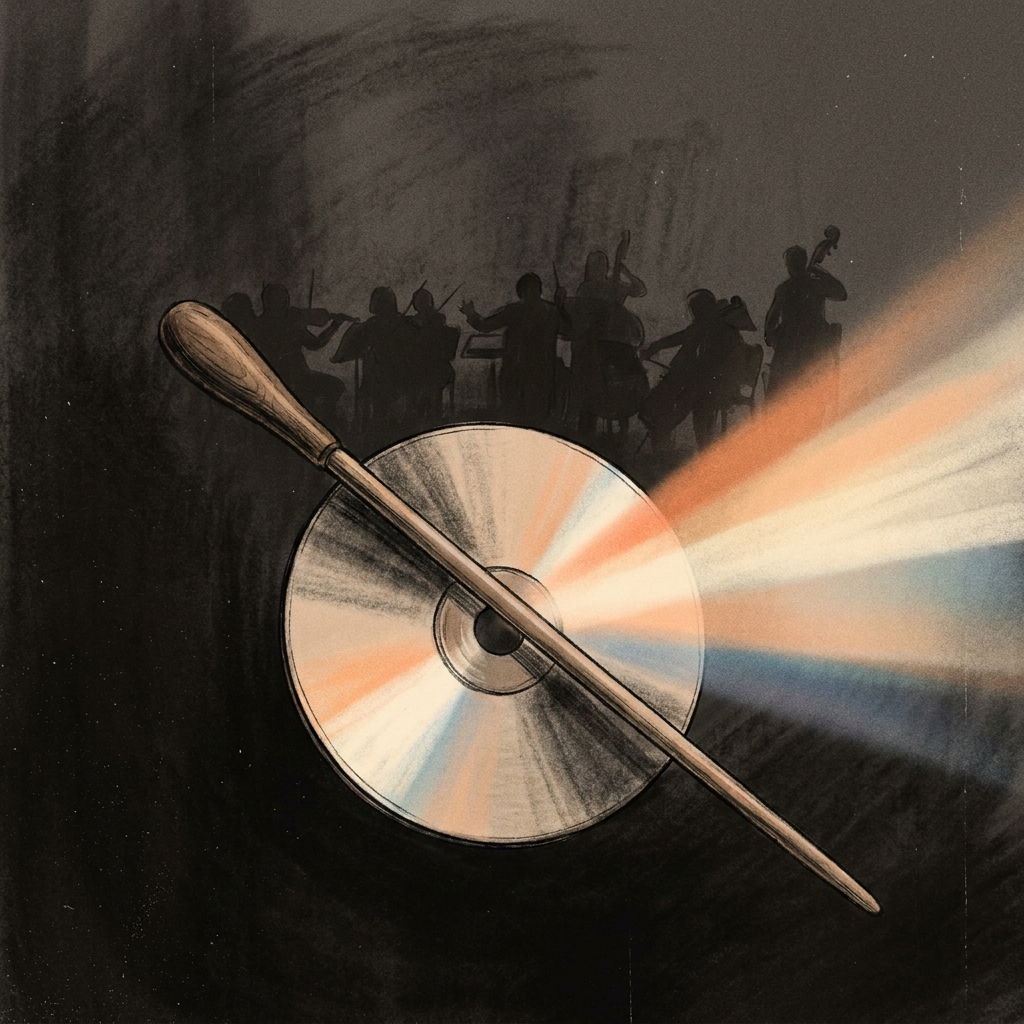
Here is one of the most beautiful facts you will ever hear about technology, and it has a problem: it is probably not true. The story goes that the compact disc holds exactly 74 minutes of music because that is how long it takes to play Beethoven's Ninth Symphony, and that the engineers at Sony and Philips sized the whole format around a single piece of music so that the Ode to Joy would never have to be interrupted by flipping a disc. It is the kind of story you want to be true. The trouble is that the people who actually built the CD remember it differently — and the truth, as usual, is half romance and half corporate knife-fight.

The legend, in its prettiest form
In the late 1970s, Sony and Philips formed a joint task force to invent a digital replacement for vinyl. Philips had the optics; Sony had the digital audio expertise. They agreed on almost everything — and then argued about size.
Enter Norio Ohga, the Sony executive who would later run the company. Ohga was not a typical electronics boss. He had trained as an opera singer, graduated from Japan's top music university, made his debut as a baritone singing Beethoven, and was close friends with the conductor Herbert von Karajan. He was, in other words, a man who genuinely cared how music sounded and how it was experienced.
The legend says Ohga insisted the disc be large enough to hold Beethoven's Ninth from end to end — all four movements, the chorus, the whole towering thing — without a break. Some versions credit his wife's favorite recording; some credit Karajan himself. The magic number became 74 minutes and 33 seconds, just enough for a famously slow 1951 performance conducted by Wilhelm Furtwängler at Bayreuth. The disc grew to 120 millimeters across to fit it. Beethoven, dead for 150 years, had reached out and set the dimensions of the digital age.
What the chief engineer actually says
The man best placed to settle this is Kees Schouhamer Immink, the Philips engineer who helped design the CD's core encoding and sat on that very task force. He has spent years gently correcting the myth — and he is the source for the more interesting truth.
Yes, Immink confirms, the Ninth was discussed. Ohga really did care about fitting an entire major work on one disc. But the diameter, Immink insists, was not decided by Beethoven. It was decided by a factory.
Here is the part the legend leaves out. Philips originally wanted an 11.5-centimeter disc — the same width as a Compact Cassette, which was elegant for shelving and marketing. Sony pushed for something smaller, around 10 centimeters, better for portability. But Philips had a quiet advantage: its subsidiary Polygram had already built a CD pressing plant in Hanover, Germany, tooled to stamp out 11.5-centimeter discs by the millions. If 11.5 became the standard, Philips would walk into the market with a factory and a head start while Sony was still building theirs.

The real reason: a corporate chess move
So Sony reached for Beethoven as a negotiating tool. The argument went: a serious music format should hold a complete symphony, and 11.5 centimeters isn't quite enough for the longest readings of the Ninth. Bump the disc to 12 centimeters and the playing time stretches to roughly 74 minutes — comfortably enough for the symphony.
The beauty of the move is geometric. A small bump in diameter is a large bump in usable surface: going from 11.5 to 12 centimeters is only a 5% wider disc, but it yields about 10% more recording area, because area grows with the square of the radius. That extra room bought the runtime Sony wanted.
And the bigger disc did something else, very deliberately: it made Polygram's Hanover plant obsolete overnight. The factory tooled for 11.5-centimeter discs couldn't press the new 12-centimeter standard. Philips' head start evaporated. As Immink puts it, the decisive factor "was not about Mrs. Ohga's great passion for music, but the money and the competition." Beethoven was real, but he was the cover story for a hard-nosed bit of corporate leverage.
So is the myth false?

Not exactly — and that is what makes it such a good story. When the fact-checking site Snopes investigated, it didn't stamp the tale "false." It rated it Undetermined. The 74-minute figure really is tied to a complete recording of the Ninth. Ohga really was a Beethoven-singing executive who wanted an opera or a symphony to fit on one disc. The symphony genuinely played a symbolic, motivating role in the room. What's false is the clean fairy-tale version where Beethoven, and Beethoven alone, set the spec. The runtime and the romance are real; the causation is muddier, tangled up with factories and market share.
There's a lovely epilogue. Decades later, on his 60th birthday, Norio Ohga did the thing the legend always implied was in his heart — he picked up a baton and became a conductor, leading the Berlin Philharmonic and other great orchestras. The man accused of shaping the CD around a symphony spent his retirement actually conducting them. Whether or not Beethoven sized the disc in your hand, he absolutely shaped the man who helped decide. And every time a CD splits a beam of light into a rainbow, it is still quietly playing both stories at once: the pretty one, and the true one.