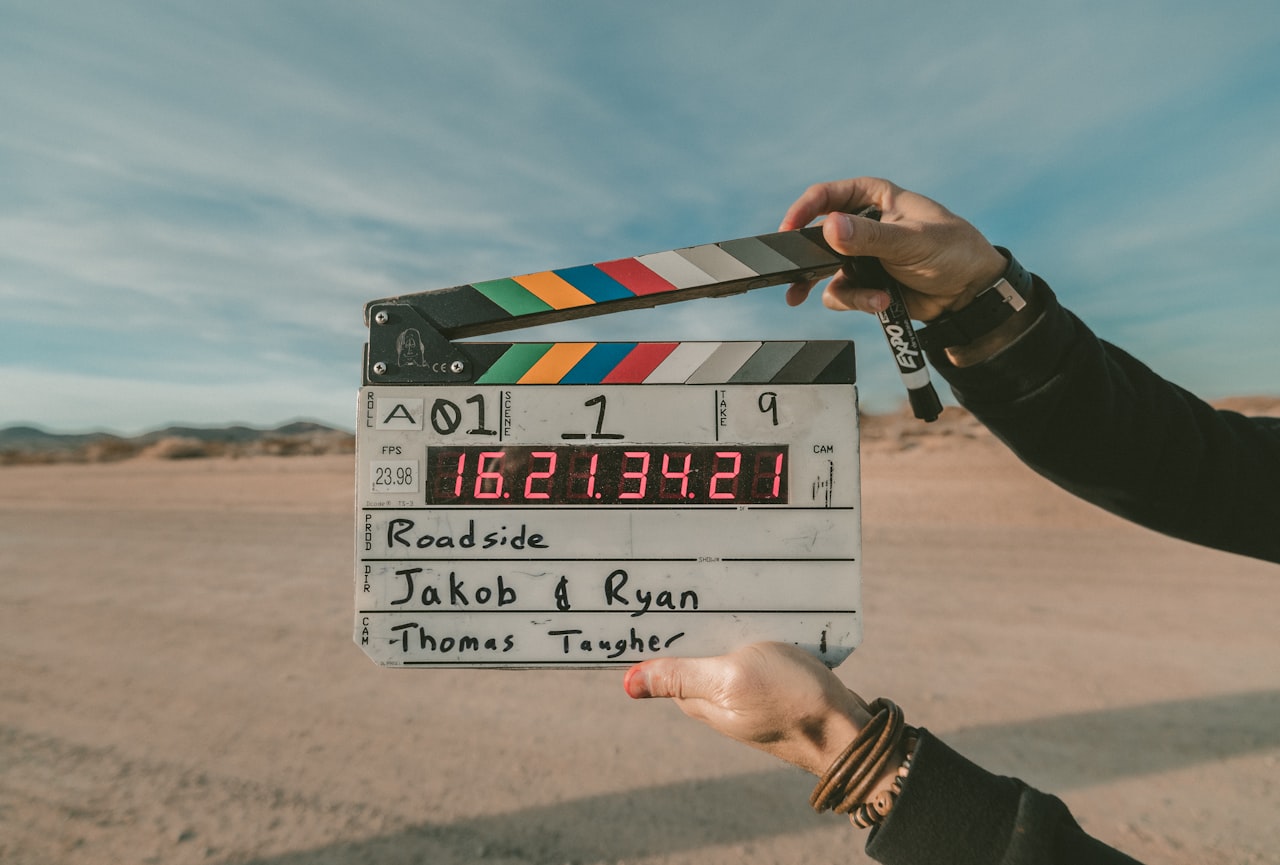
The Lens That Lies: How Widescreen Was Born to Beat Television
In the early 1950s, Hollywood looked across the living room and saw its executioner: a glowing wooden box in the corner that was emptying the theaters. Television was small, blurry, and black-and-white, but it was free and it was there, and millions of people stopped buying tickets to stay home with it. The studios needed a weapon the little screen could never copy — something so wide your eyes couldn't take it all in at once. The strange thing is that the weapon already existed. It had been sitting in a French laboratory for nearly thirty years, invented for the inside of a tank.

A lens born in the trenches
During the First World War, the French optician Henri Chrétien was working on a problem that had nothing to do with movies: how to give a tank crew a wider view of the battlefield without cutting a bigger, more vulnerable slit in the armor. His answer was a special arrangement of cylindrical lenses that bent light unevenly — squeezing a sweeping field of view, almost 180 degrees wide, down to fit a small viewing window. He called the optical trick the Hypergonar.
The clever part is that a cylindrical lens, unlike a normal round one, only curves the image in one direction. It can squash the world horizontally while leaving its height untouched. Chrétien realized this could do for film exactly what it did for a tank periscope: take something very wide and compress it sideways to fit a narrow opening. He patented it for cinema around 1926. And then, for almost three decades, essentially nothing happened. A single experimental film used it in 1929 and quietly vanished. The invention went to sleep.
Squeeze, then un-squeeze
Here is the whole idea in one breath. You put Chrétien's anamorphic lens on the camera, and it optically crushes a wide scene horizontally — actors look unnaturally tall and thin, like reflections in a funhouse mirror — so that an image twice as wide as normal fits onto ordinary 35mm film. The compression is about 2:1. Nothing is thrown away; the picture is simply folded sideways onto film stock the studios already owned, like vacuum-packing a duvet into a shoebox.
Then, in the cinema, you put a matching anamorphic lens on the projector that stretches the image back out by the same factor. The funhouse squeeze reverses, the actors snap back to their right proportions, and a panorama roughly 2.55 times wider than it is tall spills across the wall (that was the original CinemaScope ratio in 1953; the modern anamorphic standard settled at 2.39:1) — far wider than any television could dream of. No new film, no new cameras, no rebuilt projectors: just a clever piece of glass at each end of the journey. The wide screen was hiding inside the ordinary frame the whole time, folded up and waiting to be opened.
Fox bets the studio on a forgotten Frenchman
By 1952, 20th Century Fox was desperate, and an engineer in its research department remembered Chrétien's dormant lens. The inventor was 73 years old. Fox sent its technical people to Paris, signed the first agreement in early 1953, and renamed the Hypergonar process something far catchier: CinemaScope. Studio boss Darryl Zanuck was so convinced it would rescue the company that he called the French system "Fox's savior" and bet the studio's slate on it.
The first film out the door was The Robe, a Biblical epic about a Roman tribune at the crucifixion, released in September 1953. It was the first feature ever shown in CinemaScope, and it was a deliberate flex: huge crowds, vast skies, sweeping Roman vistas — all the things a small living-room television could never contain. Fox was so unsure theaters could handle the new format that they hedged, shooting many scenes twice, once with the anamorphic lens and once "flat," so cinemas without the special gear could still play a normal version. For decades, that flat copy was the one television aired — the very enemy CinemaScope was built to defeat, quietly screening the watered-down cut.
The trick that never left
The gamble paid off. Audiences poured back into theaters to be swallowed by an image their living rooms could never produce, and within a couple of years rival studios scrambled out their own widescreen systems. But the real surprise is that Chrétien's two-lens sleight of hand never actually retired. The squeeze-and-stretch principle is still alive on professional film and digital cameras today, and modern anamorphic lenses are prized not just for width but for their flaws — the horizontal blue streaks across bright lights, the gentle oval blur in the out-of-focus background, the dreamlike stretch at the edges of the frame.
Directors deliberately seek out those imperfections because they read, to our eyes, as "cinematic." We now buy software filters and pricey lenses just to fake the look on footage that doesn't need it. The lens distortions a 1953 audience would have called artifacts are now the very texture of a blockbuster. So the next time a film opens on a horizon stretched impossibly wide and some light flares into a long blue dash across the frame, remember where that shape was born: not in a Hollywood lab, but in the cramped dark of a First World War tank, where a French optician was simply trying to help a soldier see a little more of the world without getting shot.