
The NTSB Wants Rail Workers Off Pushed Railcars After 14 Deaths. The Rules Left the Call to Riders.
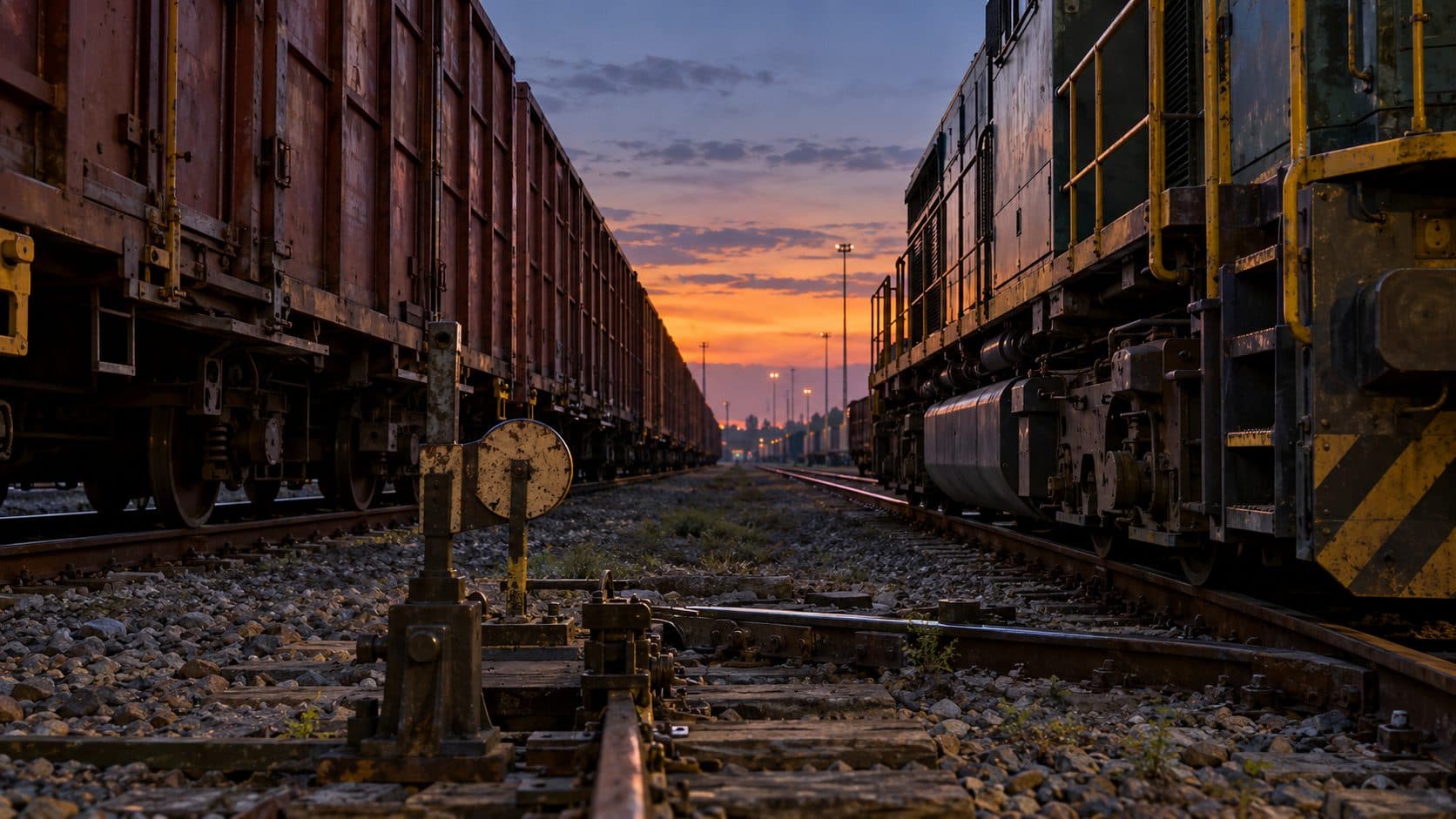
On September 21, 2026, the National Transportation Safety Board asked the Federal Railroad Administration (FRA) and every Class I railroad, the largest US freight carriers, to stop letting workers ride railcars to watch the track during shoving movements. The recommendations come from report RIR-26-15, dated September 17. The report covers 16 accidents investigated by the NTSB since October 2020 in which a worker riding equipment during a shove was killed or seriously injured. Fourteen died. Two were seriously injured. The press release adds that the board had opened two more investigations since August.
"Railroads have safer alternatives, and they should use them," said Chairwoman Jennifer Homendy.
I do not work in rail. I am CTO of a LegalTech built on Claude, and I orchestrate much of my work with Claude Code, deciding which actions an agent may take on its own and which wait for my approval. So the question I bring to any safety report is where the last check sits, and what the person doing it can see from where they stand. The report answers that for rail in uncomfortable detail.
What a shoving movement is
A shoving movement is a locomotive pushing railcars from the rear, common in yard switching. Because the locomotive is behind the cars, whoever runs it usually cannot see the track ahead of the leading car. Someone has to watch it, confirm it is clear and give signals. The regulation calls this point protection.
Federal regulation, 49 CFR 218.99, allows that person to ride the equipment; in the report's cases, riders stood on a side ladder, an end ladder or the platform of the lead car. Riding is generally faster than walking and less tiring. It also puts a person on the outside of a moving train, without the seatbelts, restraints or enclosures that, the report notes, are federally required on other equipment designed to be ridden.
The cases show four ways this goes wrong. Close clearances: in Cumberland, Maryland, in 2023, a CSX conductor trainee was caught in a 7-inch gap, about 18 centimeters, between the car he was riding and the handrail of a locomotive parked on the next track. Falls: in Tupelo, Mississippi, in 2020, a conductor fell from the lead car into the train's path when the engineer slowed. The physics is slack action: couplers and draft systems allow limited movement between cars, by design, to absorb shocks, and when the speed changes, that play can produce sudden forces the rider does not expect. Grade crossings: in Houston in 2021 and Cleveland in 2023, a motor vehicle collided with the lead car the conductor was riding. Derailments: in El Paso in 2022, one of two derailed cars overturned and struck the conductor.
The 16 run from Richmond, Virginia, on October 12, 2020, to Calera, Alabama, on December 13, 2025: roughly one every four months. The report lists 13 as completed investigations, 3 as ongoing. Of 20 conductor fatalities reported to the FRA between January 2020 and July 2025, 14, or 70%, involved conductors riding trains during shoving movements. A joint working group of the FRA, railroads and unions counted 34 switching fatalities from 2011 to 2021; 27 of them, 79%, involved a shove.
The rule said where to look, not where it was safe to stand
On where the person protecting the shove should be, the regulation's wording is "properly positioned to make the observation." In the NTSB's words, it only requires that employees can see the movement, "not that they are in the safest position during the movement itself."
The guidance pushed the judgment down to the same person. After the 2023 accidents in Baltimore and Cumberland, the FRA issued two safety bulletins. Both say employees should ride only when necessary and after a job briefing, then add: "Further, employees should only ride equipment after determining it is safe to do so." Railroad safety rules say it their own way: ride "only if necessary" at BNSF, "only when duties require" at Union Pacific.
So the last safety check was the rider, outside a moving car, with whatever he could see. Cumberland shows the limit. CSX's own rule 2102.1 prohibits riding through close-clearance areas. But that clearance existed only when equipment was stored on the adjacent track, and it was not marked. The NTSB found no evidence that the conductor had seen it. A rule that depends on the rider noticing a hazard offers little against one nobody documented.
Local rules also collided. In Baltimore, the trainee was following a grade-crossing rule that barred riding the bottom step. It restricted his footing and reduced his stability; he fell when a change in speed caused slack action. The NTSB found CSX's operating rules deficient. A rule written for one hazard made another worse.
The briefing covered the task
Federal rules require a job briefing before a shove. It must cover how the engineer and the person directing the move will communicate and how point protection will be provided. It does not have to cover hazards.
In Denver, in 2025, a BNSF crew shoved part of their train through a crossover switch lined for an adjacent track and hit standing railcars. The yardmaster told investigators that briefings "can happen on the lead, it can happen on a locomotive, it can happen in a crew room, it happens anywhere," and that, beyond conditions to watch for such as water on the track, they generally did not address specific hazards. BNSF called them job safety briefings. The radio recordings show no discussion of switch alignment. The NTSB found that a hazard-focused briefing could have prompted the conductor to check every switch on the route.
The regulation also says the person directing a shove "shall not engage in any task unrelated to the oversight" of the movement, yet in Cumberland and Baltimore the shove was also a training session. And the NTSB writes that in many investigations, employees rode "without supervisory objection, even when safer methods of point protection were available."
Each layer pointed to the next
In October 2023, after the Houston investigation, the NTSB asked for a narrow fix: ground protection for shoves through crossings equipped only with flashing lights or passive warning devices. In January 2024, the committees behind two common rulebooks, GCOR and NORAC, replied that they manage operating rules, not safety rules, cited the increased injury risk of protecting a shove from the ground, and said they would change nothing without a federal rule change. On March 5, 2026, the FRA told the NTSB informally that the existing definition of "track is clear" was sufficient. Watco, the holding company that owns the Houston railroad, had followed a GCOR exception that let crews skip ground protection when they could clearly see no traffic; after the accident it removed that exception on all 47 of its US railroads. The GCOR rule, the report said in September, remained unchanged.
The September report closes both 2023 recommendations as superseded and goes after the practice itself. Its first finding: riding equipment during shoves "is unjustifiably used" given the risk and "the availability of alternative methods of point protection." The alternatives it lists: a worker positioned at the end of the movement, walking alongside, a utility vehicle, shove lights wired to the track circuits, fixed yard cameras viewable at kiosks. It also asks for documented, site-specific hazard analyses, shared with employees and used in the briefing.
What the evidence does not show
The report gives no denominator: how many shoves are ridden each year. So there is no risk rate, and 14 deaths in 16 accidents does not mean riding kills seven times out of eight: the 16 are, by definition, accidents in which a rider was killed or seriously injured. It does not quantify the injury risk of the alternatives, or what cameras and shove lights would cost. Union Pacific's point-protection cameras, the report says, are mounted on locomotives and not yet used in shoving movements. And these are recommendations: the only FRA response the report cites, an informal one in March 2026, said the existing definition was enough. One inconsistency: a sentence in the body counts Denver as fatal; the case table, the totals and an FRA safety alert from August 2025 record that conductor as seriously injured.
What I take from it
A rail yard is not a codebase, and the stakes are not comparable. What transfers, as an analogy only, is the structure of the check.
- Find the sentence that hands the risk to the person doing the work. "Only ride equipment after determining it is safe to do so" is not a control. In an agent workflow, the equivalent is a confirmation prompt approved from a view that hides what the action will touch.
- Brief hazards, not steps. A release checklist that only says who does what and how we will talk is a task-focused briefing, the kind the NTSB found in Denver. Add one line: what is different on this site today.
- Document temporary hazards. Cumberland's clearance existed only when something was parked next door. In software, that is the temporary flag or the migration in progress.
- Do not give the watcher a second job, such as onboarding someone.
- When the exceptions pile up, remove the exposure. Rules by car type, by step, by crossing: the NTSB stopped patching and asked for the practice to end.
The rule told each worker where to look. It never asked whether the place he stood to look from was safe.
Sources
- National Transportation Safety Board, "Prohibit Riding Railroad Equipment During Shoving Movements" (Railroad Investigation Report NTSB/RIR-26-15) (report date September 17, 2026; read October 20, 2026)
- National Transportation Safety Board, "NTSB Calls for Better Protection of Rail Workers During Shoving Movements" (September 21, 2026)
- Title 49 Code of Federal Regulations, section 218.99
- Federal Railroad Administration, SOFA Alert, August 5, 2025 (Denver)