
You Are Part Bacteria
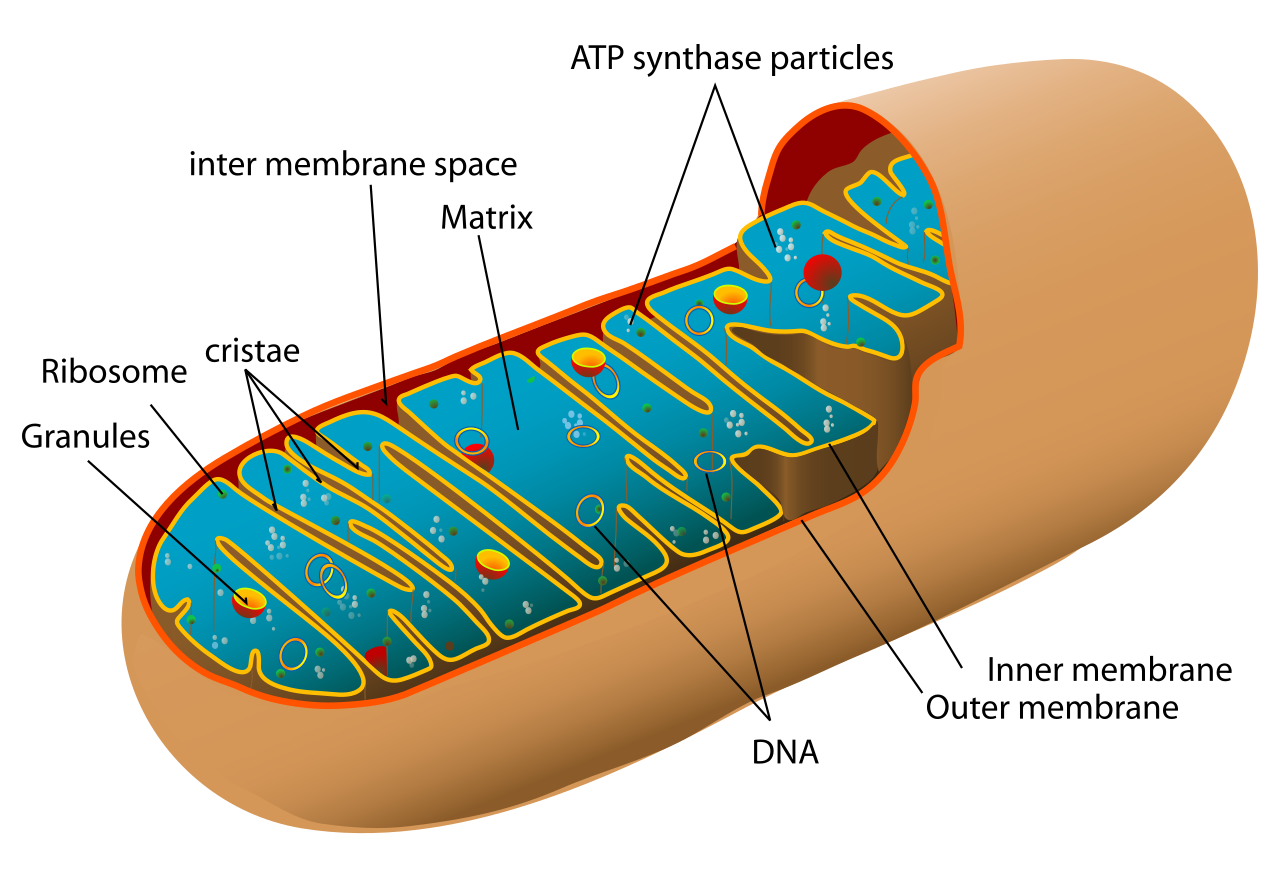
Right now, in every cell of your body, there are hundreds of tiny structures quietly burning sugar and oxygen to keep you alive. They have their own membranes, their own machinery, and — here is the strange part — their own DNA, separate from the DNA in your cell's nucleus. That is not a leftover or a glitch. It is a fossil. Roughly a billion and a half years ago, your ancestors swallowed a bacterium and never let go. You are, quite literally, a partnership between two kinds of life that decided to merge.
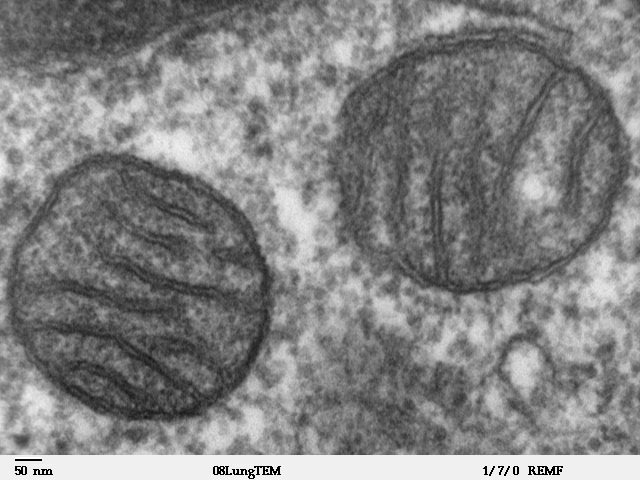
The power plants that came in from the cold
The structures are called mitochondria, and biology textbooks love to call them "the powerhouse of the cell." It is a tired phrase, but it is true: mitochondria take the food you eat and the air you breathe and convert them into ATP, the molecule that powers nearly everything your cells do — thinking, moving, healing, even reading this sentence. A single hard-working cell, like a heart muscle cell, can hold thousands of them.
What the textbook phrase hides is where they came from. Mitochondria did not evolve as part of our cells. They arrived. Their closest living relatives are not human cells at all — they belong to a group of free-living bacteria called the alphaproteobacteria, the same broad family that includes Rickettsia, the microbe behind typhus. Once upon a time, the ancestor of every plant, animal, fungus, and amoeba was a single cell that engulfed one of these bacteria. Instead of digesting it, the host kept it. The bacterium kept its end of the bargain by producing energy with ruthless efficiency.
The smoking gun is in the DNA
How do we know any of this actually happened, rather than being a nice story? The evidence is hiding in plain sight, inside the mitochondria themselves.
Your mitochondria still carry their own genome — a tiny, circular loop of DNA, just like a bacterium's, completely unlike the long linear chromosomes packed into your nucleus. In humans, this loop is exactly 16,569 base pairs long and holds 37 genes. That is almost nothing compared to the roughly 20,000 genes in your nuclear DNA, but it is unmistakably bacterial in shape, in structure, and in the way it is read.
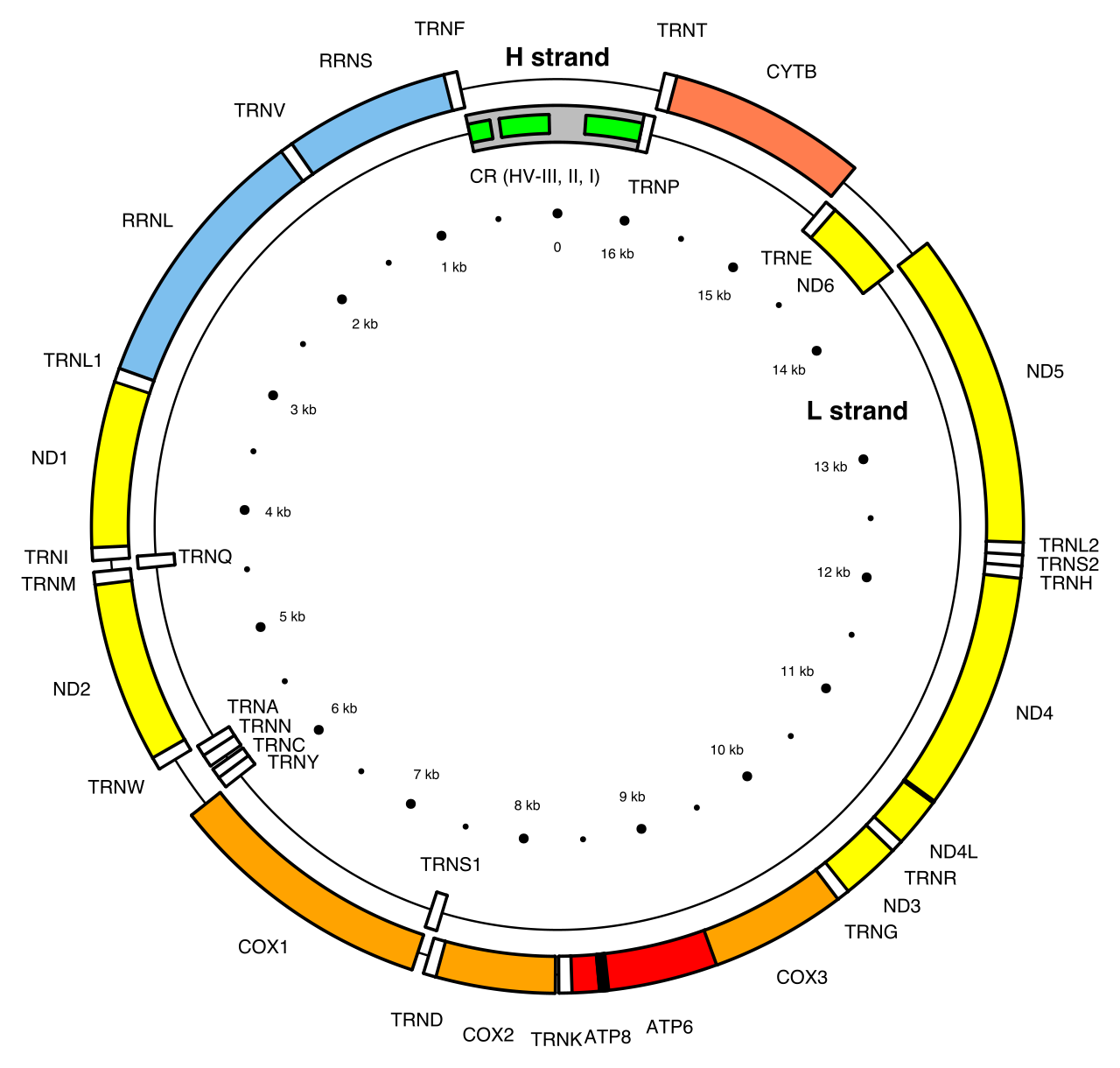
There is another tell. Mitochondrial DNA is inherited almost entirely from your mother. When a sperm fertilizes an egg, the father's mitochondria are usually destroyed. So the loop of DNA inside your cells traces an unbroken maternal line — mother to mother to mother — stretching back through deep time. It is the thread geneticists follow to reconstruct human migrations, and the reason scientists can speak of a "Mitochondrial Eve."
Why the deal nearly disappeared
If mitochondria were once independent organisms, why are they now so utterly dependent? Over a billion and a half years of cohabitation, most of the captured bacterium's genes did not stay put. They migrated, one by one, into the host cell's nucleus, where they were absorbed into the main genome. Today the great majority of the proteins a mitochondrion needs are coded for in the nucleus, built elsewhere in the cell, and shipped back in.
That slow leak of genes is why only 37 stubborn ones remain on the mitochondrial loop, and it is the final proof that two organisms truly fused into one. The merger was so complete that the boundary nearly vanished. Neither partner can survive alone anymore.
The woman who was right when everyone said no
The idea that a cell could be an alliance of former strangers sounds obvious now. It was once close to heresy. In 1967, a young biologist named Lynn Sagan — later known as Lynn Margulis — wrote a paper arguing exactly this: that mitochondria and chloroplasts were once free-living bacteria, captured and domesticated. The paper, "On the Origin of Mitosing Cells," was rejected by something like fifteen journals, some of which did not even bother to read it. The mainstream view was that complex cells had assembled their parts from within, gradually, the ordinary way. The notion of one organism moving in with another struck many scientists as wild.
She kept submitting. It was finally published, and then largely ignored for another decade — until the genetic evidence began rolling in and proved her right in detail. Today, endosymbiosis is uncontested textbook knowledge, taught to teenagers as plain fact. Margulis had seen, before the tools existed to confirm it, that cooperation could be as powerful an engine of evolution as competition.
So the next time you climb a flight of stairs and feel your heart work, remember what is doing the burning. Buried in every beating cell is the descendant of a bacterium your ancestors caught and kept — a creature that signed a contract a billion and a half years ago, and is still, faithfully, keeping you alive.