
On Venus, a Day Is Longer Than a Year
Imagine waking up on a planet where you could celebrate your birthday before the sun has finished setting. On Venus, that absurdity is the law of the land. Our neighbour spins so slowly on its axis that a single rotation takes longer than one trip around the Sun. In other words: a day on Venus lasts longer than a Venusian year. It is one of the strangest clocks in the Solar System, and nobody is entirely sure who wound it.
The day that outlasts the year
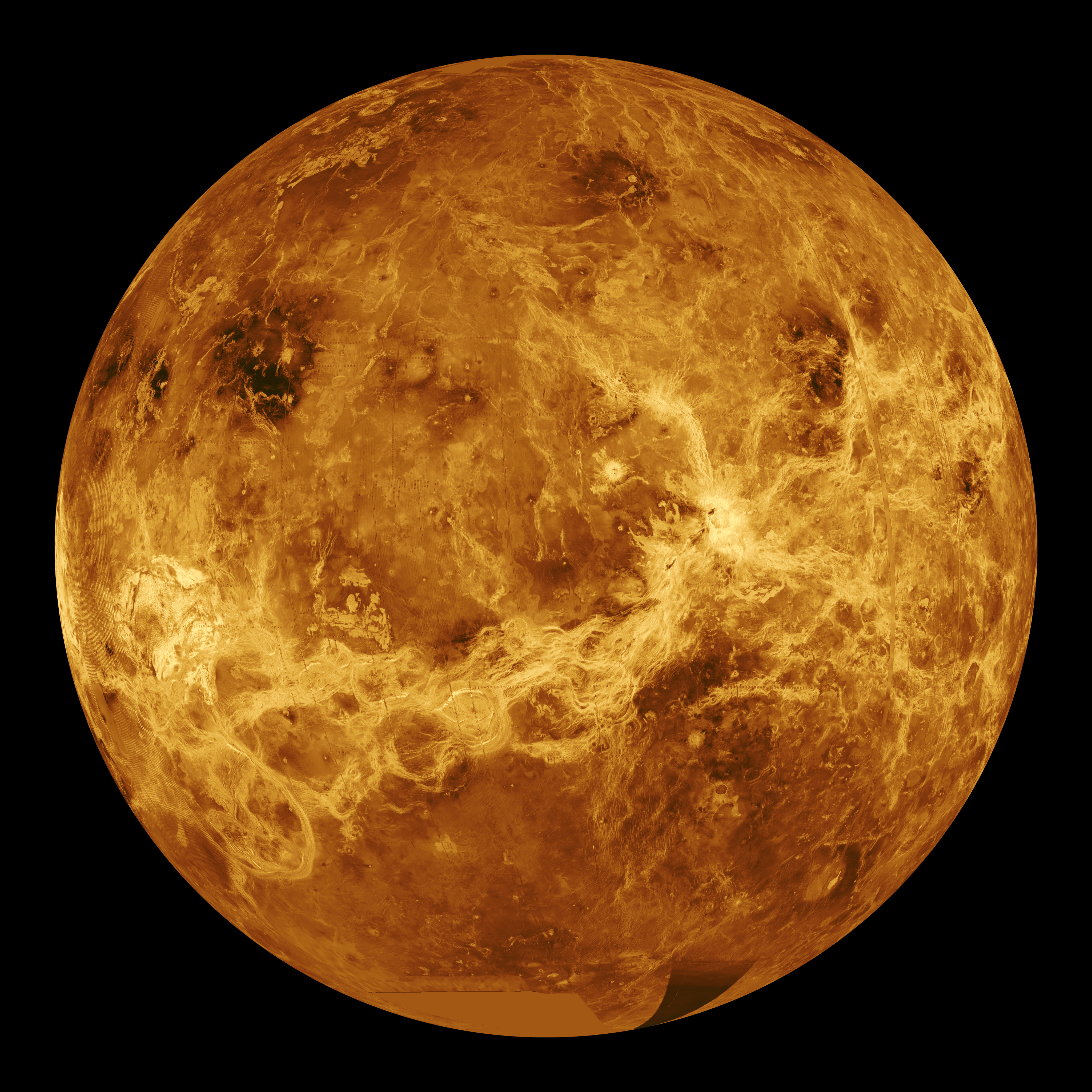
Let's get the numbers straight, because they really are that wild. Venus takes about 243 Earth days to turn once on its axis — astronomers call that the sidereal day, measured against the distant stars. But it only needs about 225 Earth days to complete one orbit of the Sun. Do the subtraction and you get the headline: the planet finishes a whole year roughly 18 days before it finishes a single spin.
No other planet pulls off this trick. Earth rattles through a rotation in 24 hours; Jupiter does it in under 10. Venus, almost exactly our twin in size and mass, behaves like a cosmic sloth, dragging itself around once every eight months while the calendar laps it.
Where the Sun rises in the west
There's a second twist, and it's a big one. Venus rotates backwards. Almost every planet in the Solar System spins in the same direction it orbits — a leftover signature of the swirling disk of gas and dust they all formed from. Venus goes the other way. This is called retrograde rotation, and the practical consequence is poetic: if you could stand on the surface and peer through the crushing clouds, you would watch the Sun rise in the west and set in the east.
That backwards spin also rescues us from the truly dizzying part. Because the planet turns one way while orbiting the other, sunrise to sunrise — what we'd actually call a "day" if we lived there — works out to about 117 Earth days. So a Venusian year contains not even two of its own solar days. You would see the Sun cross the sky fewer than two times before your next birthday came around.
Who slammed on the brakes?
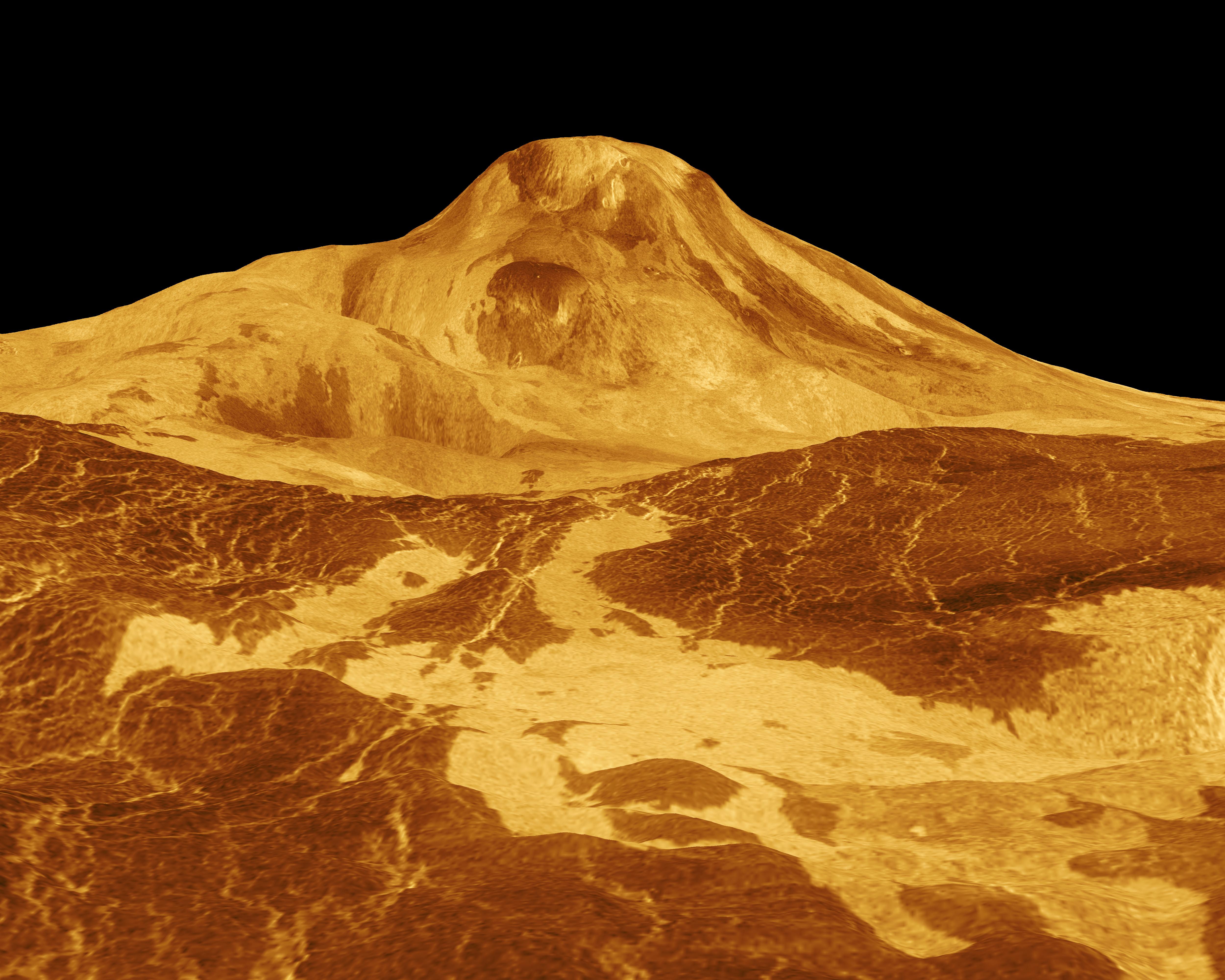
A planet doesn't just decide to spin this slowly and this wrong. Venus almost certainly started life like its siblings: turning fast and forwards, finishing a rotation in mere hours. Something stopped it, flipped it, or both. And the leading explanation is wonderfully counterintuitive — the culprit is the very air.
Venus wears a monstrously thick atmosphere, more than 90 times the pressure at Earth's surface, a blanket of carbon dioxide so dense it behaves almost like an ocean. When the Sun heats that atmosphere, it bulges and sloshes, creating what scientists call atmospheric thermal tides. These tides shove against the planet's rotation, and over hundreds of millions of years that gentle, relentless atmospheric push appears to be one of the main forces that braked Venus down and locked it into its strange retrograde crawl.
The Sun's gravity adds its own pull, trying to tidally lock Venus the way our Moon is locked to Earth. The result is a tug-of-war: gravity trying to stop the spin, the heated atmosphere trying to drive it backwards, and the planet settling into an uneasy equilibrium somewhere in between. Some researchers think a colossal impact early in Venus's history helped tip it over first; others argue the atmosphere alone could have done the whole job, given enough time. The debate is very much alive.
A world out of sync with itself
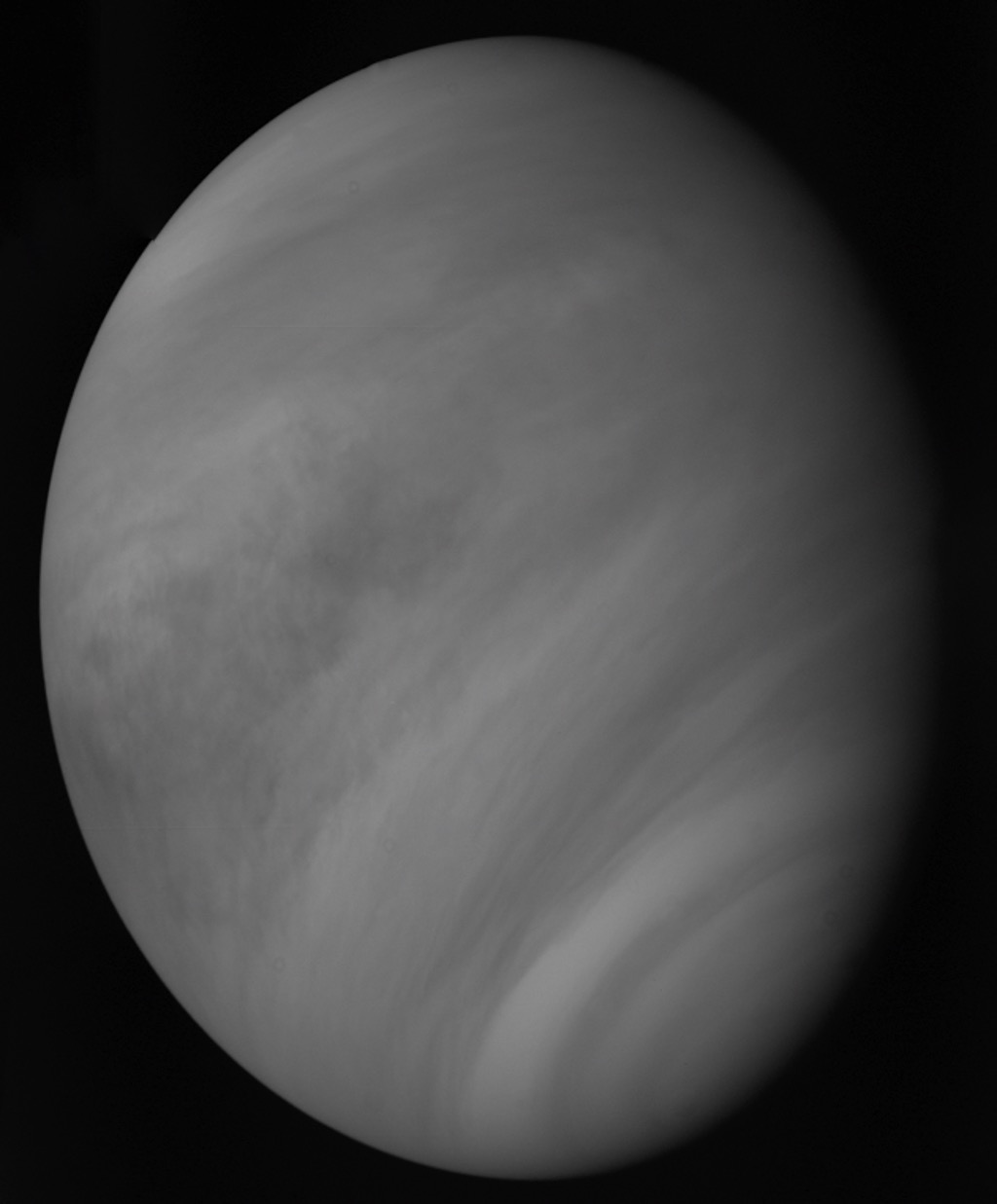
Here is the detail that makes me grin. While the rocky body of Venus crawls through its 243-day rotation, the clouds above it are sprinting. The upper atmosphere whips all the way around the planet in just four Earth days — a phenomenon called super-rotation, with winds racing some sixty times faster than the ground below. So Venus is a planet at war with its own schedule: a surface that can barely turn, wrapped in a sky that won't stop spinning.
It's a useful reminder that "a day" and "a year" aren't sacred cosmic constants. They're just the rhythms our particular rock happens to keep. Step next door, to a world close enough in size that we once called it Earth's twin, and the most basic units of time fold in on themselves. On Venus, you really could be a year older before tomorrow morning ever arrives.