Three-Strip Technicolor: The Camera That Filmed the World Three Times
When Dorothy steps out of her sepia farmhouse into the eye-watering greens and yellows of Oz, audiences in 1939 gasped — and most assumed somebody had simply painted the world brighter. They were wrong in the most wonderful way. That color wasn't a filter laid over the picture or a trick of fancy lighting. It was the result of a camera that secretly shot three movies at once, in black and white, and a printing process closer to a rubber stamp than to anything we'd call photography today.
One camera, three secret films
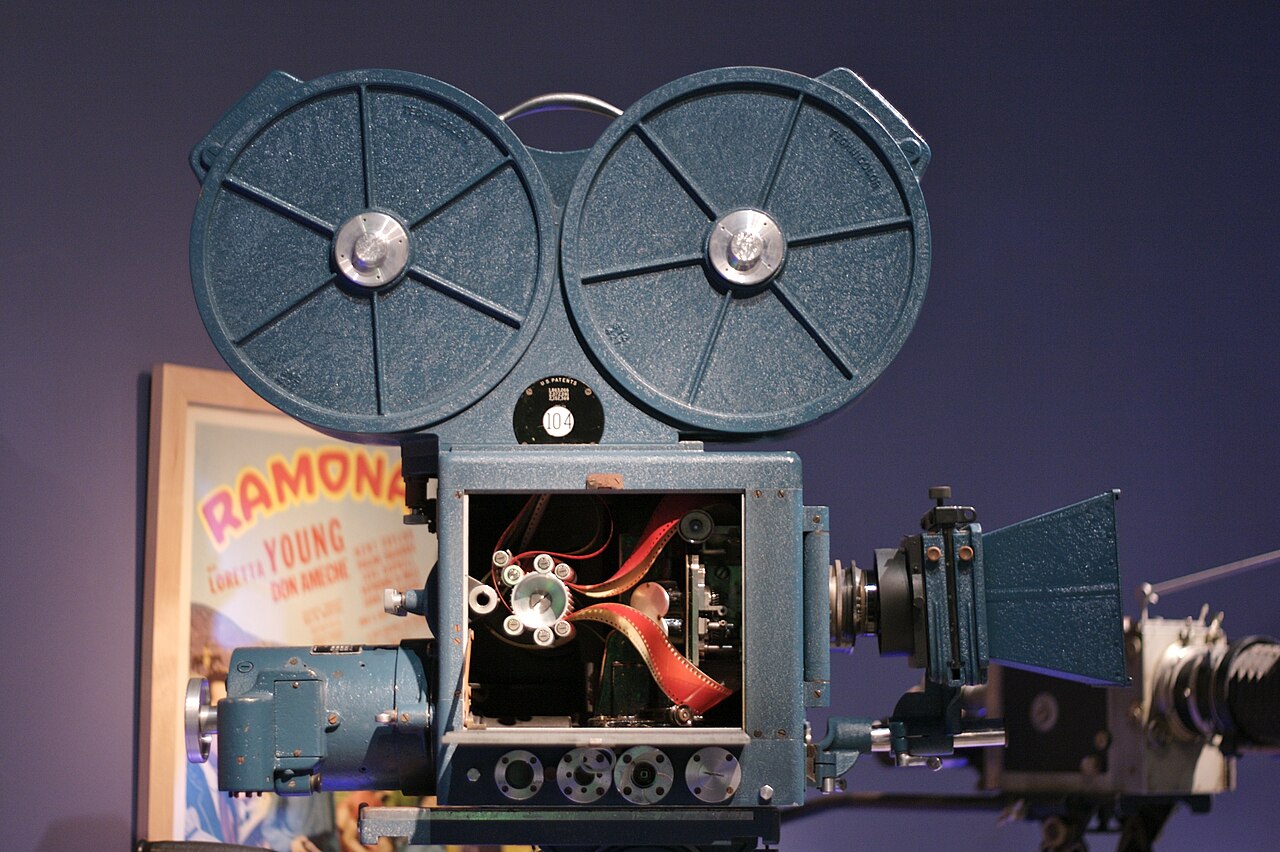
Inside a three-strip Technicolor camera sat a small block of glass — two prisms cemented into a cube — with a half-silvered mirror running through the middle on the diagonal. Light came through the lens, hit that mirror, and split. Part of it carried straight on to one strip of film. The rest bounced off at ninety degrees toward two more strips stacked together behind it.
Each path wore a colored filter, so each strip recorded only one slice of the spectrum: one for red, one for green, one for blue. None of these strips was in color. They were ordinary black-and-white negatives, each a grayscale ledger of how much of its color was present in every part of the scene. The camera was, in effect, three cameras crammed into one body, all staring through the same lens at the exact same instant. That last part mattered enormously: if the three views had been even slightly out of sync, the colors would never have lined up.
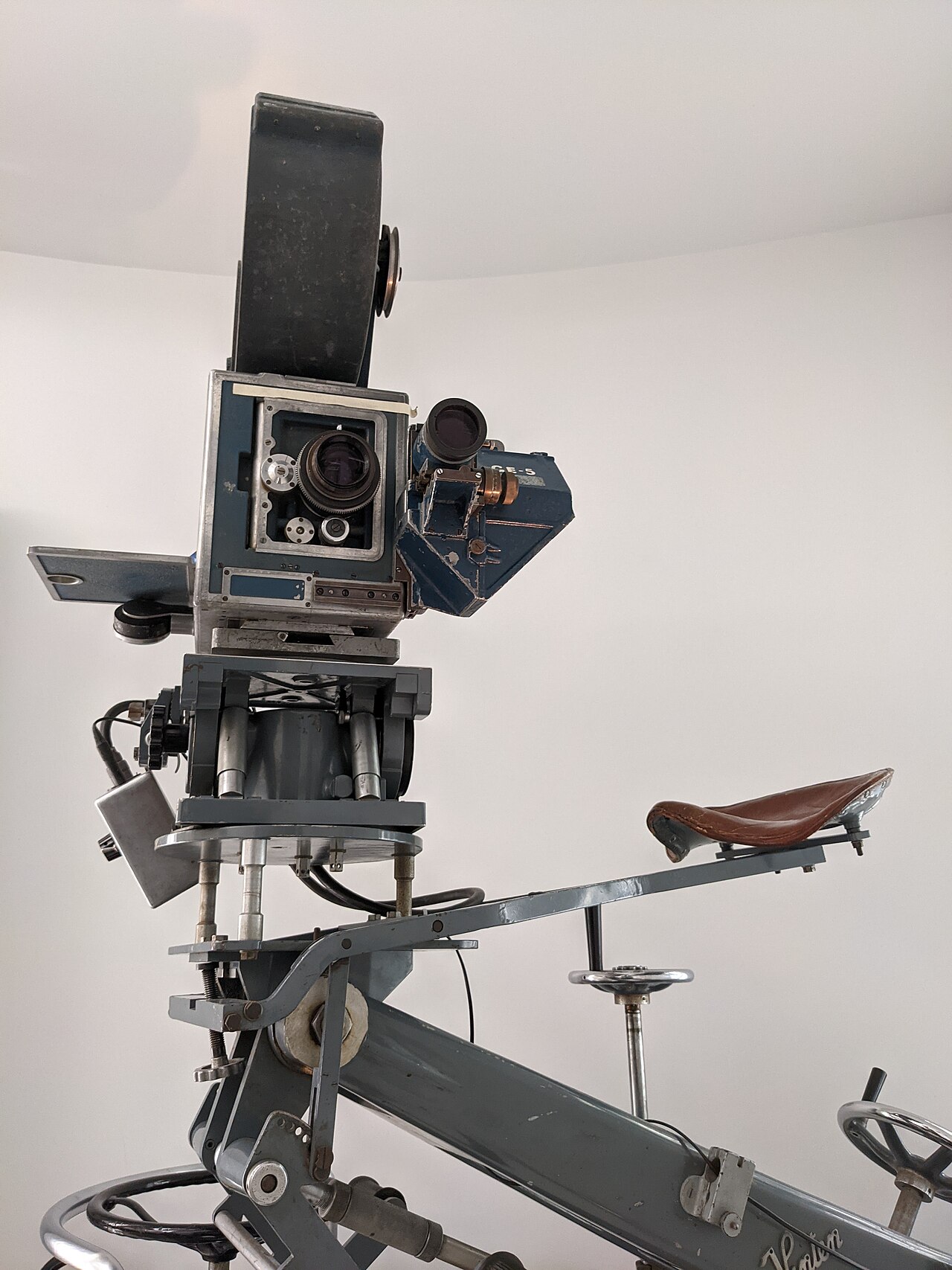
The price of this cleverness was bulk. These cameras were enormous, heavy, blimp-housed beasts built by the Mitchell Camera Corporation to Technicolor's specifications, and they ran roughly three times the length of normal film through their gates because they were feeding three strips at once. You didn't rent the camera, either — Technicolor leased it to you with one of their own technicians attached.
The color you saw was never on the negative
Here's the part that still makes people blink. When you watched a Technicolor film, you were not looking at any of those three negatives projected. You were looking at a print made by a process borrowed straight from the printing industry: dye imbibition, also called dye transfer.
From each black-and-white record, the lab made a matrix — a sheet of gelatin developed so that it swelled into a relief, thicker where more dye needed to go, thinner where less did, like a topographic map of a single color. Each matrix was then soaked in its complementary dye: cyan for the red record, magenta for the green, yellow for the blue. One by one, those inked matrices were pressed against a blank receiving strip in exact registration, and the dye soaked into the gelatin of the film rather than sitting on top of it — imbibed, hence the name.
It was, almost literally, a three-color rubber stamp applied to every single frame of a feature film. That's why old Technicolor prints have such a deep, dense, weirdly solid color — the dyes were richer and more stable than the colored couplers baked into later film stocks. It's also why they've aged so gracefully: a 1939 Technicolor print can look more vivid today than a 1985 movie, because those dyes simply don't fade the way later chemistry does.
A consultant for every shade
Technicolor didn't just sell you the camera and the prints. It sold you taste, whether you wanted it or not. Every production using the process came with a "color consultant" from the studio's Color Advisory Service, most famously Natalie Kalmus, who was credited on hundreds of films and had firm opinions about what colors belonged on screen. Directors found her exacting; some found her maddening. Vincente Minnelli grumbled that he couldn't do anything right in her eyes.
Her job, and the studio's quiet agenda, was to keep the color from screaming. Early Technicolor could look garish, and Kalmus pushed restraint, harmonized palettes, the careful saving of a bold red for the moment it would land hardest. The candy-bright look we now think of as "Technicolor" was, paradoxically, governed by someone constantly telling filmmakers to tone it down.
The look that outlived the machine
The big three-strip cameras were retired around 1955, made obsolete by single-strip color films like Eastmancolor that you could shoot in any ordinary camera, develop more cheaply, and edit without leasing a technician from a single company. The era of literally photographing the world three times at once was over almost as suddenly as it began — barely two decades, roughly 1932 to 1955.
And yet the look never left. When a modern colorist wants a frame to feel rich, nostalgic, larger than life, the word they reach for is still "Technicolor." Filmmakers and software try to fake those impossibly saturated reds and greens with digital grading, chasing a quality that originally came not from a camera at all, but from gelatin, dye, and a printing press stamping color into film one frame at a time. The machine is gone. The fingerprint it left on how we imagine vivid never washed out.