
STEVE: the purple ribbon amateurs discovered before NASA
One night in 2016, a handful of aurora chasers in Alberta tilted their cameras toward a thin purple thread of light arcing across the sky — far to the south of where the northern lights usually dance. It didn't behave like an aurora. It didn't sit where an aurora should. So, half-joking, they gave it a name borrowed from a children's movie: Steve. The name stuck. Then NASA got involved, and the joke turned into one of the most charming scientific discoveries of the decade.
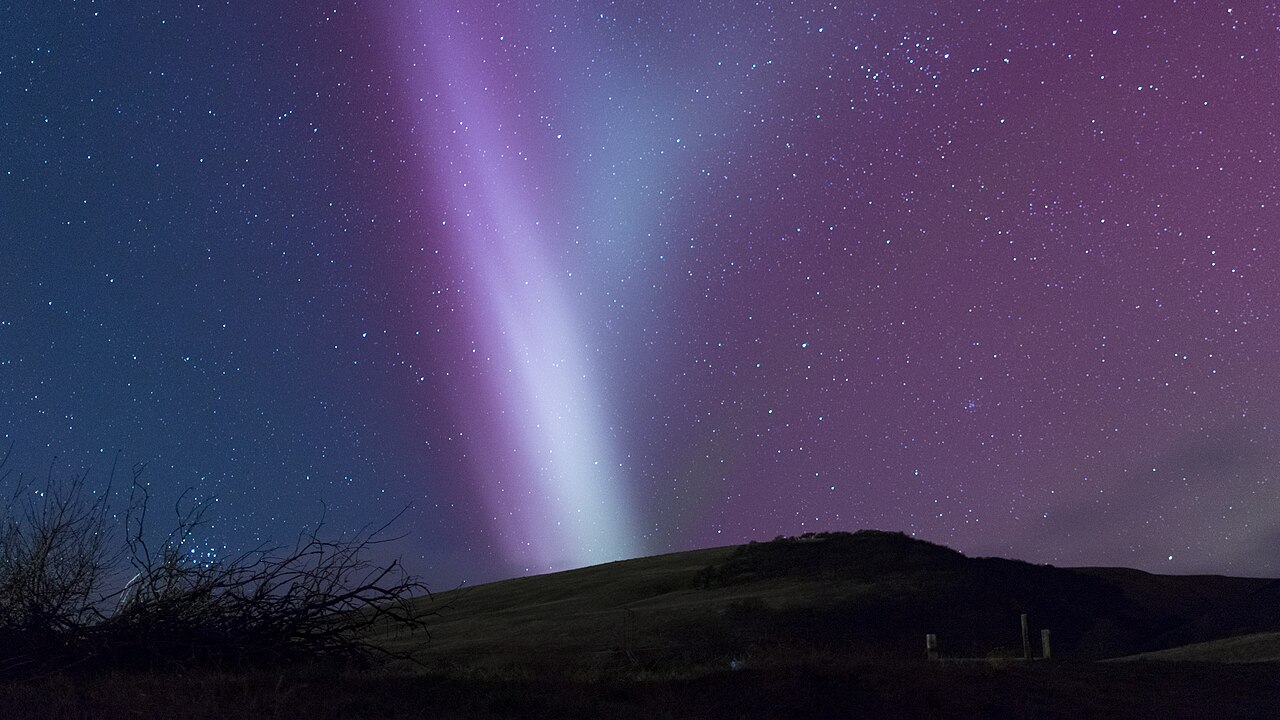
A ribbon that breaks all the rules
If you've seen the aurora borealis, you know its vocabulary: shimmering green curtains, slow waves of color, the whole show wrapped around the magnetic poles. STEVE speaks a different language. It's a narrow, near-straight ribbon — often mauve or pinkish-white — that runs east to west and can stretch for hundreds, even thousands, of kilometers. It shows up at much lower latitudes than the classic aurora, which is exactly why ordinary aurora hunters in southern Canada kept photographing something the textbooks didn't mention.
For years, people assumed it was a "proton arc." It isn't. STEVE turned out to be something genuinely new to optical science — not because it's rare, but because nobody had ever pointed the right instruments at the right patch of sky at the right time.
So what is it, really?
Here's the twist that makes STEVE so satisfying: it is not an aurora. A true aurora glows because charged particles rain down from space and slam into the upper atmosphere, lighting it up like a neon tube. STEVE's purple light comes from a completely different mechanism.
When the European Space Agency's Swarm satellites flew straight through one, they found a river of plasma — a subauroral ion drift, or SAID — tearing sideways through the sky at roughly 6 kilometers per second. That's a stream of charged particles being dragged across the neutral gas around them, and the friction heats everything to about 3,000 °C, sitting somewhere around 300 to 450 kilometers up. The ribbon itself is a ferociously hot, fast-moving channel about 25 km wide. The mauve glow is that superheated gas radiating its energy away.
In other words: an aurora is the sky being hit. STEVE is the sky being dragged.
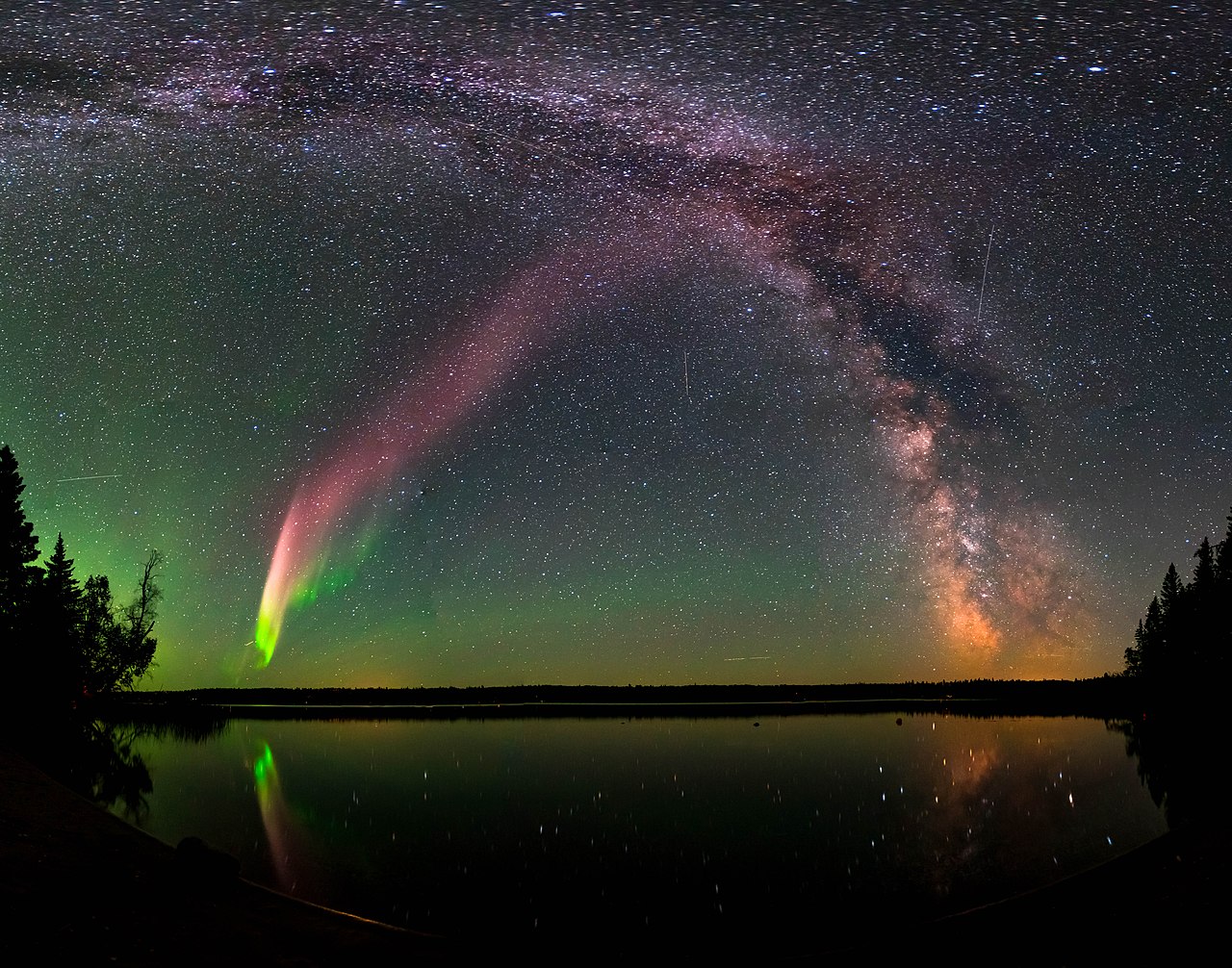
The picket fence
STEVE rarely travels alone. Beneath that smooth purple band, observers often catch a row of vertical green stripes — a structure researchers nicknamed the "picket fence." It looks like a tidy garden fence made of light, glowing green where the mauve ribbon glows pink.
And the picket fence keeps a secret of its own. Unlike the smooth, heat-driven STEVE ribbon, those green columns seem to involve energetic electrons after all — closer to ordinary auroral physics — which means STEVE and its little fence may actually be two different things happening side by side. Even now, scientists openly admit there are unsolved problems hiding in those few minutes of light. STEVE generally lasts only twenty minutes to an hour before fading.
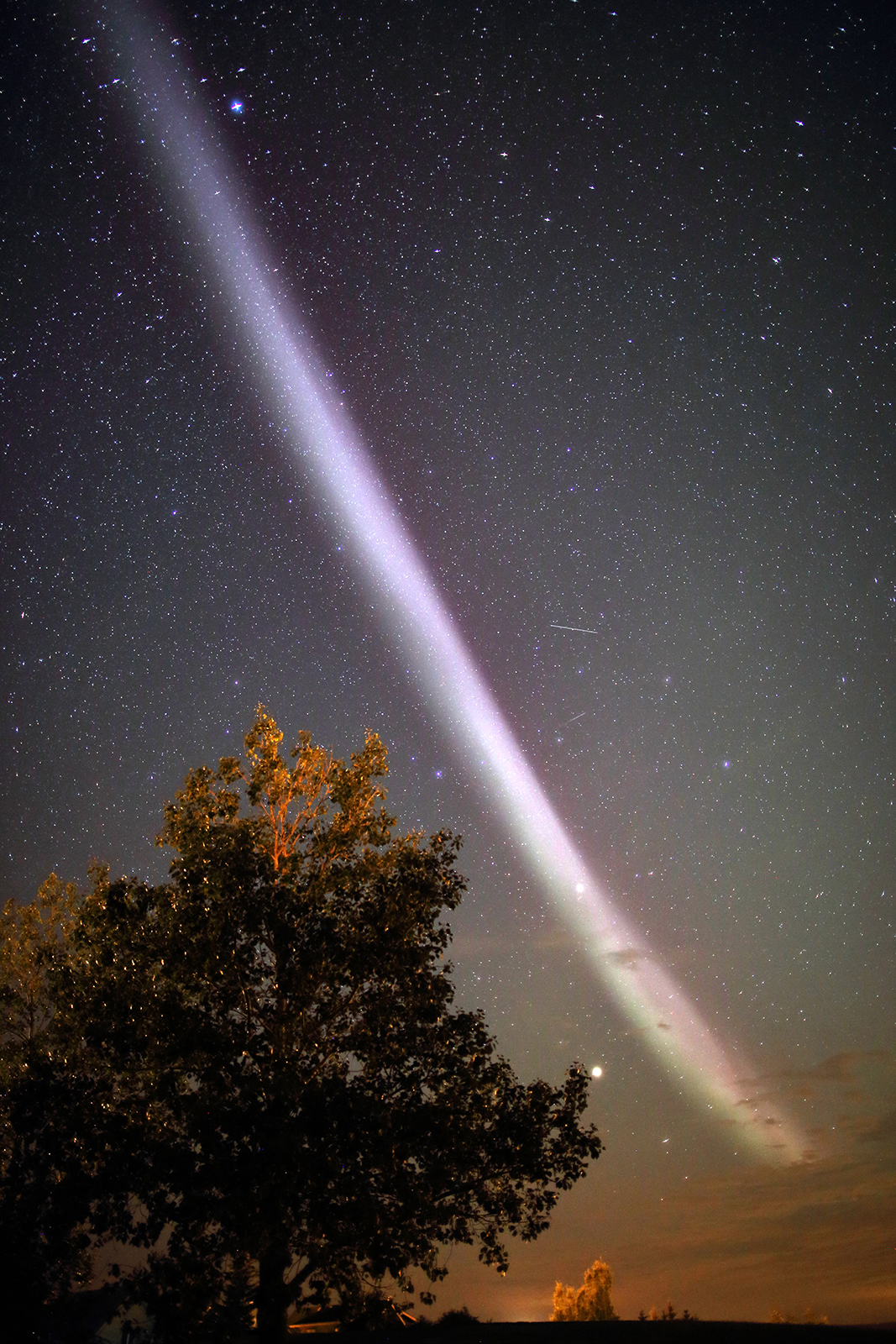
Citizen science at its best
What makes this story so warm isn't the physics — it's the people. STEVE is one of the rare modern discoveries that came from amateurs first and professionals second. The Alberta Aurora Chasers were a Facebook group of hobbyist photographers, and it was their relentless, well-documented images that caught the eye of a University of Calgary physicist, Eric Donovan, who connected their photos to the satellite data passing overhead.
The scientific backronym eventually assigned to it — Strong Thermal Emission Velocity Enhancement — was reverse-engineered so the acronym would spell the name the photographers had already chosen. The professionals didn't rename it. They kept Steve.
Why "Steve"?
And the name itself? It comes from the 2006 animated film Over the Hedge. In it, a pack of nervous animals discovers a mysterious, towering hedge and, terrified of the unknown, decides to make it feel less scary by giving it the most ordinary name they can think of: Steve. The aurora chasers, faced with a glowing river of 3,000-degree plasma they couldn't explain, did exactly the same thing. They looked up at one of the strangest lights in the sky — and called it Steve.