
Noctilucent Clouds: The Highest Clouds on Earth
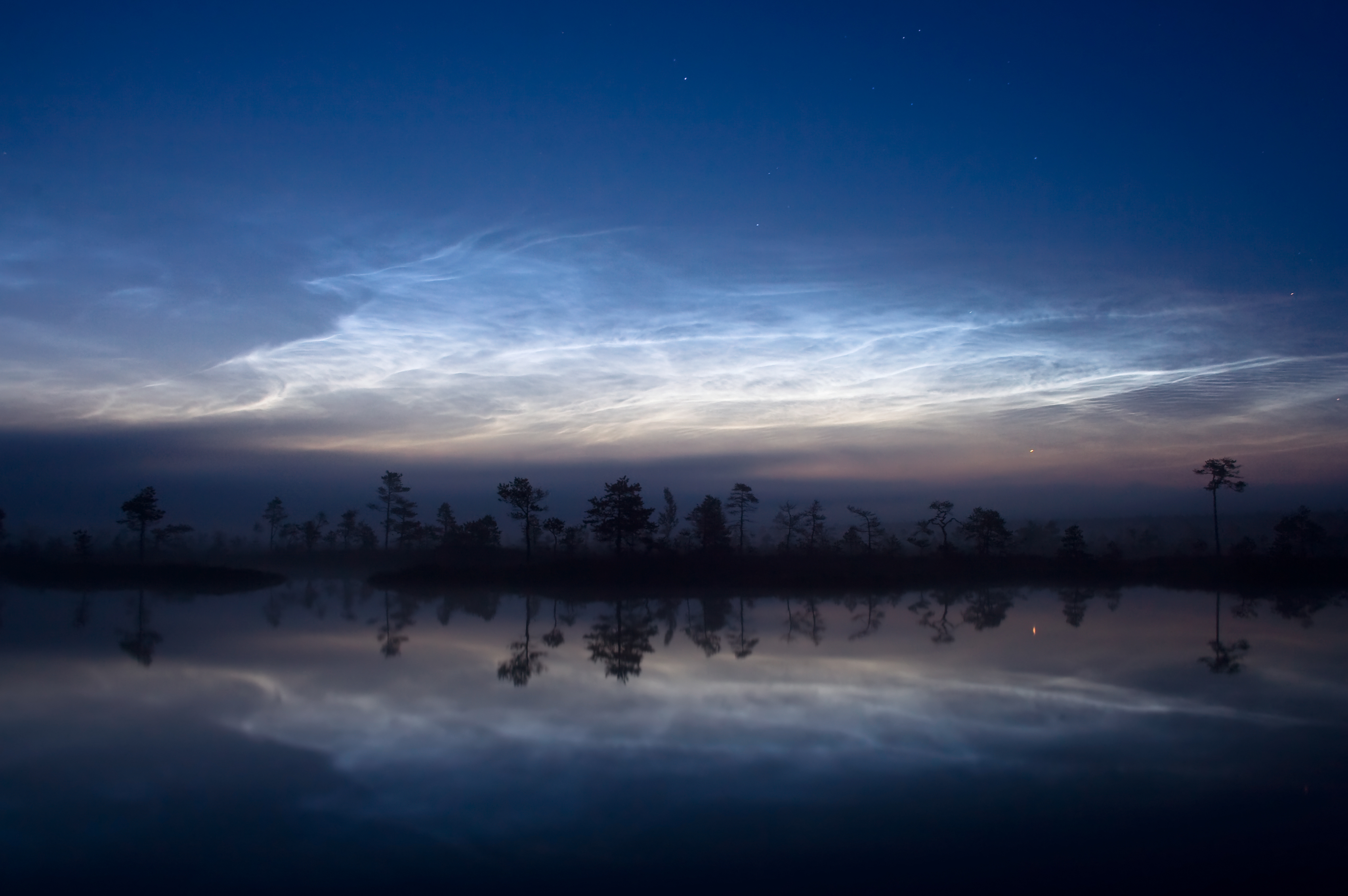
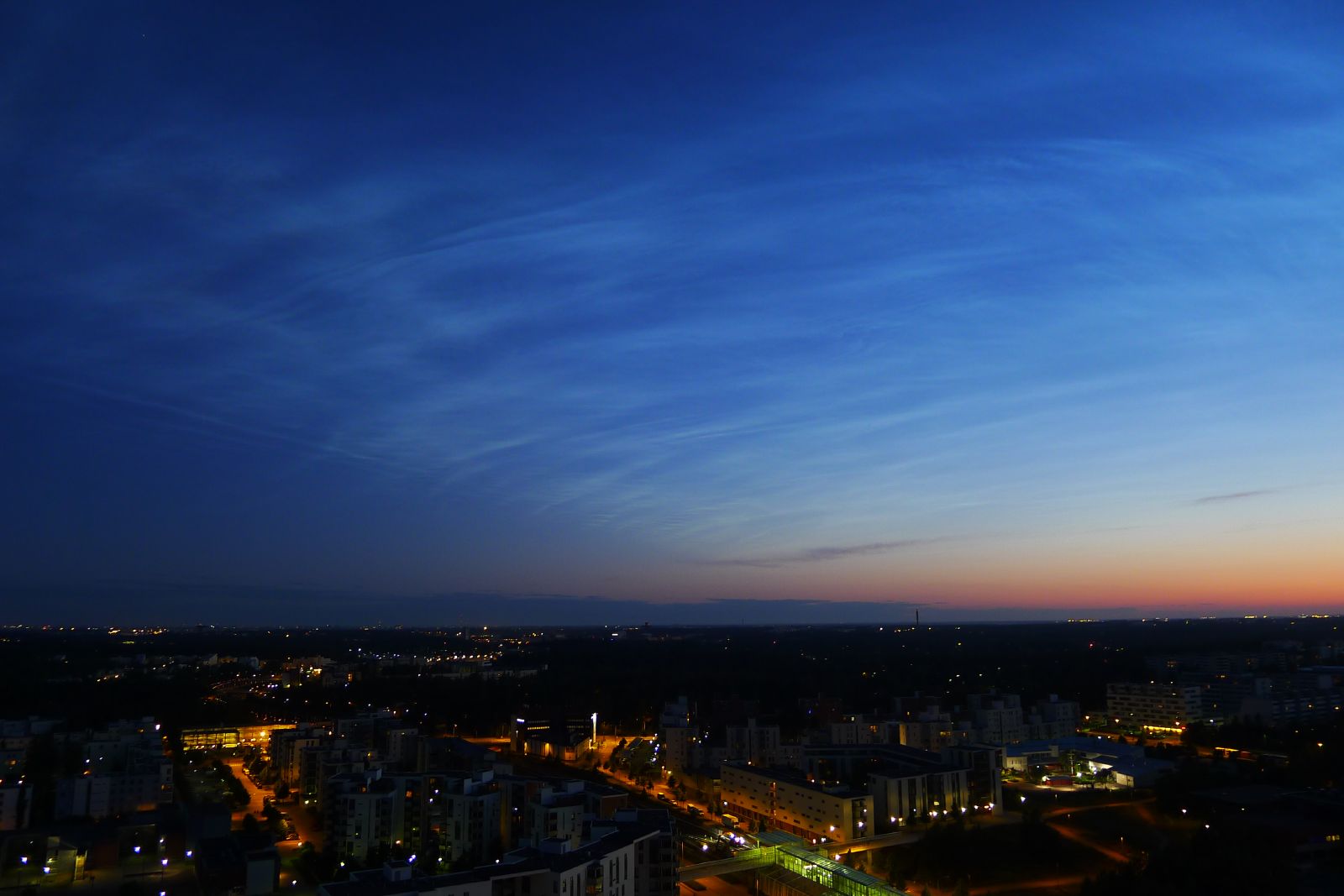
Wait for a clear summer night, look toward the part of the sky where the sun went down an hour or two ago, and — if you're lucky and far enough north — you might catch them: pale, rippling streaks of electric blue, glowing like frost lit from within while the rest of the sky has gone dark. These are noctilucent clouds, Latin for "night-shining," and they are the highest clouds on Earth. They float so high that they're barely part of our atmosphere at all — they hover at the very edge of space, where Earth fades into the black.
The highest clouds in the world
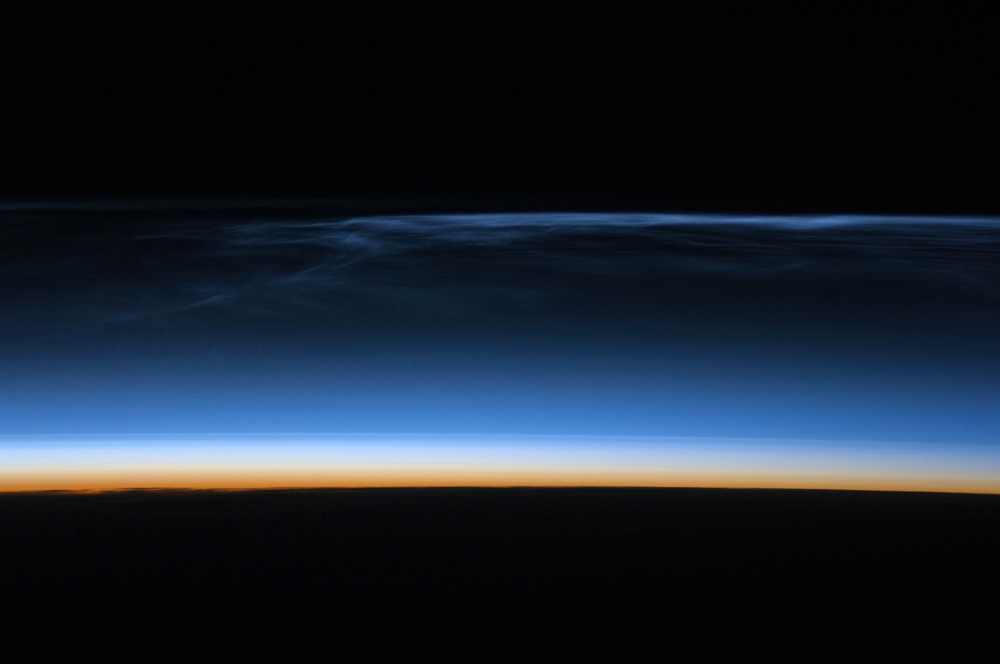
An ordinary cloud lives a few kilometers up. A towering thunderhead might reach 12. A passenger jet cruises around 10 or 11. Noctilucent clouds sit at roughly 83 kilometers — about ten times higher than anything you've ever flown through. That puts them in the mesosphere, a thin, cold, almost airless layer near the boundary of space.
And here's the thing that makes them glow at night: they're so high that the sun, even after it has dipped well below your horizon, is still shining on them from underneath the curve of the Earth. The whole landscape around you is in darkness, the lower clouds are black silhouettes — but these clouds, 83 km up, are still catching direct sunlight. That's why they only appear in deep twilight. In broad daylight they're washed out by the sky; in true night the sun no longer reaches them. They live in a narrow window between the two.
Made of frost and stardust
To form a cloud you need two things: water and something for it to freeze onto. Up in the mesosphere, water is almost absent and the dust of the lower world never reaches. So what do these crystals grow on?
Meteor smoke. Every day, tons of tiny meteoroids hit the upper atmosphere and burn up, leaving behind a haze of microscopic particles — vaporized rock that recondenses into specks of cosmic soot. NASA's AIM satellite, launched in 2007 specifically to study these clouds, confirmed it: each ice crystal in a noctilucent cloud is about 3% meteoritic. Water vapor freezes directly onto leftover dust from shooting stars.
It takes brutal cold to do it. The summer mesosphere — counterintuitively, summer is when it's coldest up there — drops to around −120 °C, the lowest temperature found anywhere in Earth's atmosphere. The resulting ice crystals are absurdly tiny, just 20 to 70 nanometers across, hundreds of times smaller than the crystals in an everyday cirrus cloud. It's that tininess that scatters sunlight toward the blue end of the spectrum and gives the clouds their signature electric tint.
A clock you can read in the sky
There's a quiet twist to this story. Noctilucent clouds were first recorded in 1885 — and not before. People had been watching the night sky carefully for thousands of years, so why did nobody mention these shimmering blue clouds until then?
One trigger was the eruption of Krakatoa in 1883, which flung water vapor and dust high into the atmosphere. But there's a deeper, more troubling possibility. The mesosphere gets its water partly from methane rising from below, which is broken down into water vapor at high altitude. More methane in the air means more water up high, which means more ice, which means brighter and more frequent noctilucent clouds. And methane in our atmosphere has roughly doubled since the late 1800s — so much of it from human activity that researchers estimate mesospheric water vapor has climbed about 40% over the same period.
In other words, these clouds may be a beautiful side effect of a planet we've been quietly changing. They're now seen farther south, and more often, than our great-grandparents ever could have seen them.
Looking up at the edge of space
What I love about noctilucent clouds is how much they pack into a single glance. You're looking at frost that froze onto the ash of meteors, at the coldest place on the planet, lit by a sun that has already set, in a band of sky that didn't seem to glow at all until about 140 years ago. A thing that is, at once, the most delicate and the most distant weather we have.
So next clear June or July night, if you're somewhere between roughly 50 and 70 degrees latitude, give the northern horizon an hour after sunset. The blue you might see isn't the last of the daylight. It's the highest, coldest, strangest cloud on Earth — quietly catching a sunbeam that's traveling under your feet.