
18 Quintillion Planets on One Hard Drive: The Trick Behind No Man's Sky
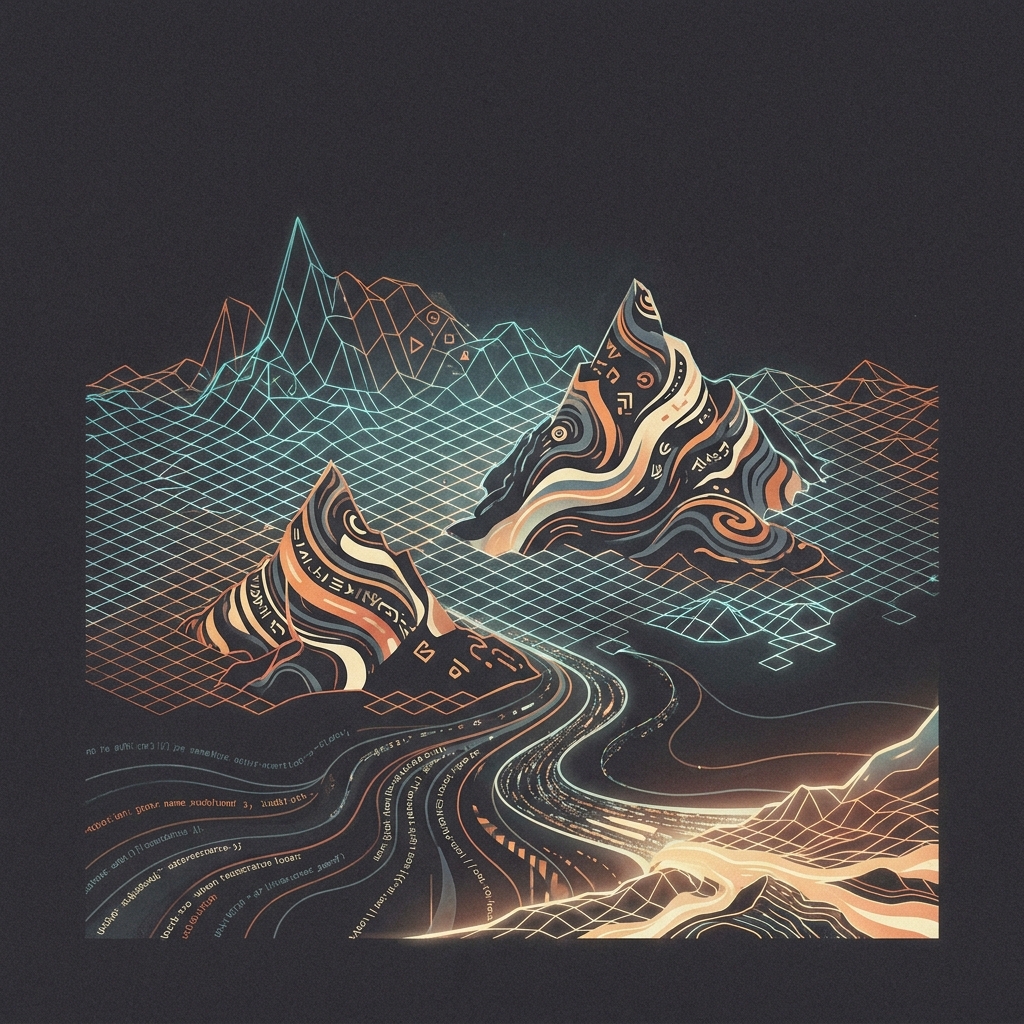
In 2016, a tiny studio in Guildford promised a video game with 18 quintillion planets. Not 18 thousand. Not 18 million. Eighteen quintillion — 18,446,744,073,709,551,616 of them, each one a full world you could land on, walk across, and name. The obvious question is the one nobody could quite believe the answer to: where do you put all that? You can't ship a hard drive big enough to store eighteen quintillion planets. There isn't a data center on Earth big enough. The answer No Man's Sky landed on is one of the most beautiful tricks in game design: you don't store the universe at all. You store the recipe, and you cook each planet fresh the moment a player shows up.
One number to rule them all
Here's the sleight of hand. That headline figure, 18 quintillion, isn't a marketing flourish — it's exactly 2 to the power of 64, the largest number a 64-bit integer can hold. Every star, every planet, every cave and creature is addressed by a single 64-bit seed. Think of the seed as the universe's DNA. Feed the same seed into the same algorithm and you get back the exact same world, down to the last pebble, every single time.
The magic is that the seed is the coordinates. A planet's position in the galaxy isn't looked up in a database — the position is the input that generates the planet. That's why two players who fly to the same dot on the galactic map see the same purple sky, the same toxic lake, the same six-legged grazing animals. Nobody synced anything. The math is just deterministic: same input, same output, forever. The universe isn't a place that exists. It's a question with a stable answer, waiting to be asked.
Building a planet out of noise
So a player drops into orbit and the seed fires. What actually paints the mountains and carves the valleys? The workhorse is something called Perlin noise — an algorithm invented in 1983 by Ken Perlin to make computer-generated textures look less artificial (it won him an Academy Award). Plain randomness gives you static, ugly TV-snow. Perlin noise gives you randomness that's smooth: nearby points get similar values, so it reads like rolling terrain instead of chaos.
But one layer of Perlin noise is boring — gentle hills, all the same size, forever. The fix is fractal: you stack many layers of noise at different scales and add them together. Big slow waves make continents; medium waves make hills; tiny fast waves make the rocky texture underfoot. Pile them up — a technique called fractal Brownian motion — and a believable landscape emerges from pure arithmetic. Hello Games went further with a refined system they nicknamed "Uber noise," folding in erosion-style passes and analytical tricks so the terrain gets ridgelines and weathered slopes instead of generic lumps.
The trick that makes caves
Hills and valleys are one thing, but the features that make a planet feel real are the weird ones: overhanging cliffs, twisting caves, arches you can fly a ship through. Plain noise can't make those, because for any spot on the map it only gives one height — so the ground can never fold back over itself.
The clever fix is called domain warping: before you ask the noise function for a height, you use another noise function to distort the coordinates you're asking about. You're lying to the math about where you are. That deliberate distortion bends the smooth landscape into overhangs, tunnels and caverns — structures the original function could never have produced on its own. It's a small, almost mischievous idea, and it's the difference between a planet of bland dunes and one with caves worth getting lost in.
Why this is the same magic as drawing a game in code
What I love about all this is that it's the exact instinct behind CodeQuest, the little Vampire-Survivors-style game I built where every sprite, every sound, and every level is generated by code instead of loaded from a file. No art folder, no asset pipeline — just functions that produce the world on demand. No Man's Sky is that same idea cranked to a galactic, almost absurd extreme: a universe that weighs nearly nothing because it doesn't exist until you look at it.
There's something quietly profound in that. Most of those eighteen quintillion planets will never be visited by a single human being. They aren't sitting unseen on a server somewhere, gathering digital dust. They are pure potential — worlds that will only ever flicker into existence if a curious traveller happens to point their ship that way and ask the universe the right question. Until then, every one of them is just a number, waiting.