
The Prosthesis That Replays Your Brain's "Save" Button
Imagine your brain has a "save" button — and that, for some people, it has stopped clicking. The memory forms, flickers, and is gone before it can be written down, like a document you typed for an hour and never saved. Now imagine an implant that watches your brain hit that save button correctly on a good day, records the exact electrical signature of the click, and then, when the click misfires, plays that signature back to make the memory stick. This is not a thought experiment. A team at the University of Southern California built it, tested it inside human brains, and watched memory scores climb by roughly 37 percent.
The seahorse that files your days
Deep in each temporal lobe sits a curled ridge of tissue named, by some long-dead anatomist with a poetic streak, the hippocampus — Greek for seahorse, which is exactly what it looks like in cross-section. This little seahorse is your brain's filing clerk. It takes the fleeting present — where you parked, the name of the person you just met, the joke from five minutes ago — and decides what gets written into longer-term memory. Neuroscientists call this episodic memory, the memory of moments, and it is the very first kind to crumble in Alzheimer's, after a stroke, or following a head injury.
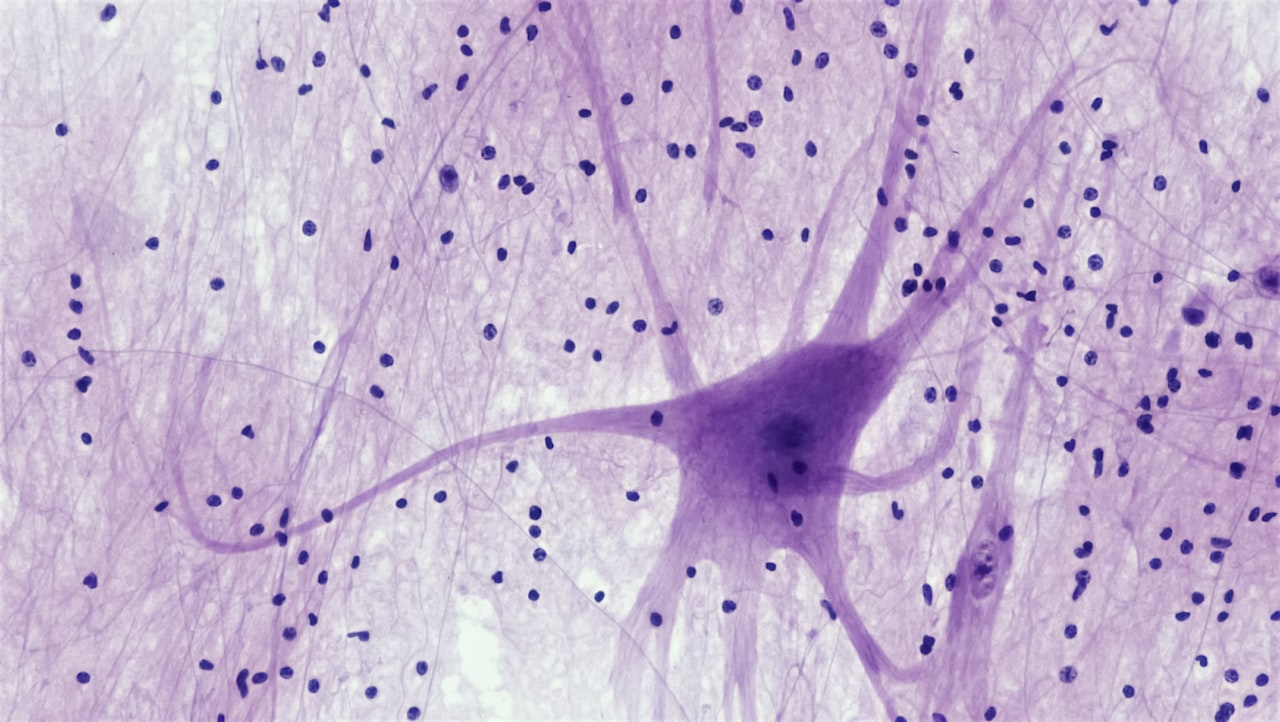
The hippocampus does its filing as a relay. A region called CA3 hands its signal to a neighboring region called CA1, and the precise pattern of electrical spikes passing between them is the memory being encoded. When that hand-off goes cleanly, the moment gets saved. When the tissue is damaged, the hand-off garbles, and the moment evaporates.
Reading the brain's own handwriting
Here is where biomedical engineers Theodore Berger and Dong Song did something genuinely clever. Working under a DARPA program with the very sci-fi name Restoring Active Memory, they reasoned: if a healthy hand-off from CA3 to CA1 is just a pattern of spikes, then it is, in principle, a code you could learn to read — and to write.
So they built a mathematical translator, a multi-input multi-output (MIMO) model. Think of it as a piece of software that listens to the noisy chatter of CA3 firing and predicts the exact tidy pattern CA1 should produce when a memory is being saved correctly. It learns each patient's personal "handwriting" for a good memory, because no two brains spell things quite the same way.
To gather that handwriting, the researchers worked with epilepsy patients who already had electrodes implanted for their treatment — a rare window directly into a living human hippocampus. The patients played a simple game: look at an image, wait through a blank screen, then pick the original out of a lineup. Sometimes the delay was seconds; in the toughest version, they had to recognize a photo shown up to 75 minutes earlier. All the while, the electrodes quietly recorded which spike patterns accompanied the memories that stuck.
Pressing play on a memory
The recording half is interesting. The playback half is the part that sounds like science fiction made real.
Once the MIMO model had learned a patient's signature for a correctly saved memory, the team turned the electrodes around and used them to write. As the patient tried to remember, the implant stimulated CA1 with the very pattern the model predicted a healthy hippocampus would have produced. In effect, the device whispered the right answer to the brain in its own electrical language — not the content of the memory, but the structure of a good save.
The results, published in the Journal of Neural Engineering, were striking. With the prosthesis feeding back each patient's own optimized code, short-term memory performance improved by about 37 percent, and longer-term recall by roughly 35 percent, over each person's baseline. As lead clinician Robert Hampson of Wake Forest put it, they had tapped into a patient's own memory content, reinforced it, and fed it back. Crucially, the implant was not implanting false memories or someone else's thoughts — it was amplifying the patient's own signal, like a sound engineer cleaning up a muddy recording the singer themselves made.
A prosthetic for the thing that makes you, you
We are comfortable with prosthetics for the body — a titanium hip, a cochlear implant, a bionic hand. A memory prosthesis is a stranger creature, because the thing it repairs is not how you move or hear but how you hold on to your own life. The eight patients in the early trials were not cured of anything; this is a proof of principle, not a product, and a wired-up lab task is a long way from helping someone remember their grandchild's face.
But the principle is now demonstrated in human tissue: a damaged brain's faltering save button can be backed up by a machine that learned, from the brain itself, what a good save feels like. The seahorse, for all its quiet diligence, sometimes drops the file. It turns out we can teach a chip to catch it.