
The World's Oldest Film Lasts 2 Seconds — and Its Inventor Vanished
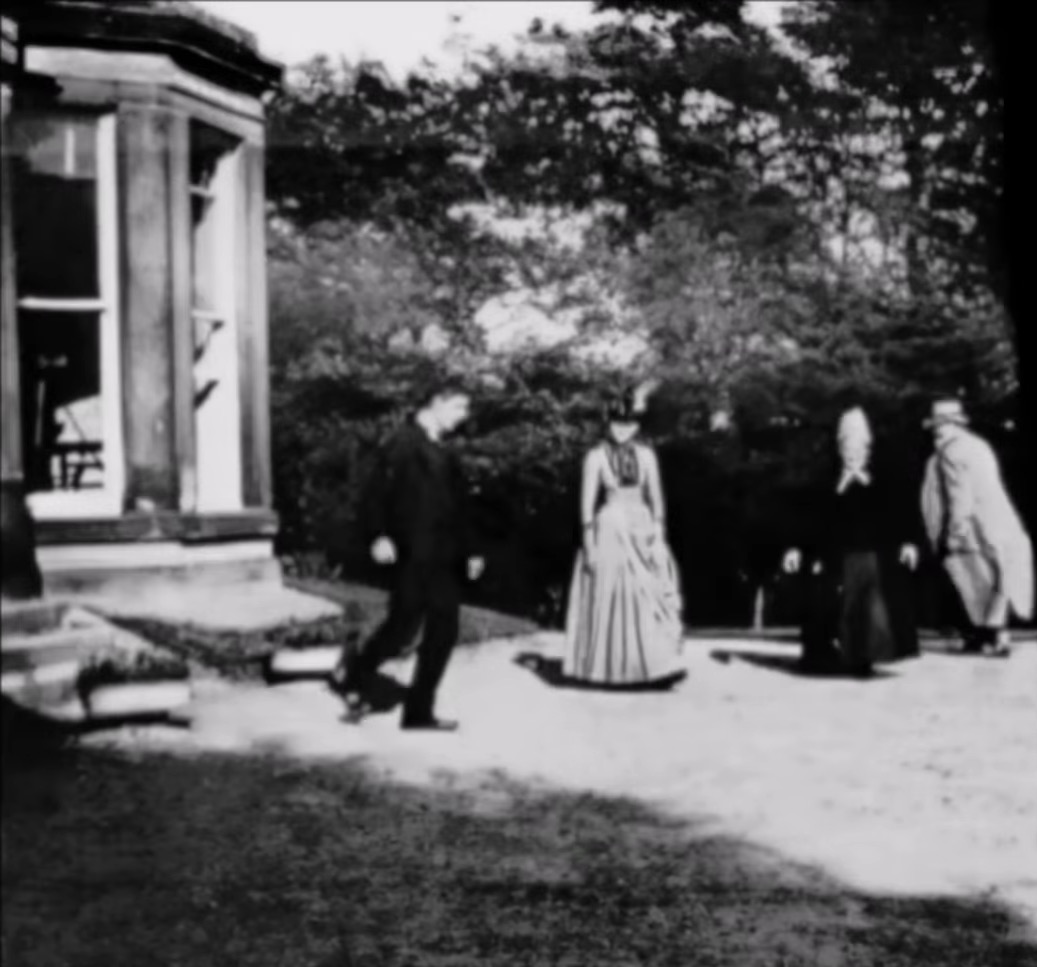
The oldest surviving film in the world is shorter than the time it takes you to read this sentence. It runs about two seconds — roughly twenty frames of a sunny October afternoon in 1888 — and in it, four people stroll in a loose circle around an English garden, laughing at a camera most of them had probably never seen before. It is the entire ancestry of cinema compressed into a single breath. And the man who shot it, the Frenchman who arguably invented the movie camera, vanished off the face of the earth two years later and was never found.
Two seconds in a Leeds garden
It was October 14, 1888, at Oakwood Grange, a comfortable house in Roundhay, a leafy suburb of Leeds. Four people agreed to walk in front of a strange wooden box: Louis Le Prince's son Adolphe, a family friend named Annie Hartley, and his in-laws Joseph and Sarah Whitley. They don't pose. They simply move — Sarah seems to step backward as she turns, Joseph's coattails swing out as he pivots, everyone vaguely orbiting the same patch of lawn. It is astonishingly, almost unbearably ordinary, which is exactly what makes it feel like a window rather than a photograph.
Le Prince captured them on Eastman paper film running through a single-lens camera of his own design — a forty-pound box of mahogany and brass so far ahead of its time that he patented it in Britain a month later, on November 16, 1888. His son later claimed the footage ran at twelve frames per second; modern analysis suggests something closer to seven. Either way, the result is the same: the first moving image of real human beings going about an unremarkable afternoon, recorded years before anyone had heard the names Edison or Lumière.
The first ghost in the machine
Here is the detail that gives the clip its quiet weight. Sarah Whitley, the grandmother turning and laughing in the garden, died just ten days after the camera rolled, on October 24, 1888. She is, in a real sense, the first person ever to be filmed and then lost — her last recorded movements preserved by accident, by a son-in-law tinkering with an invention nobody yet understood.
That ten-day gap is also why we can date the film so precisely. Decades later, Le Prince's family used Sarah's death certificate to prove the footage couldn't have been shot later than 1888 — crucial ammunition in a long fight to establish that Louis Le Prince, not Thomas Edison, had filmed the first motion picture. The garden scene, in other words, is both the birth of cinema and the first time film was used as evidence.
The man who got on a train and disappeared
Louis Le Prince should have become as famous as Edison. He was preparing to unveil his moving pictures publicly in New York, a debut that might have rewritten the official history of film with his name at the top. He never made it.
On September 16, 1890, Le Prince boarded a train in Dijon, bound for Paris and then onward to England and America. His brother saw him onto it. When the train pulled into the Paris station, he was not on board. No body. No luggage. No sign of a struggle along the entire Dijon–Paris line. A grown man, a famous inventor carrying the future of an entire art form, had simply evaporated between two stops. He was declared legally dead in 1897.
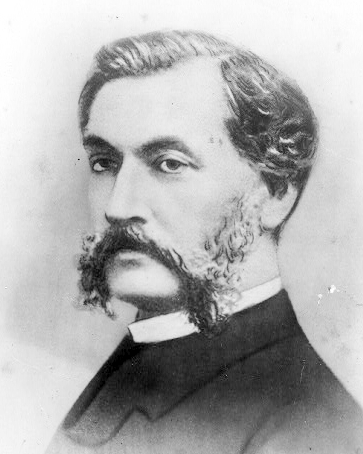
The theories never stopped multiplying. Suicide, supposedly over money troubles — though his letters show a devoted family man who had carefully arranged a move to New York. Murder by his own brother, the last person to see him alive — though no one could find a motive in a famously close family. And the most cinematic theory of all, whispered within his circle: that Edison, racing to claim the title of cinema's inventor, had him quietly removed. In 2003, a photograph surfaced in the Paris police archives showing a drowned man pulled from the Seine in 1890 who bore an unsettling resemblance to Le Prince. It has never been confirmed.
Why two seconds still matter
We are drowning in video now — billions of hours uploaded, scrolled, forgotten. It is easy to forget that all of it descends from a two-second loop of a grandmother turning in the sun, captured by a man who would himself become an unsolved mystery. Cinema's first act, fittingly, contained both of its great obsessions from the very start: the desire to make a fleeting moment last forever, and a disappearance no one could explain.
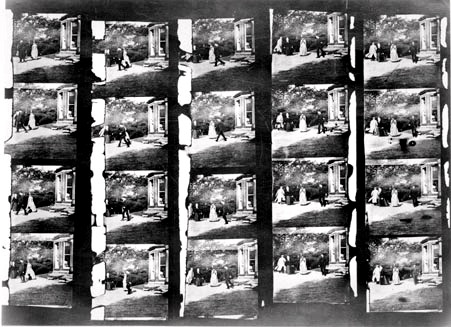
The strangest part isn't that the footage survives. It's how. The original negative was eventually lost, and the film as we know it exists only because, in the 1930s, the Science Museum in London painstakingly copied twenty surviving frames onto glass plates before they too could vanish. The oldest movie on Earth is a copy of a copy of a ghost — four people walking in a circle, forever, in a garden that is long gone, filmed by a man who is still, after more than 130 years, technically a missing person.