
Casgevy: The First CRISPR Medicine That Switched Off Sickle Cell
For most of human history, the word "incurable" was a closed door. You were born with the genes you got, and that was the end of the conversation. Then, on December 8, 2023, the U.S. Food and Drug Administration quietly cracked that door open. It approved a medicine called Casgevy — the first treatment ever built on CRISPR, the molecular "find-and-replace" tool that lets scientists edit the code of life itself. The disease it targets is sickle cell, an inherited blood disorder that has tortured people for as long as there have been people. And in the trial that earned the approval, it didn't just help. For nearly everyone, it made the agony stop.
A typo, written in blood
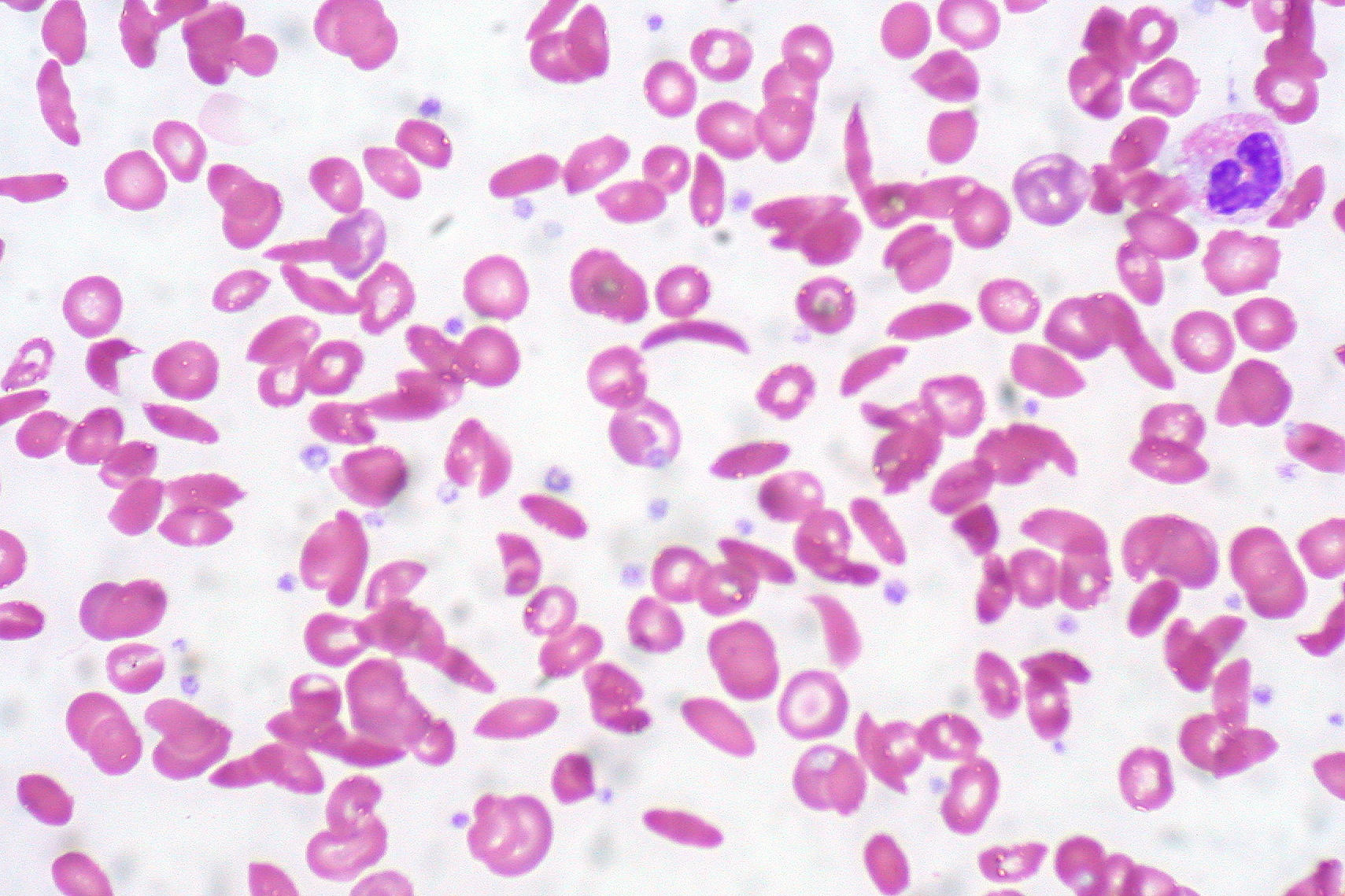
Sickle cell disease is, at its root, a single typo. One wrong letter in the gene for hemoglobin — the protein that carries oxygen in your red blood cells — makes the protein clump together when oxygen runs low. Healthy red cells are soft, round discs that glide through the narrowest vessels. Sickled cells turn stiff and crescent-shaped, like tiny shards of glass. They snag, pile up, and block blood flow. The result is a "vaso-occlusive crisis": waves of pain so severe that patients describe it as bones being crushed, often landing them in the hospital for days. It affects roughly 100,000 people in the United States, the vast majority of them Black, and for decades it got a fraction of the research money thrown at rarer conditions.
Here's the cruel twist that makes the cure so clever. We are all born able to make a different, perfectly good version of the protein: fetal hemoglobin. It's what carries oxygen in the womb. But shortly after birth, a genetic switch flips it off and turns adult hemoglobin on — and for sickle cell patients, "adult" means "broken." The fetal version never had the typo.
Editing the off-switch
So the scientists asked a beautiful question: what if we just flip the switch back?
Casgevy doesn't try to repair the broken hemoglobin gene at all. Instead it uses CRISPR-Cas9 — a pair of molecular scissors borrowed from the immune systems of bacteria — to make a precise cut in a different gene called BCL11A, the very gene that acts as the off-switch for fetal hemoglobin. Disable that switch in the patient's blood-forming stem cells, and those cells start churning out fetal hemoglobin again. The good protein floods back in. The crescents never form.
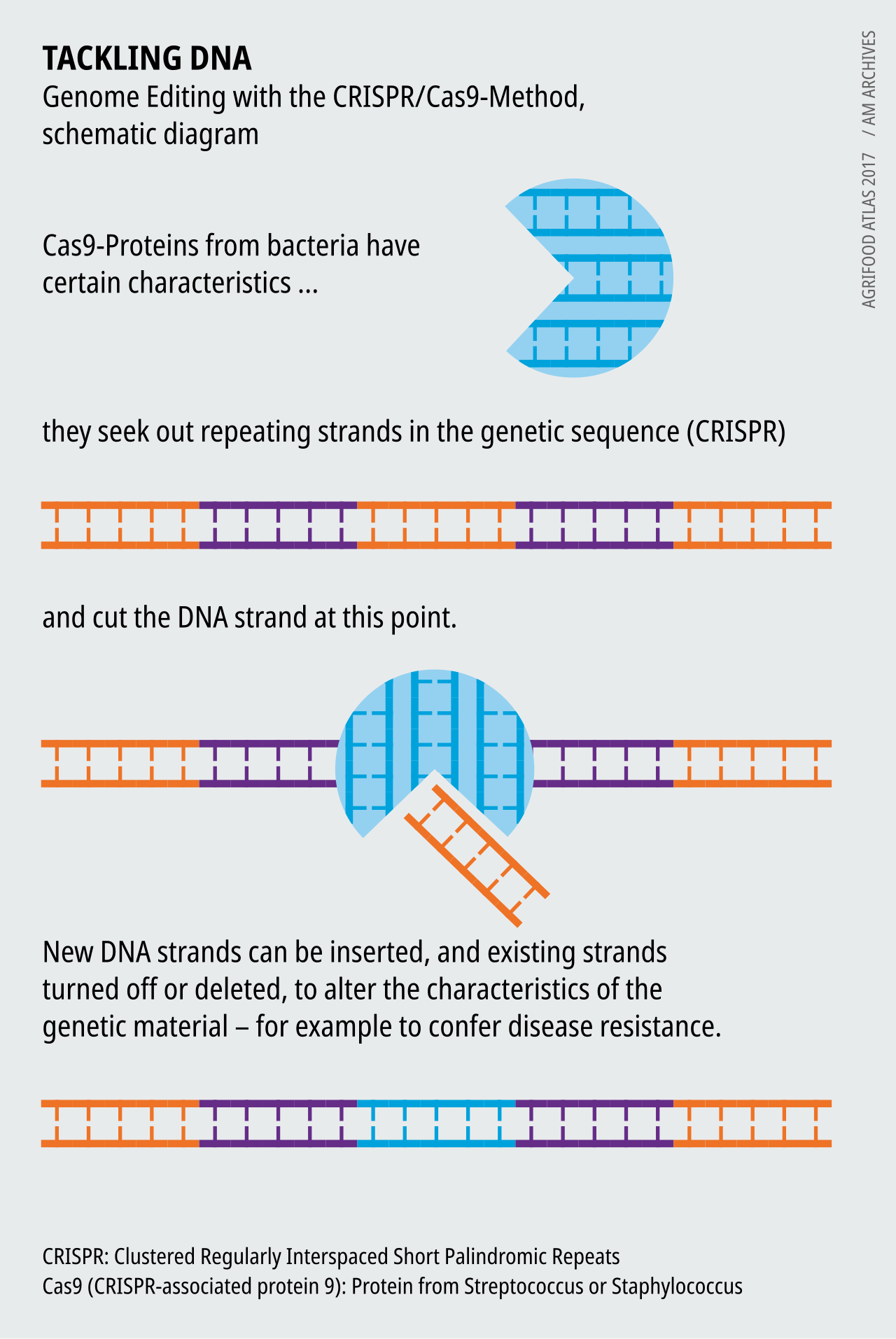
The procedure is not a pill, and it is not gentle. Doctors harvest the patient's own blood stem cells, ship them to a lab where CRISPR rewrites them, then use heavy chemotherapy (a drug called busulfan) to wipe out the patient's old, faulty bone marrow — clearing space for the edited cells to move back in and rebuild the entire blood supply from scratch. The whole journey takes the better part of a year, including weeks in the hospital. But because the edit lives in the stem cells, it is meant to last a lifetime. One time. Done.
"I can dream again"
The numbers from the pivotal trial are the kind that make hematologists do a double take. Of the 30 patients followed long enough to evaluate, 29 — that's 97% — went at least 12 straight months with no vaso-occlusive crisis at all. All 30 stayed out of the hospital for crises for at least a year. For people whose lives were organized around the next inevitable wave of pain, that is not an improvement. That is a different life.
The pioneer was a woman named Victoria Gray, from Mississippi, who received the experimental version back in July 2019. She has said it took about eight months before she fully registered the change — she woke up one day without pain and thought her body had simply gone numb. "At one point in my life, I stopped planning for the future because I felt I didn't have one," she told a gene-editing summit. "Now, I can dream again without limitation."
The catch, and the horizon
There is, of course, a catch — and it's a big one. Casgevy's list price is around $2.2 million, and the full course of care, with the chemotherapy and the months of monitoring, can push the real cost closer to $3 million. A genuine cure exists for a disease that overwhelmingly affects people who are least able to pay for it. That tension — between what science can now do and who actually gets it — is the defining puzzle of the gene-editing age.
But step back and look at what just happened. A bacterial defense mechanism, repurposed by humans barely a decade ago, was used to rewrite a single targeted spot in a person's genome and lift a lifelong sentence of pain. The same approach is already being aimed at other inherited diseases, from blindness to high cholesterol. Casgevy is not the end of the story. It's the proof that the door, once closed forever, actually opens.