
The Bionic Eye and Phosphenes: Seeing Flashes That Aren't There
Here is the strange truth at the heart of the "bionic eye": it does not give anyone their eye back. It does not regrow the retina, repair the dead cells, or restore the picture the way you'd restore an old photograph. Instead, it does something far weirder and far more clever. It whispers to the cells that are still alive, in the only language they understand — tiny pulses of electricity — and tricks the brain into seeing flashes of light that were never there. The first one approved for everyday use, the Argus II, turned that trick into a device a blind person could actually wear out of the house. To understand how, you have to start with a word most people have never heard: phosphene.
A flash of light, with no light
Close your eyes and press gently on the corner of your eyelid. After a moment you'll see a soft glow, a smudge of color blooming in the dark. That glow is a phosphene — the sensation of light when no light has entered your eye at all. You've just nudged your retinal cells with mechanical pressure, they've fired, and your brain has done what it always does with a signal from the optic nerve: assumed it meant light, and drawn one for you.
That's the loophole the bionic eye exploits. Vision doesn't really happen in the eye; it happens in the brain. The eye is just a sensor that turns photons into nerve impulses. If you can produce those impulses some other way — say, with a jolt of current — the brain can't tell the difference. It receives the signal, shrugs, and paints a dot of light into your field of view. Stimulate a neuron, get a phosphene. That single fact is the entire foundation of artificial sight.
Why some blind eyes still listen
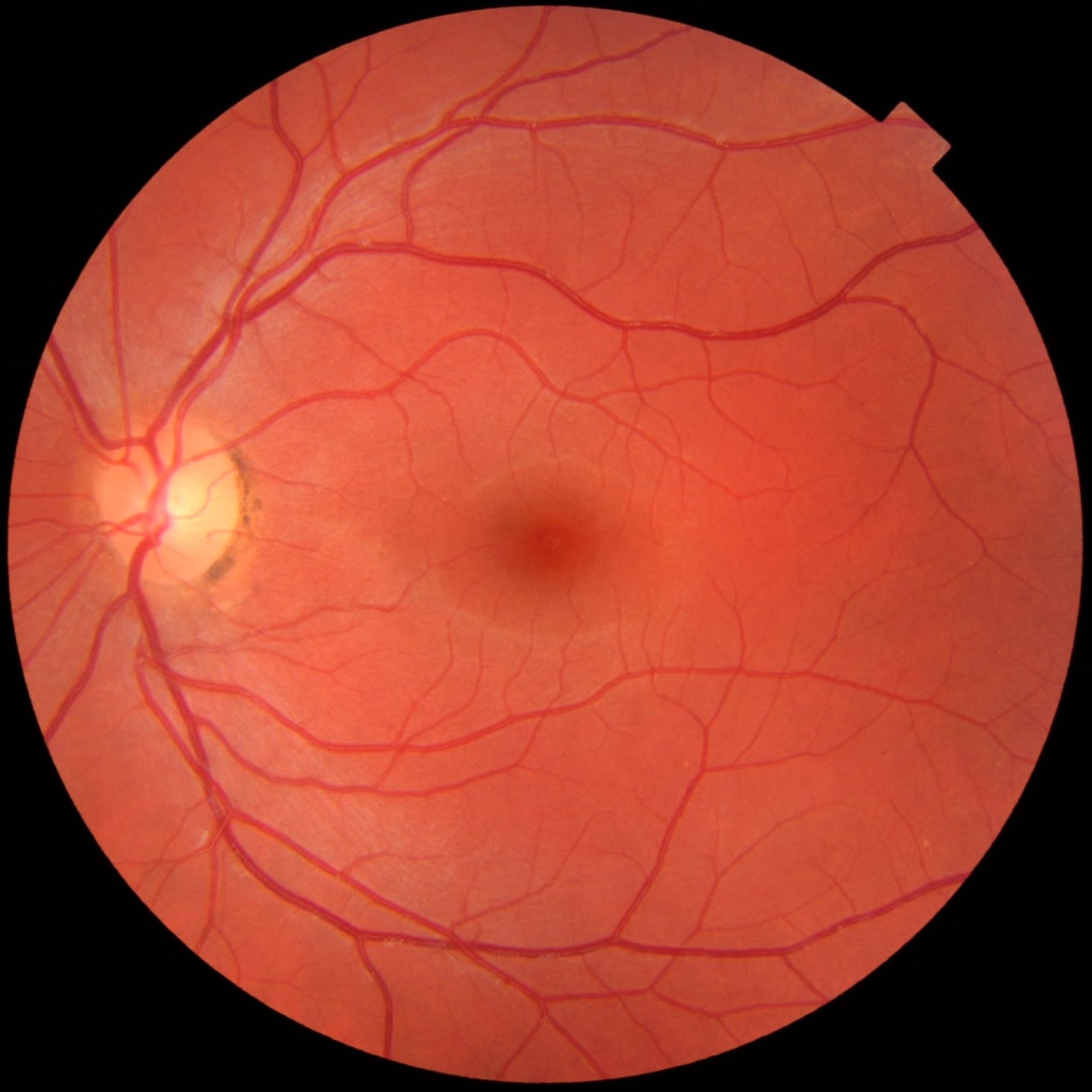
The Argus II was built for people with a disease called retinitis pigmentosa, an inherited condition that slowly destroys the retina's photoreceptors — the rods and cones that catch light. Over years, the picture fades to nothing.
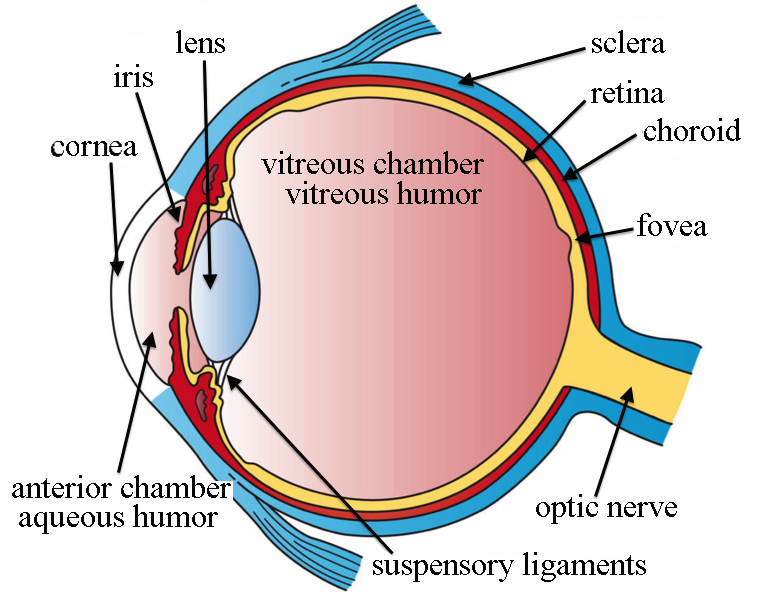
But here's the lucky detail the whole field depends on: the photoreceptors die first, while the wiring behind them often survives. The retina is layered, and the inner cells that pass signals on toward the brain can keep working long after the light-catchers are gone. Those survivors are deaf to light — but they still answer to electricity. The bionic eye is, in essence, a way to reach past the broken sensors and knock directly on the cells that still pick up the phone.
Camera on your glasses, electrodes on your retina
Approved by the FDA in 2013 after more than twenty years of research and over $200 million in funding, the Argus II is a beautifully literal piece of engineering. A tiny video camera sits on a pair of glasses, watching the world. Its footage runs to a small computer worn on a belt, which strips the image down to grayscale and crushes it to a resolution that sounds almost insulting: about 60 pixels. That stripped-down picture is then beamed wirelessly to a chip implanted on the eye, which drives a postage-stamp-sized grid of 60 electrodes laid directly on the surviving retina.
Each electrode, when it fires, produces one phosphene — one dot of light. Sixty electrodes, sixty possible dots, arranged in a small 6-by-10 grid covering a sliver of the visual field. The "image" a user receives is not a scene. It's a sparse constellation of glowing points, switching on and off as the camera scans. Reading the world this way is closer to feeling out a coastline of light than seeing a photograph.

Learning to read a sky of dots
What surprised researchers most wasn't the hardware — it was the homework. Switching the device on does not hand someone vision; it hands them a riddle. The brain has spent a lifetime expecting rich, dense images, and now it's getting 60 flickering dots. Users go through months of rehabilitation, slowly teaching their brains to translate this dotted Morse code into meaning: a bright bar is the edge of a doorway, a moving smear is a person walking past, a pale rectangle on the table might be a plate.
There's a physical trick to it, too. Because the field is so narrow, users learn to sweep — turning their head slowly to drag the camera across a scene, building up a shape the way you'd trace an object in the dark with a flashlight. Over time, many can find a doorway, follow a white line on the floor, sort dark socks from light ones, even make out the rough shape of large letters. It is, by any normal standard, almost nothing. To someone who has seen pure black for a decade, it can be the difference between being lost and finding the door.
The brain was the eye all along
The deepest lesson of the bionic eye isn't about cameras or electrodes. It's that "seeing" was never really the eye's job — the eye just delivers the mail. Researchers have produced phosphenes by stimulating the optic nerve, and even by placing electrodes directly on the visual cortex, bypassing the eye completely. In every case the brain does the same obliging thing: it takes a meaningless jolt of current and insists on turning it into light.
Which means the Argus II, primitive as its 60 dots are, is a proof of concept for something far larger. If a flash of electricity can become a flash of light, then somewhere down the line a richer, denser stream of pulses could become something much closer to true sight — written not onto a healed retina, but straight into a mind that was always doing the real seeing anyway.