
Why Space Is Black
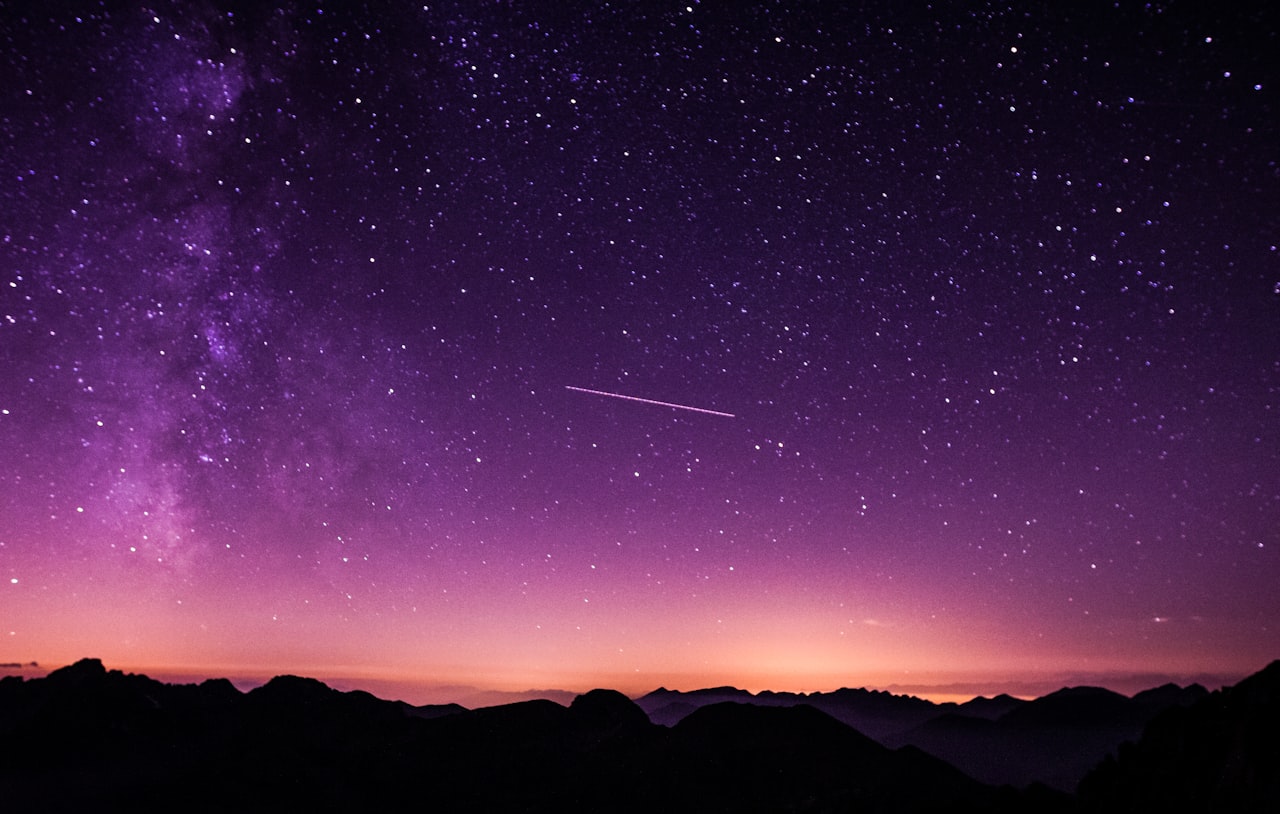
Step outside on a clear, moonless night, far from any city, and look up. The sky is spattered with stars — but between them, there's black. Lots of black. It feels too obvious to question. Of course the night is dark. And yet, for two hundred years, that darkness has quietly been one of the deepest clues we have about the universe. Because if you take a few simple, reasonable assumptions about the cosmos and follow them honestly, the night sky should be blazing — as bright as the surface of the Sun, in every direction at once. The fact that it isn't is called Olbers' paradox, and the answer to it is the entire history of the universe.
The argument that should set the sky on fire
Here's the reasoning, and it's almost annoyingly clean. Suppose the universe is infinite, eternal, and uniformly filled with stars — three things that, for most of history, seemed perfectly sensible. Now imagine drawing a straight line outward from your eye in any direction at all. If stars go on forever, that line has to eventually run into the surface of some star. There's no escaping it: given infinite depth, every single sightline ends on a star.
But that means every point on the sky should be sitting on a star's surface. Not a pinprick of light — the full glare of a stellar surface, everywhere you look. Yes, distant stars look fainter, because brightness drops off with the square of distance. But there's a catch that exactly cancels it: the number of stars at a given distance grows with the square of distance too. The dimming and the multiplying cancel perfectly. Shell after shell of sky contributes the same light, and infinitely many shells make for an infinitely bright — or at least Sun-bright — sky.
So under those three assumptions, night should not exist. The darkness overhead is a quiet, nightly contradiction.
"But isn't there dust in the way?"
The first instinct — and people had it for centuries — is that something must be blocking the light. Clouds of gas and dust between the stars, soaking up the glare from the deepest reaches before it ever gets to us. Tidy. Intuitive. Wrong.
The astronomer John Herschel saw the flaw by the mid-1800s. Dust can absorb starlight, sure — but absorbing light means absorbing energy, and energy doesn't just vanish. The dust heats up. Bathed in the light of infinite stars, it would keep heating until it glowed exactly as fiercely as the stars themselves, re-radiating everything it swallowed. Dust can delay the light. It can shuffle it around. It cannot destroy it. In a truly infinite, eternal universe, even the dark dust clouds would eventually shine. So the darkness is real, and it needs a real answer.
The answer: the universe has a birthday
The resolution is gorgeous, and an unlikely person sketched it first. In 1848 the poet Edgar Allan Poe, in a strange prose work called Eureka, guessed the heart of it: the reason we see voids between the stars, he wrote, is that the more distant background is so immense that no ray from it has yet been able to reach us at all.
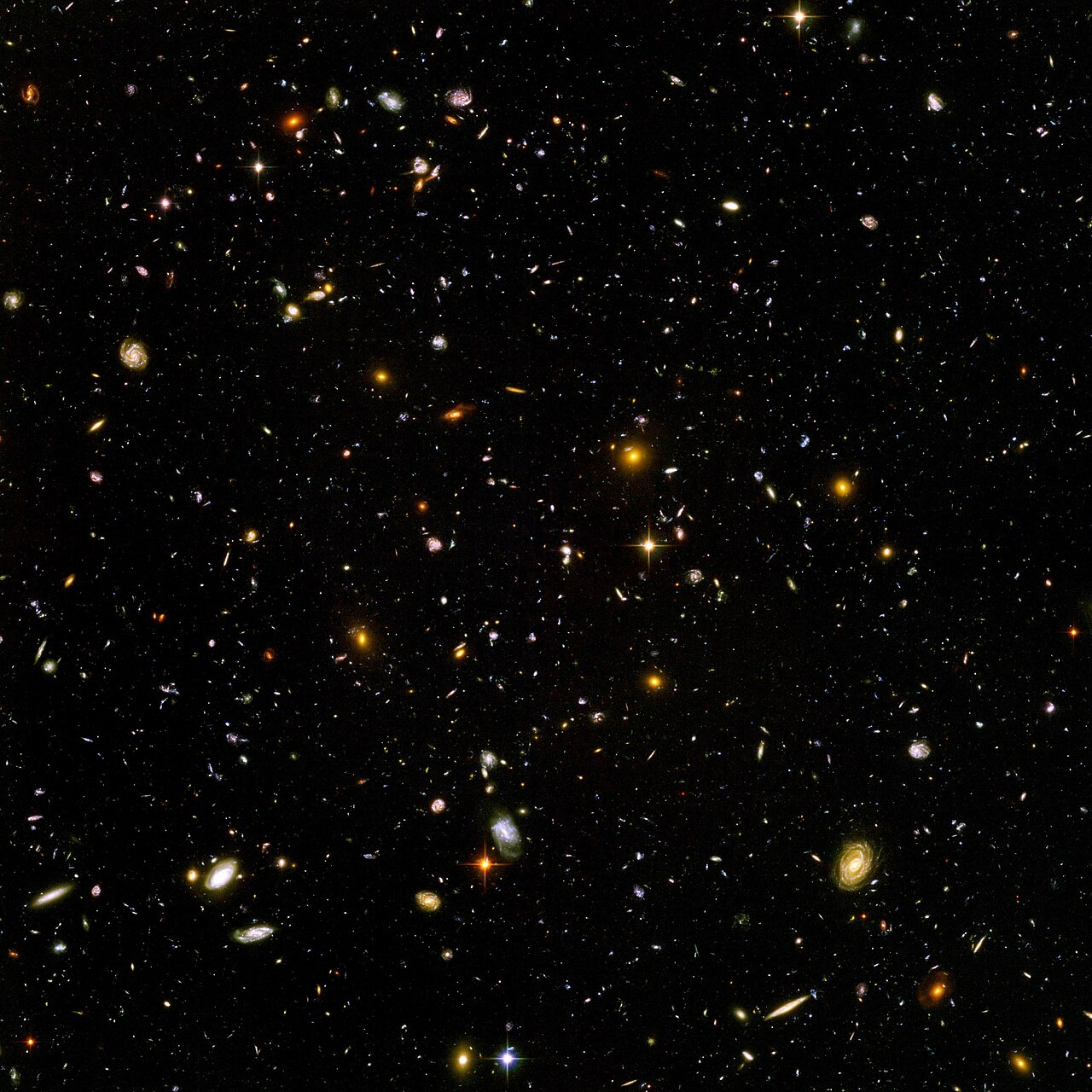
He was right. The universe is not eternal — it is about 13.8 billion years old. Light is fast, but not infinitely fast, so in that time it can only have traveled so far. This gives us a finite observable universe: a sphere with us at the center, beyond which the light of more distant stars simply hasn't arrived yet. The far-off shells that were supposed to fill in the gaps are still in the mail. Most of the sightlines that should end on a star end instead on regions whose light is still en route. The sky has gaps because the universe is young enough to still be turning on.
And then space pulls a second trick
Finite age does most of the heavy lifting, but there's a second effect that drains the rest of the light. The universe isn't just sitting there — it's expanding. Space itself is stretching, and any light crossing it gets stretched along with it, shifted toward longer, redder wavelengths. The farther away a source is, the more its light is redshifted.
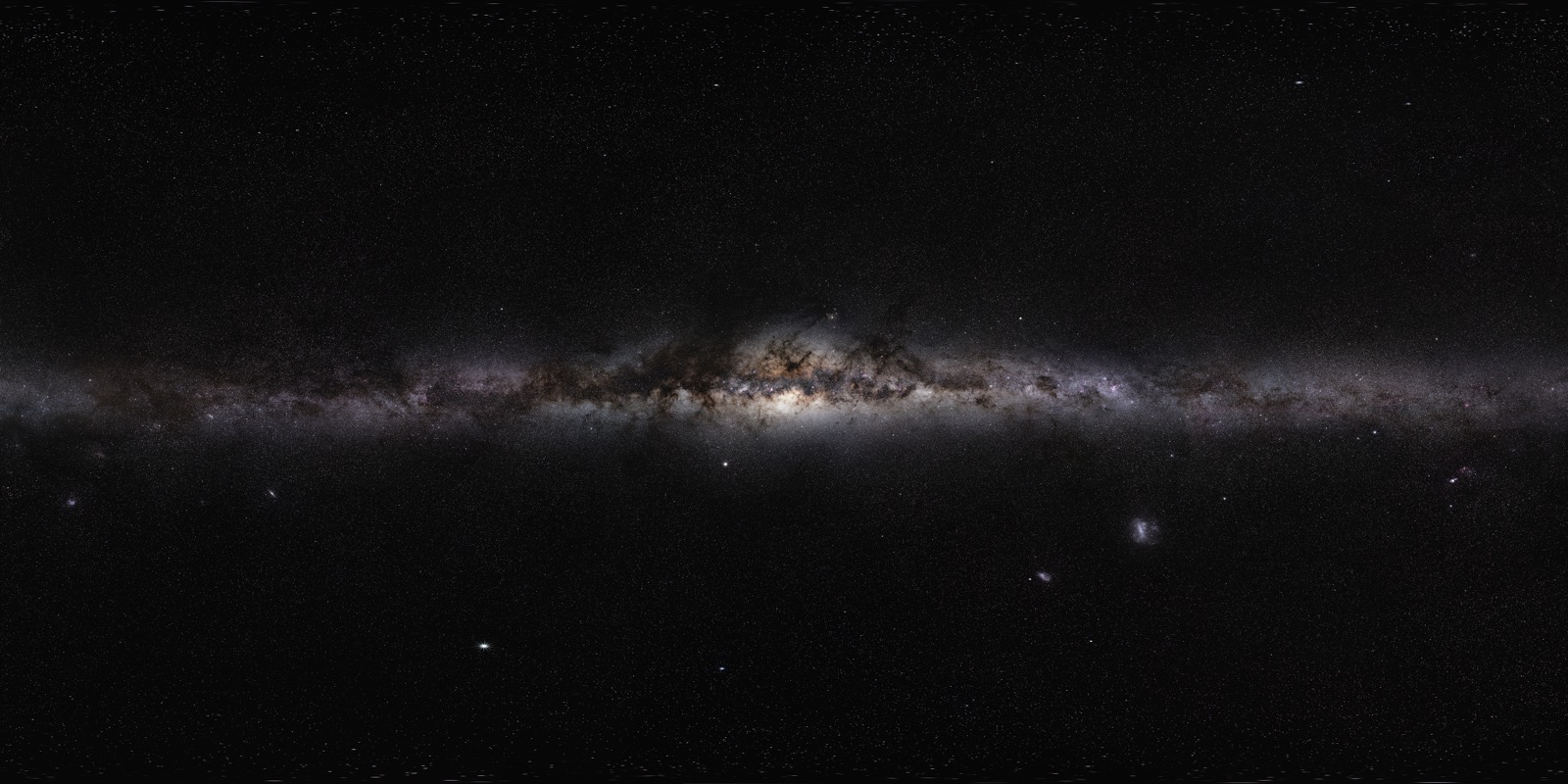
For the most distant light of all, this is dramatic. The afterglow of the early universe — light that once blazed visibly hot — has been stretched so far that it now arrives as faint microwaves, invisible to the eye, glowing at a frosty 2.7 degrees above absolute zero. So even the light that has reached us from the deepest reaches has had its energy diluted and its color shoved out of the visible band entirely. Expansion takes the embers that finite age didn't already hide, and quietly cools them out of sight.
Why I love this one
The thing that gets me is the direction of the logic. We didn't reason our way to a young, expanding universe and then check the sky. We looked at the plain, ordinary darkness above us — the most unremarkable fact in the world — and realized it was impossible. The night sky is a quiet, all-points alibi proving that the universe had a beginning and is still flying apart.
So the next time you're under a dark sky and the cold black between the stars feels like nothing at all, remember: that emptiness is the loudest evidence we have. The darkness isn't the absence of a universe. It's a measurement of how young ours still is.