
Why We Only Ever See One Face of the Moon
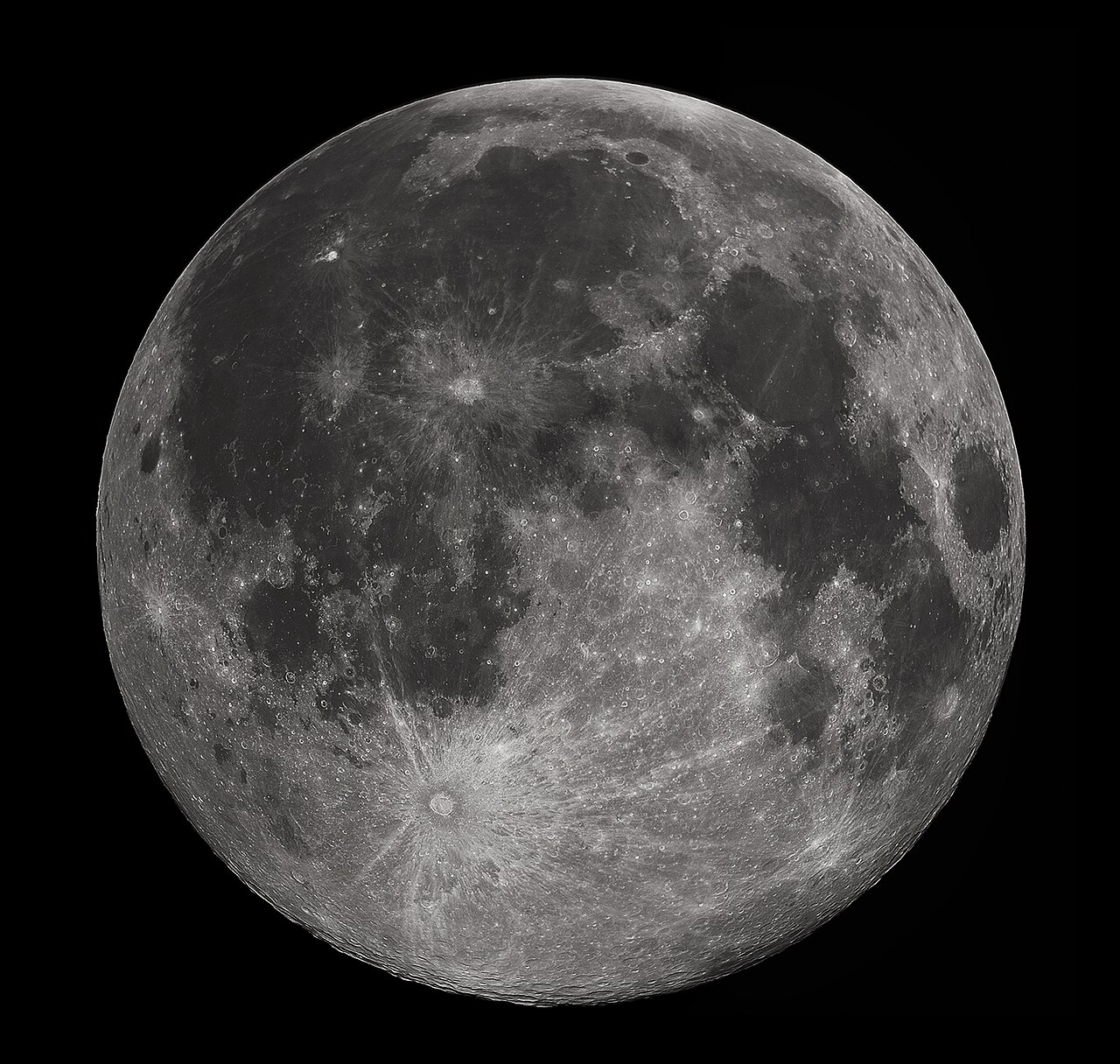
Look up at a full Moon and you are seeing the exact same face your grandparents saw, the same face the pharaohs saw, the same face the dinosaurs would have seen if they had ever bothered to look up. For all of human history, every single person who ever lived has watched the same hemisphere of our nearest neighbor — the same dark patches, the same bright rays, the same expression. The other half stayed completely hidden until a Soviet probe finally peeked around the back in 1959. For centuries that felt like a small cosmic miracle. Then you learn the real explanation, and it turns out to be stranger and more beautiful than a miracle. The Moon is not frozen in place. It spins. It just spins at the one precise speed that hides the trick from us forever.
The Moon is spinning — it just spins in perfect step
Here is the part that trips almost everyone up. People assume that because we always see the same face, the Moon must not rotate at all. The opposite is true. If the Moon genuinely didn't spin, we would see every side of it over the course of a month, the way you'd see all sides of a coin sliding past you without turning.
Instead, the Moon turns exactly once on its axis for every single trip it makes around the Earth — one rotation per orbit, both taking about 27.3 days. The two clocks tick in flawless sync. The easiest way to feel it is to act it out: stand a friend in the middle of a room and walk a slow circle around them, always keeping your face pointed at theirs. By the time you finish one lap, you've turned your own body a full 360 degrees — the rest of the room saw your back, your side, your front. Your friend never did. That is the Moon, and we are the friend. Astronomers call it synchronous rotation, or more poetically, being tidally locked.
How the Earth quietly put the brakes on
So why does the Moon spin at exactly the right rate? It wasn't always this graceful. Billions of years ago the young Moon spun much faster and orbited much closer, and over time the Earth gently strangled that spin into submission.
The culprit is gravity, working as a sculptor. Earth pulls a little harder on the near side of the Moon than on the far side, and that difference stretches the Moon ever so slightly into an egg shape — a tidal bulge, the same effect that lifts our oceans. When the Moon was spinning quickly, its rotation kept dragging that bulge a little ahead of the Earth–Moon line, and Earth's gravity kept hauling it back. The constant tug-of-war acted like a brake pad, bleeding the Moon's spin energy away as internal friction and heat over a few hundred million years. Eventually the rotation slowed just enough to match the orbit, the bulge settled into place pointing at us, and the braking stopped. The Moon had found its lock. The same process is, very slowly, working on the Earth too — our days are getting longer by a couple of milliseconds per century.
There is no "dark side"
Pink Floyd gave us a gorgeous album and a stubborn myth. The hemisphere we never see is the far side, not the dark side, and the difference is one of the most persistent errors in all of astronomy. The far side is not dark. Over a full lunar month it bathes in exactly as much sunlight as the side we know — roughly two weeks of blazing daylight followed by two weeks of night, same as ours. The two faces simply take turns. When you see a slim crescent Moon, the part you can't make out isn't shadowed; most of it is in full, brilliant sunshine, pointed away from us.
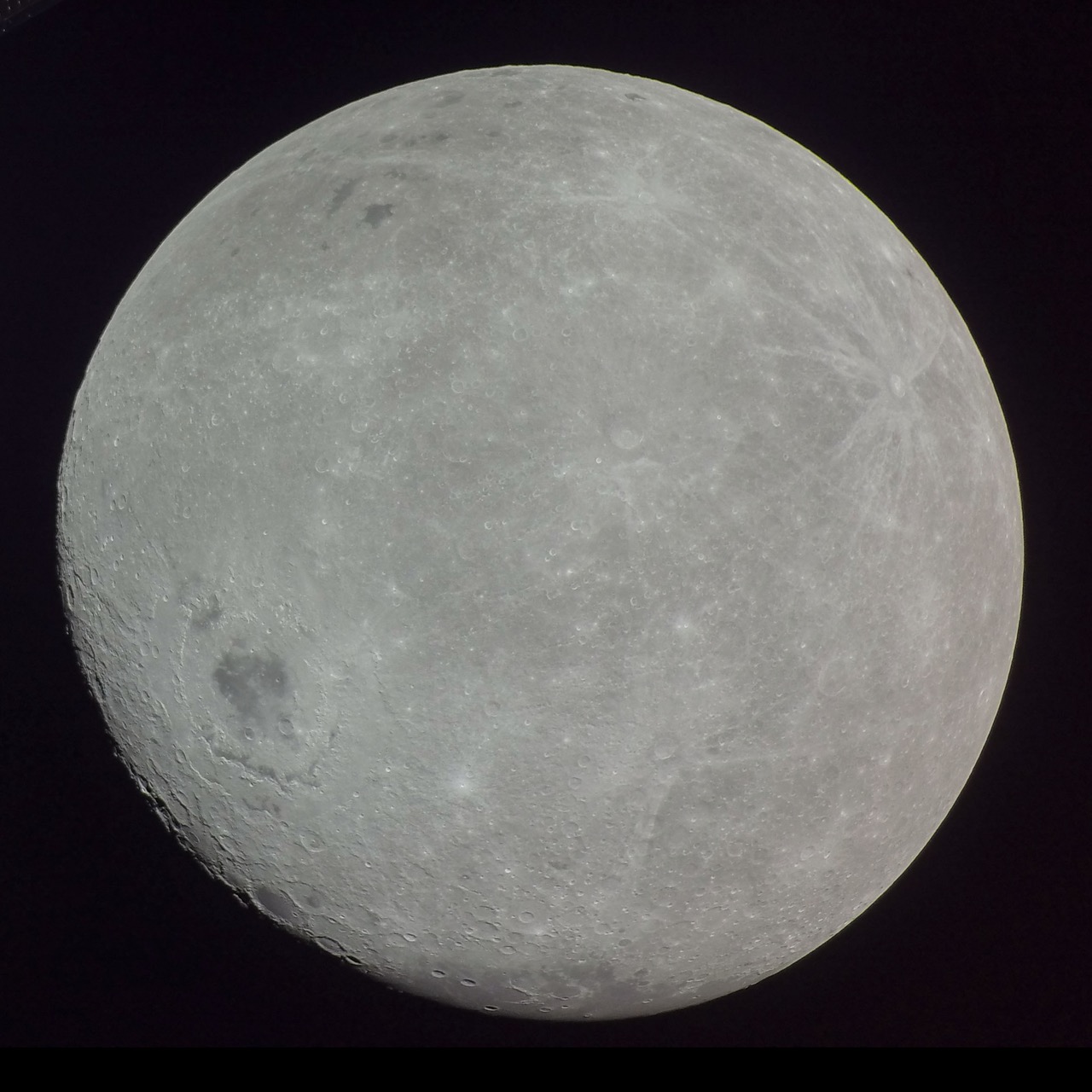
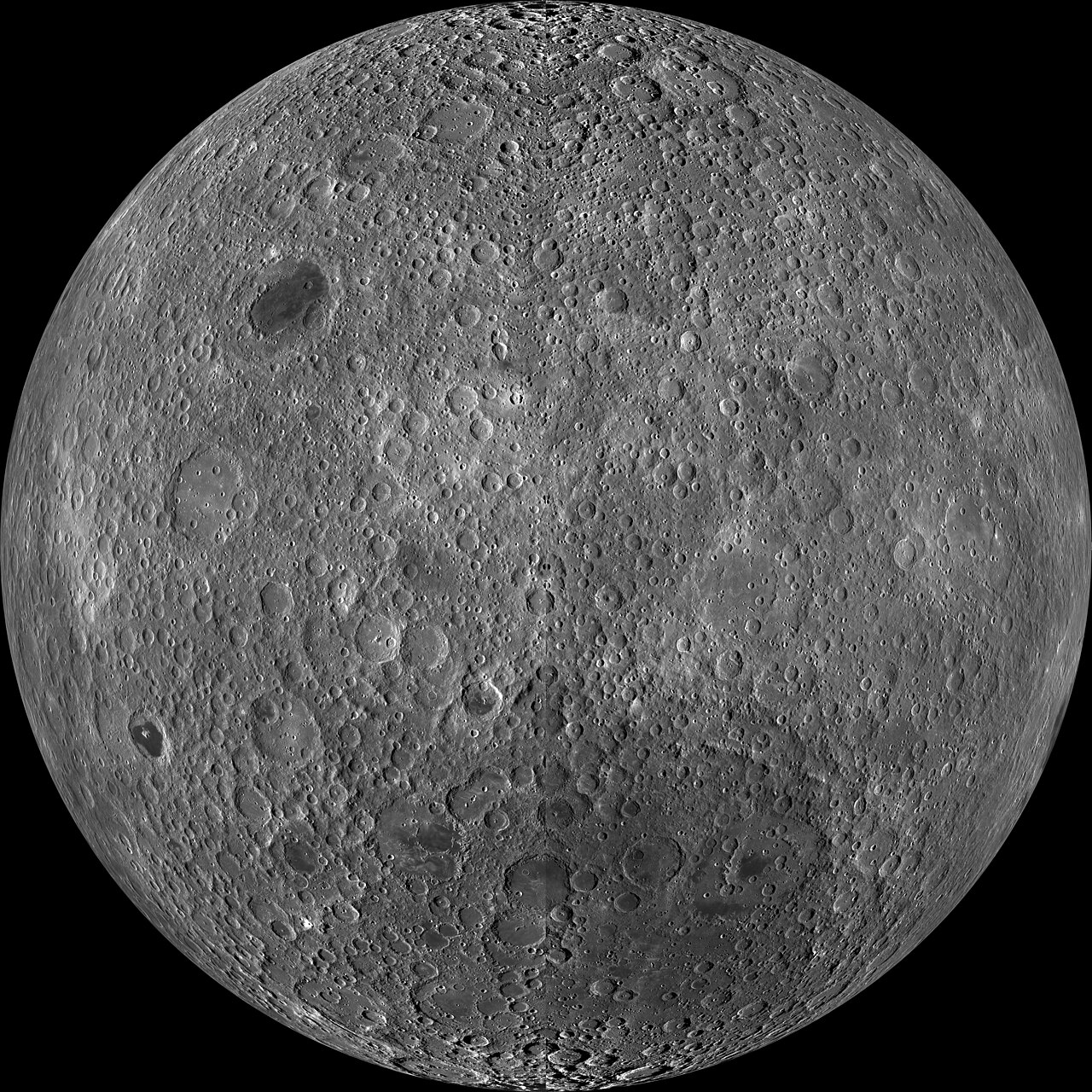
The far side is genuinely unseen rather than dark, and no human eye glimpsed it until Luna 3 radioed back grainy photos in 1959. What those first images revealed was a shock: the hidden face looks like a different world. The near side is splashed with the dark, smooth "seas" of ancient lava — the maria that form the Man in the Moon. The far side has almost none. Only about 1% of it is covered in those lava plains, versus roughly 31% of the side we see. Instead it is a brutally cratered, mountainous wilderness. NASA's GRAIL mission found the reason: the crust on the far side is markedly thicker, so impacts there rarely punched deep enough to release the basaltic lava that flooded the near side into smoothness.
We actually cheat — a little
Tidal locking sounds absolute, but nature left us a loophole. Because the Moon's orbit is a gentle ellipse rather than a perfect circle, and its axis is slightly tilted, it nods and rolls just a touch as it travels — speeding up and slowing down, tipping toward us and away. This rocking motion is called libration, and it lets us peek a little around each edge, top, and bottom over the course of a month. Add it all up and we don't see 50% of the Moon's surface; we glimpse about 59% of it from Earth. So the "hidden" hemisphere is really closer to 41% — still a vast, never-from-the-ground-seen frontier, but smaller than the legend suggests.
A face that is slowly drifting away
There is one final, quietly poignant twist. The same tidal embrace that locked the Moon's gaze on us is also pushing it away. Apollo astronauts left mirrored reflectors on the surface, and to this day scientists fire lasers at them and time the round trip. The verdict: the Moon is drifting away from us at about 3.8 centimeters a year — roughly the rate your fingernails grow.
It sounds trivial, and over a human lifetime it is. But run the clock far enough forward and the consequences are real. The Moon that hung over the dinosaurs was noticeably larger and closer; the disc our distant descendants squint at will be smaller and paler. And the perfect total solar eclipses we enjoy today, where the Moon almost exactly covers the Sun, will eventually become impossible — we happen to live in the brief cosmic window when the geometry lines up just right.
So the next time you catch the Moon hanging over the rooftops, remember that it is not standing still and it is not staring at us by accident. It is turning in flawless time, leaning in to show us one familiar face, and very slowly — a fingernail's width a year — saying goodbye.
Photos: NASA / GSFC / Arizona State University Lunar Reconnaissance Orbiter imagery and NASA far-side photography (public domain); near-side full Moon by Gregory H. Revera (CC BY-SA 3.0). Figures via NASA Science, NASA's GRAIL mission, and lunar laser ranging.