
The Octopus Robot: A Boneless Hand That Grabs Anything
Hand a jar to a robot arm and you'll watch a machine think the way machines do: rigid joints, hard fingers, a clamp that either fits or doesn't. Now imagine an arm with no joints at all — no bones, no gears, no clear shape — that simply pours itself around the jar, finds its grip, and holds on. That's roughly what an octopus does eight times at once, and it's why a small tribe of engineers has spent the last decade trying to copy it. The result is the soft robot: a machine built not from struts and motors but from rubbery, bending, almost living-feeling parts. And the octopus is its patron saint.
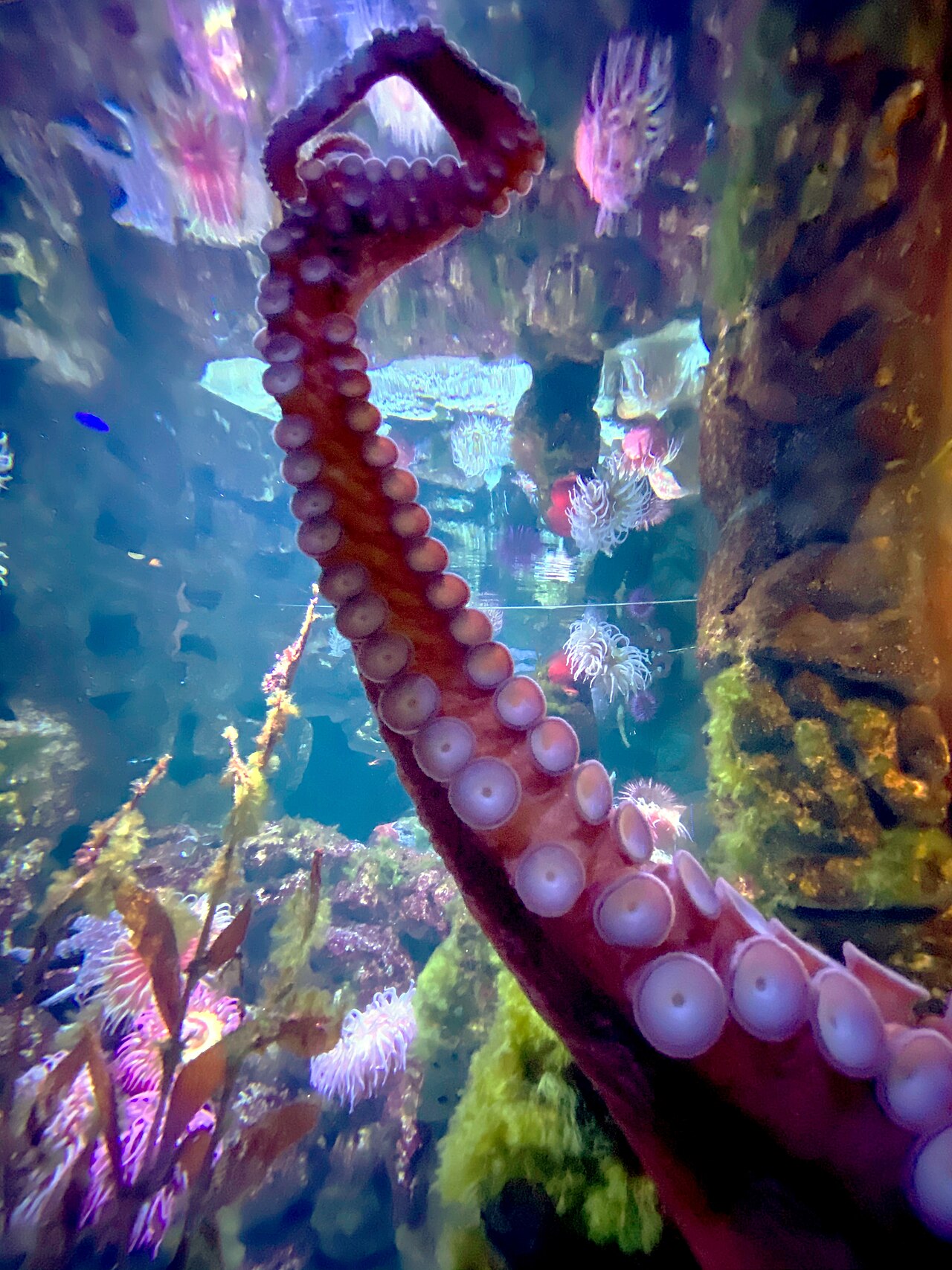
An arm with no bones and (almost) infinite moves
The trick starts with anatomy. An octopus arm has no skeleton — not a single bone or joint anywhere along its length. It's what biologists call a muscular hydrostat: a dense bundle of muscle, connective tissue, nerves and skin, with no rigid support at all. The muscles do double duty, acting as both the structure and the engine of movement.
Because there's no skeleton fixing where it can pivot, the arm can bend at any point, in any direction, twist, stretch and shorten — built from just four elementary moves (elongation, shortening, torsion and bending) that can happen anywhere along its length. Where your elbow gives you one hinge, an octopus arm has, for all practical purposes, an infinite number of degrees of freedom. The catch is the same one engineers face: infinite freedom is gloriously hard to control. An octopus solves it with an elegant cheat — to reach for something it sends a single bend traveling like a wave from the base of the arm to the tip, turning an impossibly complex limb into one simple, repeatable gesture.
The grip that conforms instead of clamps
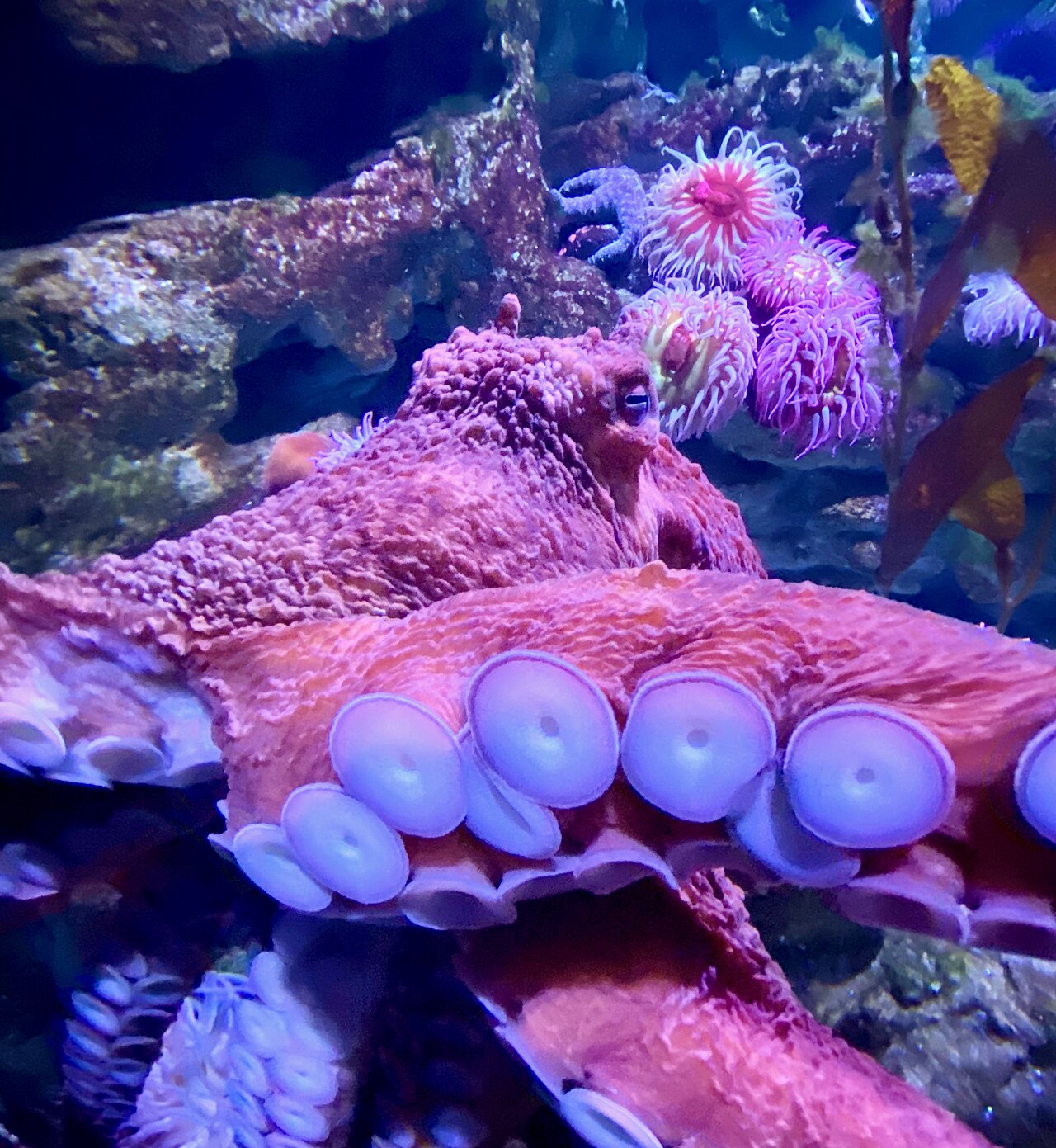
The other half of the magic is the underside. Each arm carries roughly 200 suckers, around 2,000 across the whole animal, and they are not passive cups. Every sucker can grip, taste and feel independently, and the octopus can curl a suction-tight seal around an object whatever its shape — a smooth jar, a jagged shell, a wriggling crab.
This is the part that breaks conventional robotics. A normal gripper needs to know an object's shape in advance to grasp it. A soft, suckered surface doesn't care: it conforms to whatever it touches. That single property — adapt to the object instead of forcing the object to fit the tool — is the entire pitch for soft robotics, and it's why a fishing net of a hand can pick up both an egg and a wrench without changing anything.
Building the copy: 6 arms, 30 suckers, one rubber membrane
In 2024, researchers turned all of this into hardware: an octopus-inspired soft robotic gripper made of soft, flexible material instead of metal. Their design has six arms, thirty suckers, and — the clever bit — a ventral membrane, the same webbing an octopus has between its arms. That membrane lets the gripper do something rigid hands can't: drape over irregular objects, or scoop several things at once, conforming around them for a more secure hold.
It runs in two modes. Inflate all the suckers together and it works by suction. Drive each arm individually and it grasps like a hand wrapping its fingers. So one tool can switch between a vacuum-cup pickup and a many-fingered embrace depending on what it meets — no tool change, no reprogramming the shape of the target.
A robot that crawls and swims to its prize
Here's where the imitation stops being a party trick. Most robot grippers are dumb passengers, bolted to an arm that carries them around. This one travels on its own. The same six soft arms that grasp can also row the gripper across the seabed in any direction, and the ventral membrane works as a crude fin, letting it swim in three dimensions through open water. The four notches cut into the membrane even let water flow through as it sinks, so it falls faster and lands on a more stable spot — a small detail lifted almost directly from how a real octopus drifts down.
For work underwater, that combination is the whole point. A diver-free machine that can crawl into a crevice, swim to a delicate target, and conform its grip to a fragile or oddly shaped object is exactly what's needed for salvage, marine biology and underwater repair — places where a hard steel claw would either miss the object or crush it.
The strangest part is the brain we left out
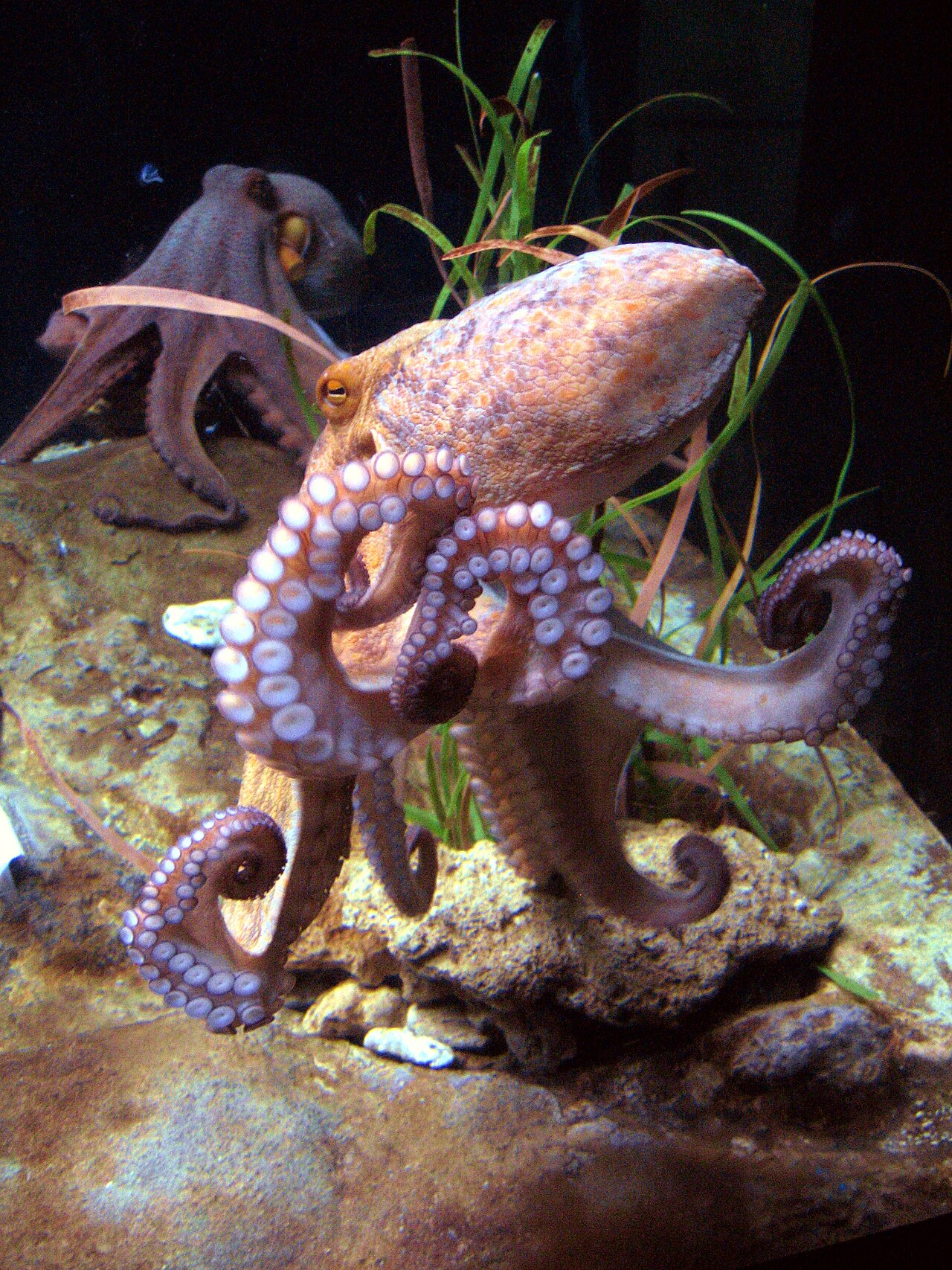
The gripper copies the octopus's body. What it can't yet copy is the control. An octopus carries around 500 million neurons, and roughly two-thirds of them live not in its central brain but spread out along its arms — each limb crowded with nerve clusters that let it taste, decide and react on its own, with little oversight from headquarters. An octopus arm is, in a real sense, partly thinking for itself.
That's the frontier soft robotics hasn't crossed. We've built the boneless, conforming, self-propelling body. We have not built the distributed, eight-way mind that knows what to do with it. For now our octopus robots are brilliant hands waiting for the rest of the animal to be invented — which means the most alien intelligence in the ocean still has plenty left to teach us.