
The James Webb Telescope's 'Impossible' Galaxies
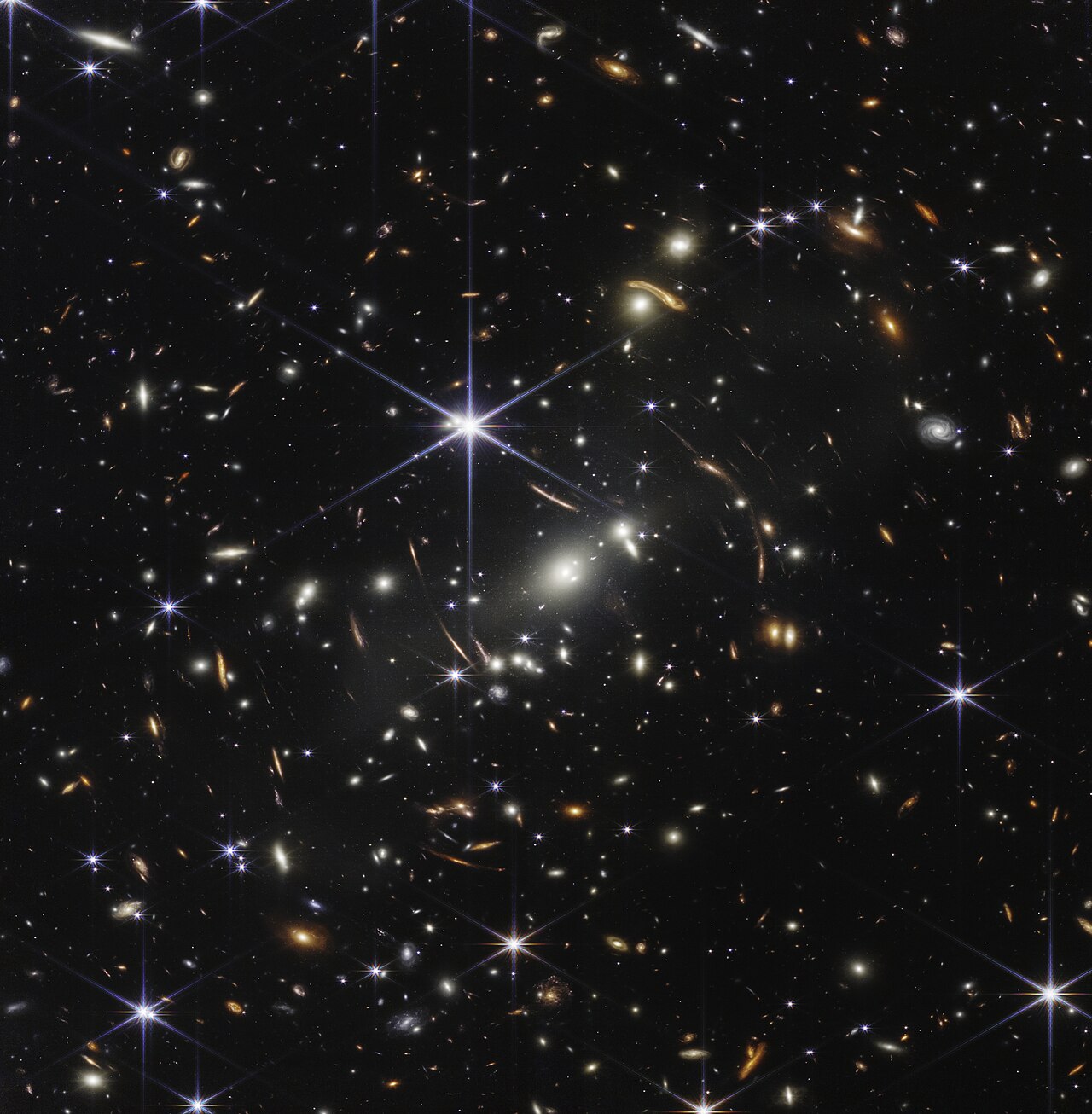
When the James Webb Space Telescope opened its golden eye on the deep sky, astronomers expected to see the universe's awkward toddler years: faint smudges, half-formed clumps of gas, the first hesitant stars flickering on. Instead, Webb found galaxies that looked all grown up — big, bright, and apparently full of stars — sitting just 300 to 400 million years after the Big Bang. On the cosmic clock, that's barely past sunrise. It was as if you photographed a newborn nursery and found a few toddlers already doing algebra. Theorists called them, only half-joking, the "impossible" galaxies.
Too much, too soon
The problem is bookkeeping. In the standard model of the cosmos, galaxies build up gradually — gas falls together, stars ignite, generations live and die, and the whole thing slowly fattens over billions of years. There simply hasn't been enough time, that early, to forge the number of stars these galaxies seemed to contain. Some looked as massive and mature as galaxies that had supposedly enjoyed billions of years of head start.
For a while, this set off genuine alarm. A few researchers wondered, out loud and in print, whether Webb was quietly breaking cosmology itself — whether our timeline of the universe needed rewriting. Headlines duly announced that the Big Bang was in trouble. The truth turned out to be subtler, and in some ways stranger.
The trick of the light
Here's the catch hiding in the word "bright." When we look at a distant galaxy, we don't count its stars directly — we measure how much light pours out and work backwards to guess the mass. That guess assumes the light comes from stars. But what if a big chunk of it doesn't?
Enter the leading suspect: a supermassive black hole. Black holes themselves emit nothing, but the gas spiraling into one heats up ferociously and blazes as an accretion disk — a glowing whirlpool that can outshine billions of stars from a region smaller than our solar system. If an early galaxy hides a hungry, fast-feeding black hole at its core, that accretion glow can inflate the total brightness enormously. Mistake that light for starlight, and you'll wildly overestimate how many stars — and how much mass — the galaxy holds.
Suddenly the "impossible" galaxy isn't impossible at all. It's a modest galaxy wearing a very loud piece of jewelry.
Enter the little red dots
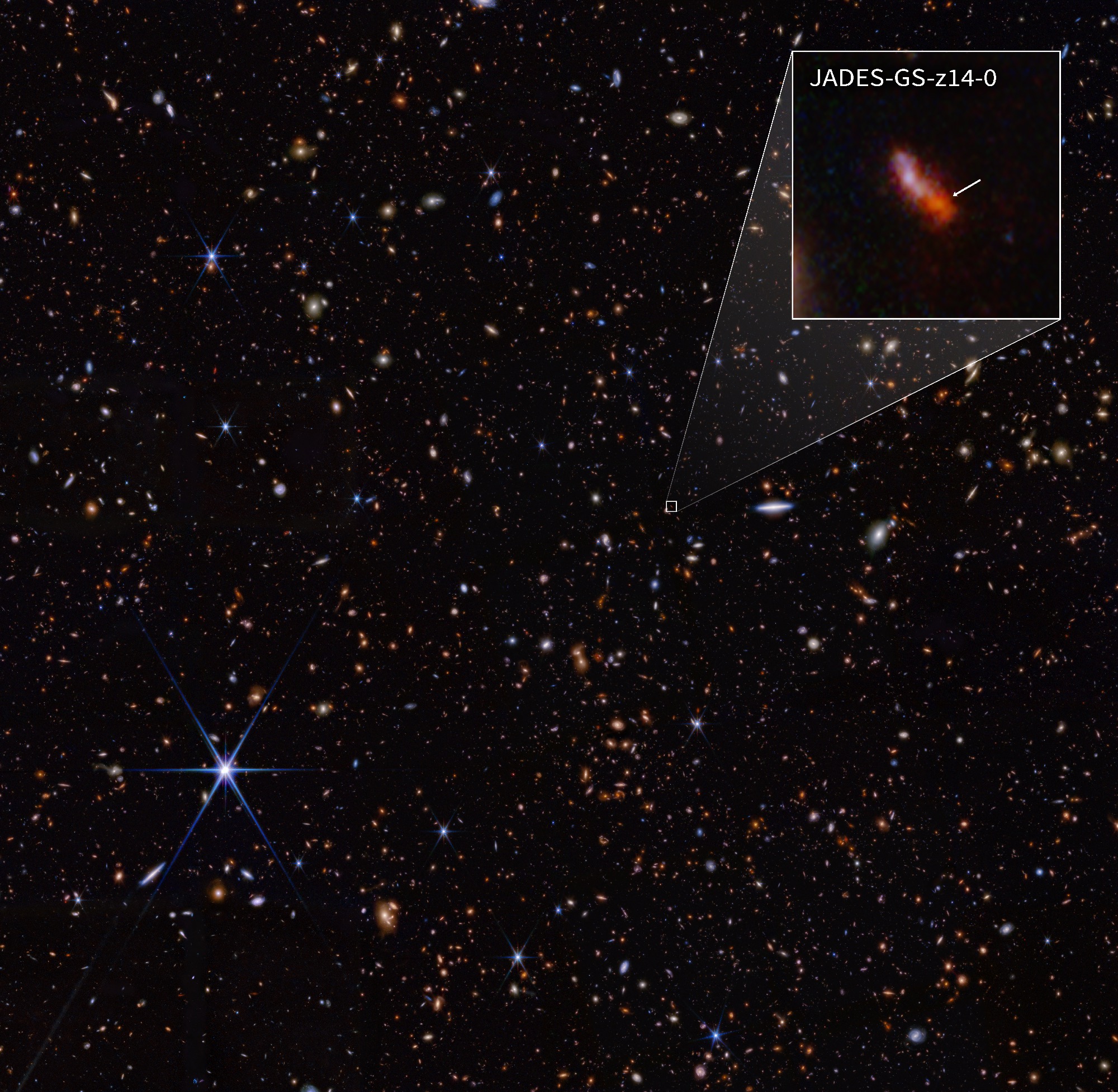
This idea got a vivid face when Webb turned up a strange new population: the "little red dots." They are exactly what they sound like — tiny, intensely red points of light scattered through the early universe, completely invisible before Webb existed. Their spectra show the fingerprints of gas whipping around at enormous speeds, the telltale sign of a black hole feeding hard.
The plot thickened in 2025. Detailed observations suggested many little red dots are swaddled in dense cocoons of ionized gas. That cocoon does two sneaky things: it hides the X-rays you'd normally expect from a feeding black hole, and it scatters the light in a way that can make the black hole look far more massive than it really is. One team even floated the idea of a "black hole star" — an object where a growing black hole and a shroud of gas blur into something we've never had a name for. Estimates of these black holes' masses dropped by a factor of a hundred once the gas trickery was accounted for.
A debate that's still wide open
None of this is settled, and that's the honest, exciting part. The accretion-disk story is compelling, but it isn't the only contender. Plenty of early galaxies do appear to be genuinely starlit, and the universe may simply have been more efficient at building stars in its first chapters than anyone guessed — bursts of star formation cramming in mass faster than the gentle textbook picture allows. For any given "impossible" galaxy, astronomers are still arguing whether they're seeing a black hole's blaze, a starburst's flare, or some mix of both.
What's beautiful is that Webb didn't break the universe — it caught us assuming. We'd been reading brightness as a headcount of stars, and the cosmos quietly reminded us that light can lie. The "impossible" galaxies may turn out to be perfectly possible the moment we stop counting them wrong. Somewhere out there, 13 billion years deep, a red dot the size of a pixel is still keeping its secret — and for now, that pixel is winning the argument.