
The Jellyfish That Refuses to Die
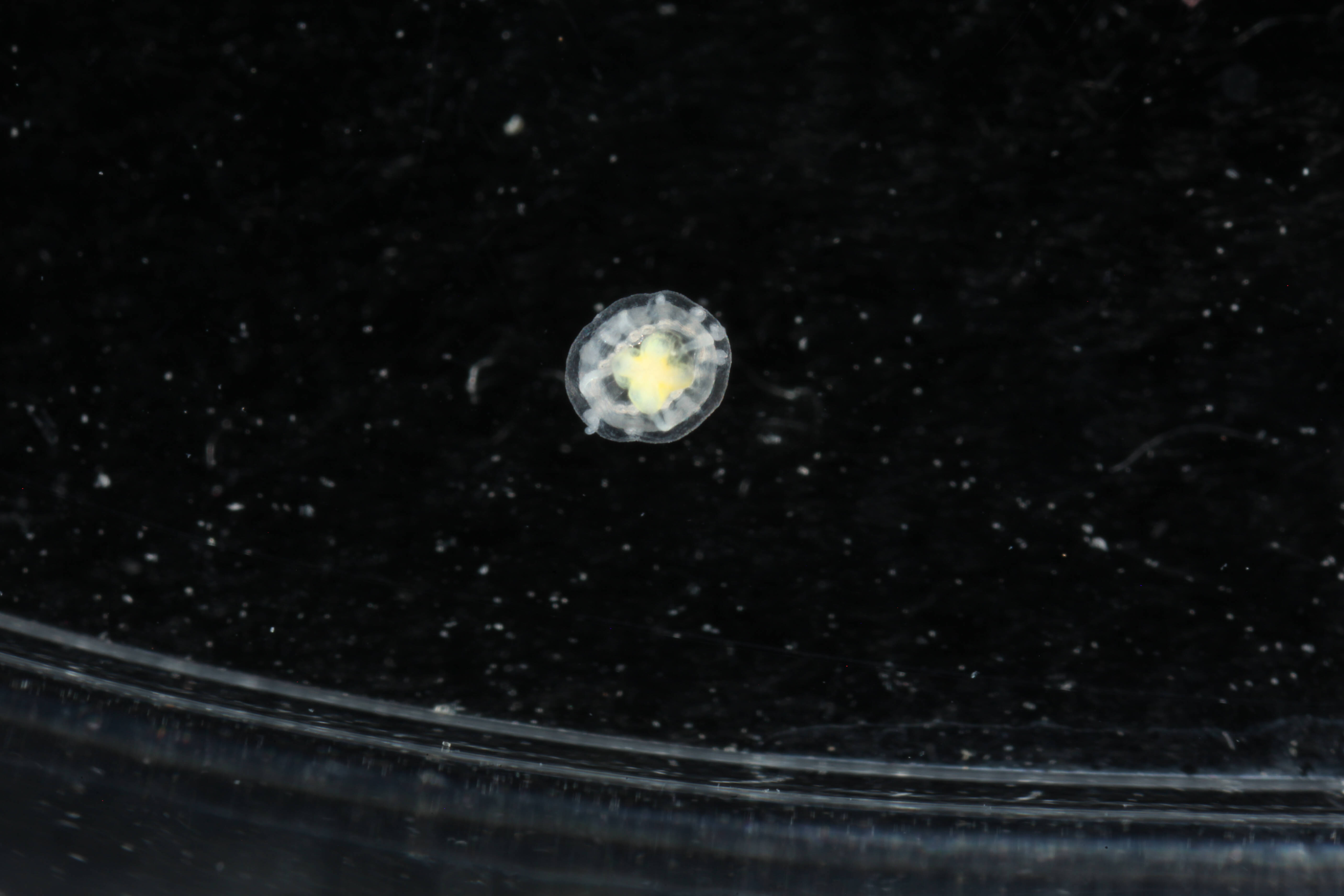
Every living thing you have ever met is on a one-way trip. Cells wear out, damage piles up, and eventually the clock runs out. It is the one rule nobody breaks. Except, it turns out, for a jellyfish the size of your pinky nail. Turritopsis dohrnii — the "immortal jellyfish" — does something so strange that biologists spent a century not quite believing it: when it gets old, sick, or badly hurt, it doesn't die. It hits rewind. The aging adult collapses back into a baby version of itself and starts its whole life over again, potentially forever.
A creature that ages backwards
To understand the trick, you need to know how a normal jellyfish lives. It begins as a fertilized egg, becomes a tiny swimming larva, and settles on a rock or shell to become a polyp — a little stalk with a mouth and tentacles, anchored in place. The polyp eventually buds off free-swimming medusae, the pulsing umbrella shape everyone pictures when they hear the word "jellyfish." Egg, larva, polyp, medusa, then old age and death. One direction only.
Turritopsis dohrnii breaks the arrow. When an adult medusa is starving, wounded, or stressed by a sudden change in temperature, it doesn't try to heal. It dismantles itself. The bell shrinks, the tentacles pull in, and the whole animal slumps into a featureless blob — a cyst — that drifts down and glues itself to a surface. Within about 24 to 36 hours, that blob has reorganized into a fresh polyp. From there it grows new medusae, genetically identical, and the cycle begins again. It is as if a butterfly, sensing the end, could melt back into a caterpillar and crawl off to live another life.
The cellular sleight of hand
The secret is a process called transdifferentiation, and it is the part that makes biologists lean in. Most animals build new tissue from stem cells — generic, unspecialized cells held in reserve. Turritopsis skips that step entirely. Its already-finished, specialized cells simply change jobs. A muscle cell can become a nerve cell. A nerve cell can become part of the digestive system. Cells that should be locked into one identity for life unlock themselves and reassign, rebuilding a young polyp out of the body of an old jellyfish.
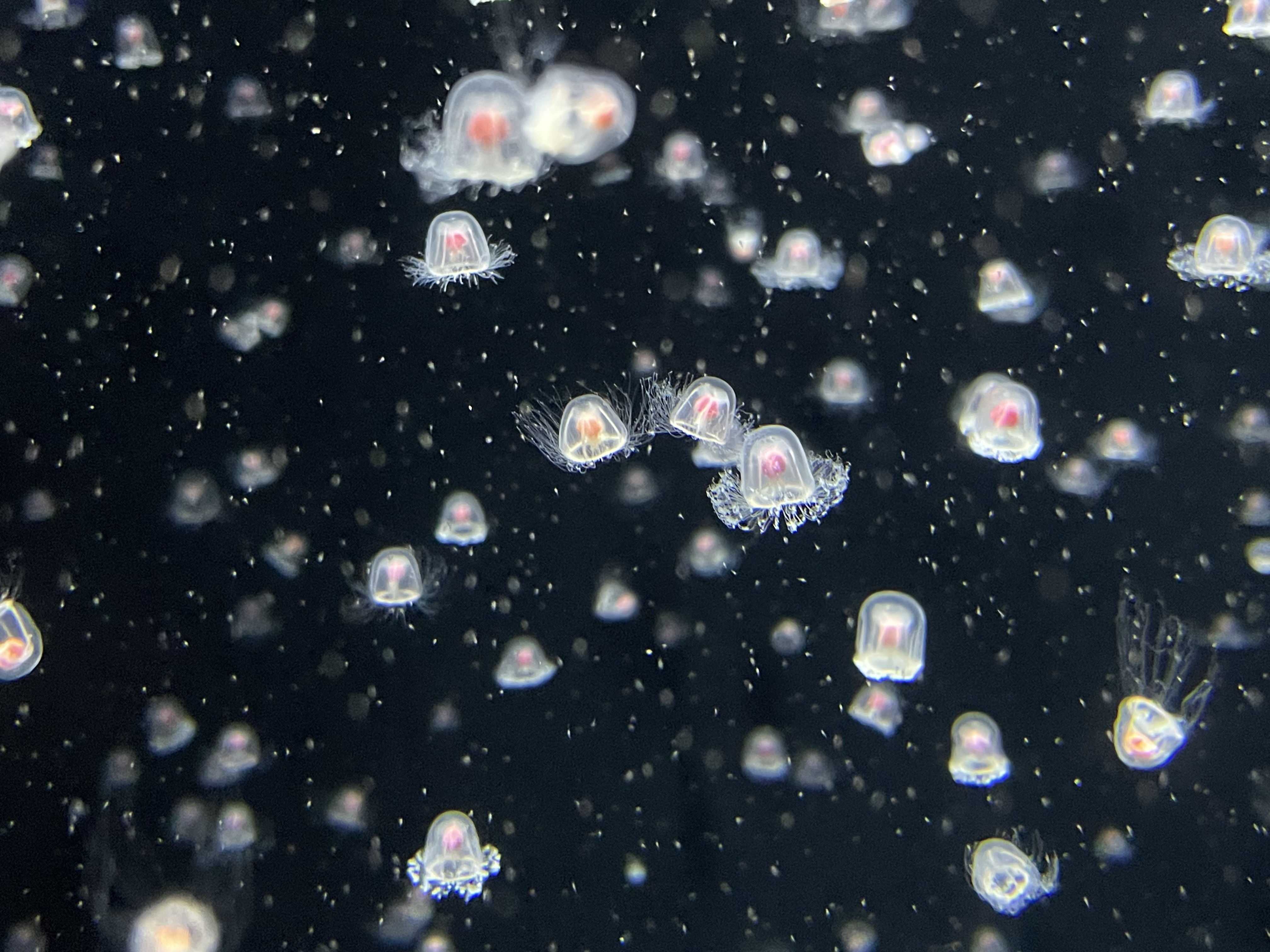
That is genuinely radical. In your body, a heart cell that decided to become a skin cell would be a catastrophe — that's roughly what cancer is, identity going haywire. Turritopsis does it on purpose, in an orderly way, and ends up healthier for it. Even more curiously, recent genetic work suggests the jellyfish maintains its telomeres — the protective caps on the ends of chromosomes that fray a little every time most cells divide. In us, fraying telomeres are one of the ticking clocks of aging. This animal appears to have figured out how to keep resetting the clock.
How we figured it out
The jellyfish was first described back in 1883, in the Mediterranean, and for over a century nobody suspected anything unusual. It looked like just another tiny hydrozoan. The breakthrough came in the 1990s, almost by accident: a group of researchers studying these jellyfish noticed that specimens which should have died were instead reverting to the polyp stage — over and over, with no obvious end. Under laboratory conditions, the same animals have been observed cycling back again and again, the only known multicellular creature with what amounts to a built-in escape hatch from old age.
It's worth being precise about what "immortal" means here, because it isn't magic. This jellyfish can still very much die. It gets eaten by fish and sea slugs, swept into filters, killed by disease before it has a chance to reset. "Biologically immortal" means it has no built-in expiration date — left undisturbed and healthy, it has no programmed reason to die of old age. In the wild, almost none of them ever cash in that potential. They just don't have to die the way the rest of us do.
Why scientists can't look away
A pinky-nail jellyfish that reverses aging is, understandably, catnip for researchers who study how humans grow old. In 2022, scientists sequenced its genome and compared it to a close, mortal cousin, hunting for the genes that make the difference — the molecular instructions for cleaning up damaged DNA, recycling worn-out cell parts, and pulling off that identity-swapping trick. Nobody is promising an immortality pill. But the dream is more modest and more plausible: if we can understand how one animal coaxes a tired old cell into becoming young and useful again, we might learn to repair our own damaged tissue — hearts, nerves, the things that don't heal well on their own.
Here's the part that lingers. Turritopsis dohrnii may already be quietly drifting through harbors and bays all over the world, hitchhiking in the ballast water of ships — a creature that has, in a sense, opted out of dying, spreading across the planet almost unnoticed. The thing that has eluded pharaohs, emperors, and billionaires for all of history turned out to be sitting in a drop of seawater the whole time. We just had to be small enough, and strange enough, to notice.
Photos: Turritopsis dohrnii via Dr. Karen J. Osborn (public domain, CC0); Turritopsis nutricula via Totti (Wikimedia Commons, CC BY-SA 4.0); glowing jellyfish via Unsplash (free to use). Science via the Natural History Museum (London), PNAS, and the 1990s observations by Italian researchers including Ferdinando Boero and Stefano Piraino.