
It Rains Diamonds Inside Neptune
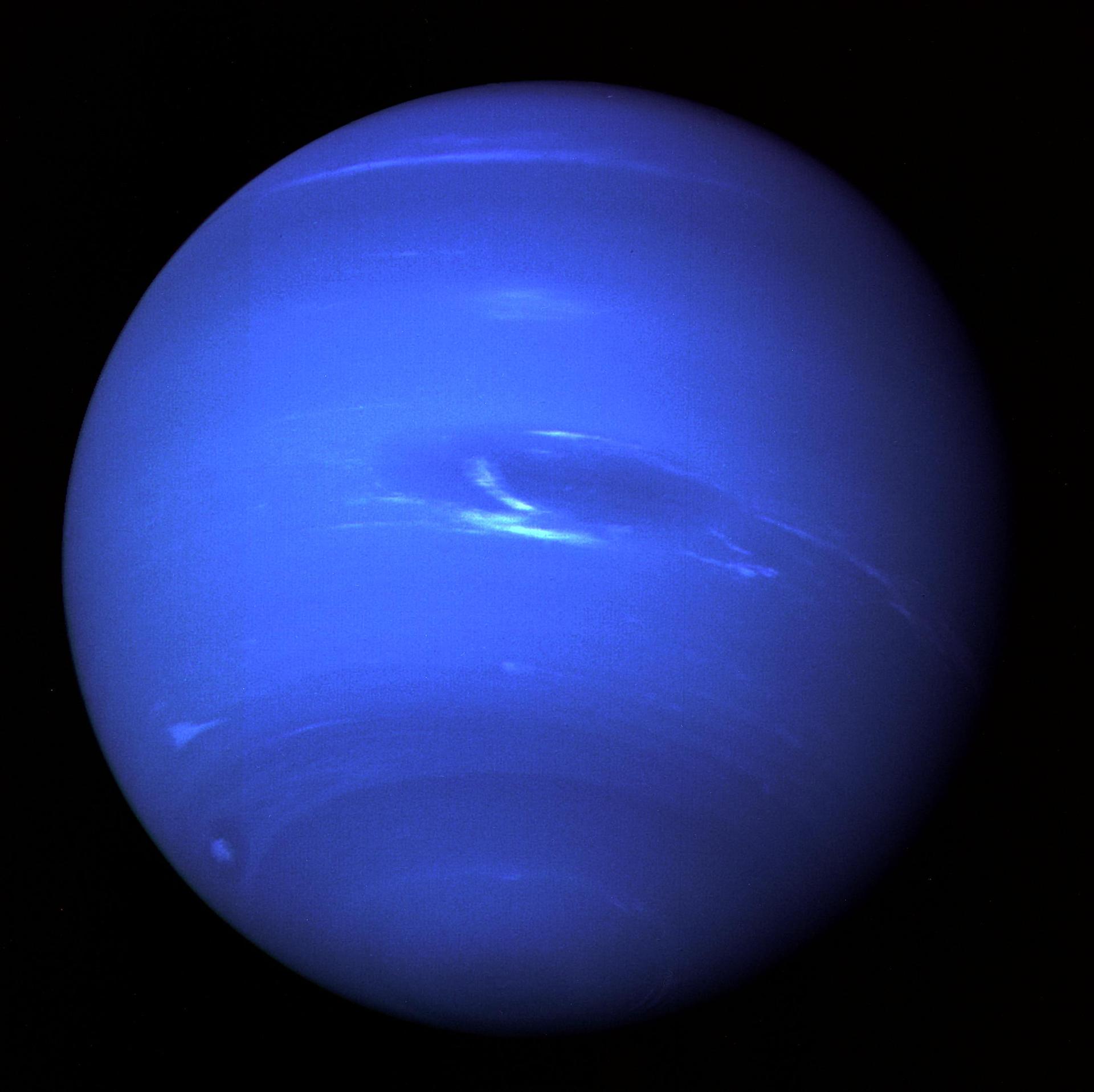
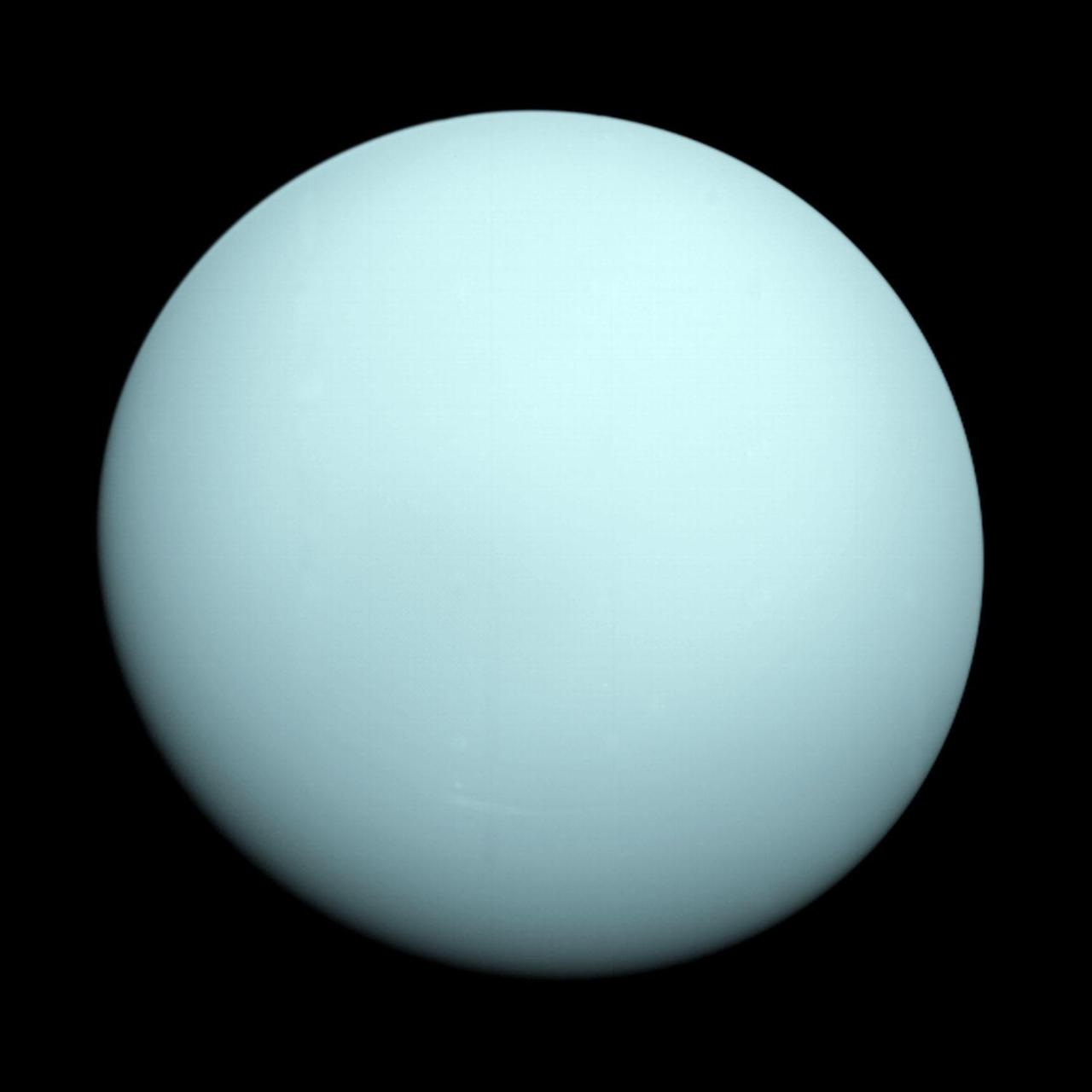
Somewhere about 5,000 miles beneath the placid blue face of Neptune, the weather gets strange. Not stormy-strange — chemically strange. Under that much crushing pressure, the planet's atmosphere stops behaving like air and starts behaving like a forge. Carbon atoms get squeezed together until they snap into the hardest, most coveted arrangement nature knows how to make. And then, the theory goes, those tiny crystals do what heavy things do: they fall. It rains diamonds inside Neptune and Uranus. For decades that was a beautiful guess. A few years ago, a team made it rain on a lab bench in California.
How you build a storm of diamonds
Start with the right ingredients. Neptune and Uranus aren't gas giants like Jupiter — they're ice giants, thick with water, ammonia, and methane. Methane is the key. Each methane molecule is one carbon atom holding hands with four hydrogen atoms, and the deep interior of these planets is wall-to-wall with hydrocarbon chains built from exactly that.
Now turn up the dial. Descend a few thousand miles and the pressure climbs to roughly 1.5 million times Earth's surface atmosphere, with temperatures around 5,000°C — hotter than the surface of many stars, and squeezed harder than the bottom of any ocean. Under those conditions the hydrocarbons can't hold their shape. The bonds tear apart: hydrogen splits off one way, and the freed carbon atoms are pressed so violently together that they lock into the rigid lattice of diamond. The same physics that makes diamonds rare and precious on Earth becomes, down there, just the local weather.
A diamond storm on a bench, lasting a billionth of a second
The hard part is that no probe has ever flown into Neptune to watch this happen — and none ever will. The pressures would flatten any spacecraft instantly. So in 2017 a team led by physicist Dominik Kraus did the next best thing at the SLAC National Accelerator Laboratory in California: they reproduced the inside of an ice giant for a fraction of a heartbeat.
Their stand-in for planetary methane was wonderfully humble — polystyrene, ordinary plastic, the stuff of foam cups and packaging. It carries the same carbon and hydrogen as the real thing. They hit it with a powerful optical laser to drive two overlapping shock waves through the sample, slamming it to about 150 gigapascals — that planetary 1.5-million-atmosphere pressure — and thousands of degrees, right where the shock fronts crossed and the pressure spiked highest.
To see the result, they used the lab's X-ray free-electron laser, firing X-ray pulses lasting just 50 femtoseconds — fifty quadrillionths of a second. A flash that brief can freeze atoms mid-motion, like a camera with an impossibly fast shutter. And in those frozen frames, the carbon had reorganized: where the shocks overlapped, the plastic had turned to diamond. "When I saw the results," Kraus said, "it was one of the best moments of my scientific career."
Almost all of it turned to diamond
The most striking part wasn't that it worked — it was how thoroughly. Nearly every carbon atom in the plastic had been swept up into diamonds. Not a stray grain here and there: the carbon converted wholesale.
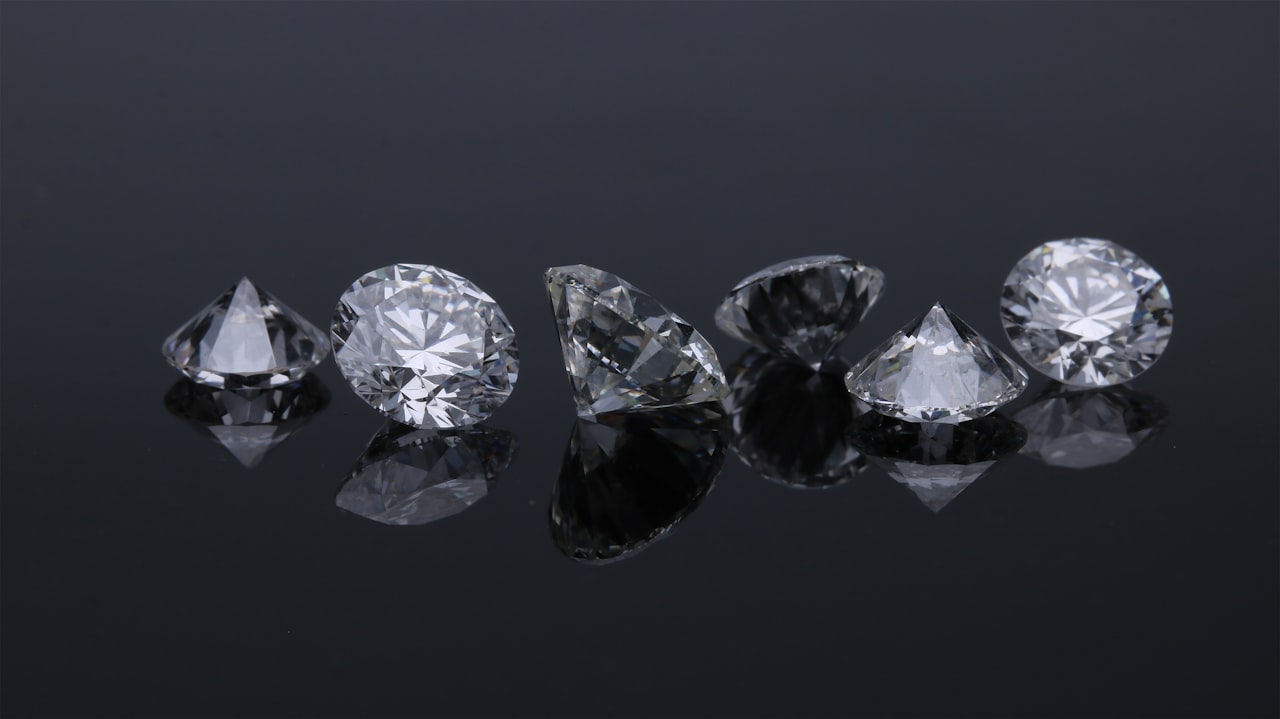
The diamonds themselves were nanodiamonds, just a few billionths of a meter across — too small to set in a ring, but unmistakably diamond by their atomic signature. Inside Neptune and Uranus, with thousands of years to grow instead of a femtosecond flash, the crystals are predicted to get far, far bigger — possibly millions of carats each. And because diamond is denser than the slush around it, those gems don't just sit there. They sink. Over geological time they're thought to drift down through the icy mantle and pile up in a glittering layer near the core — a slow, perpetual snowfall of jewels, falling for as long as the planets have existed.
Why this one stays with me
There's a tidy bit of cosmic irony here. On Earth we mine diamonds from a few rare pockets of deep crust, fight over them, lock them in vaults. Out at the cold edge of our own solar system, two unremarkable-looking blue worlds are casually manufacturing them by the planet-load and burying the harvest where no one can ever reach it.
It also flips a small assumption on its head. We tend to think of diamonds as the product of one freakishly lucky planet. But the recipe — carbon, crushing pressure, heat — is everywhere. The same conditions almost certainly exist inside ice giants orbiting other stars, which means diamond rain may be one of the more ordinary kinds of weather in the universe. Rare here, routine out there.
So the next time someone tells you diamonds are forever, you can tell them something better: somewhere right now, on a planet too hostile to ever visit, it is quietly, endlessly raining them.
Photos: NASA/JPL Voyager 2 imagery (public domain); diamond via Unsplash (free to use). Science via SLAC National Accelerator Laboratory, Lawrence Livermore National Laboratory, and the 2017 Nature Astronomy study led by Dominik Kraus.