
Cochlear Implants: The Robotic Shortcut Into the Brain
Here is the thing almost everyone gets wrong about cochlear implants: they are not hearing aids. A hearing aid is basically a tiny, very clever loudspeaker — it takes sound and makes it louder, then pushes it down the same ear canal you were born with. A cochlear implant does something far stranger and far bolder. It does not amplify sound at all. It throws away the broken part of the ear entirely and wires a microphone straight into your nervous system. It is, quite literally, a robotic shortcut into the brain.
The part of the ear that usually breaks
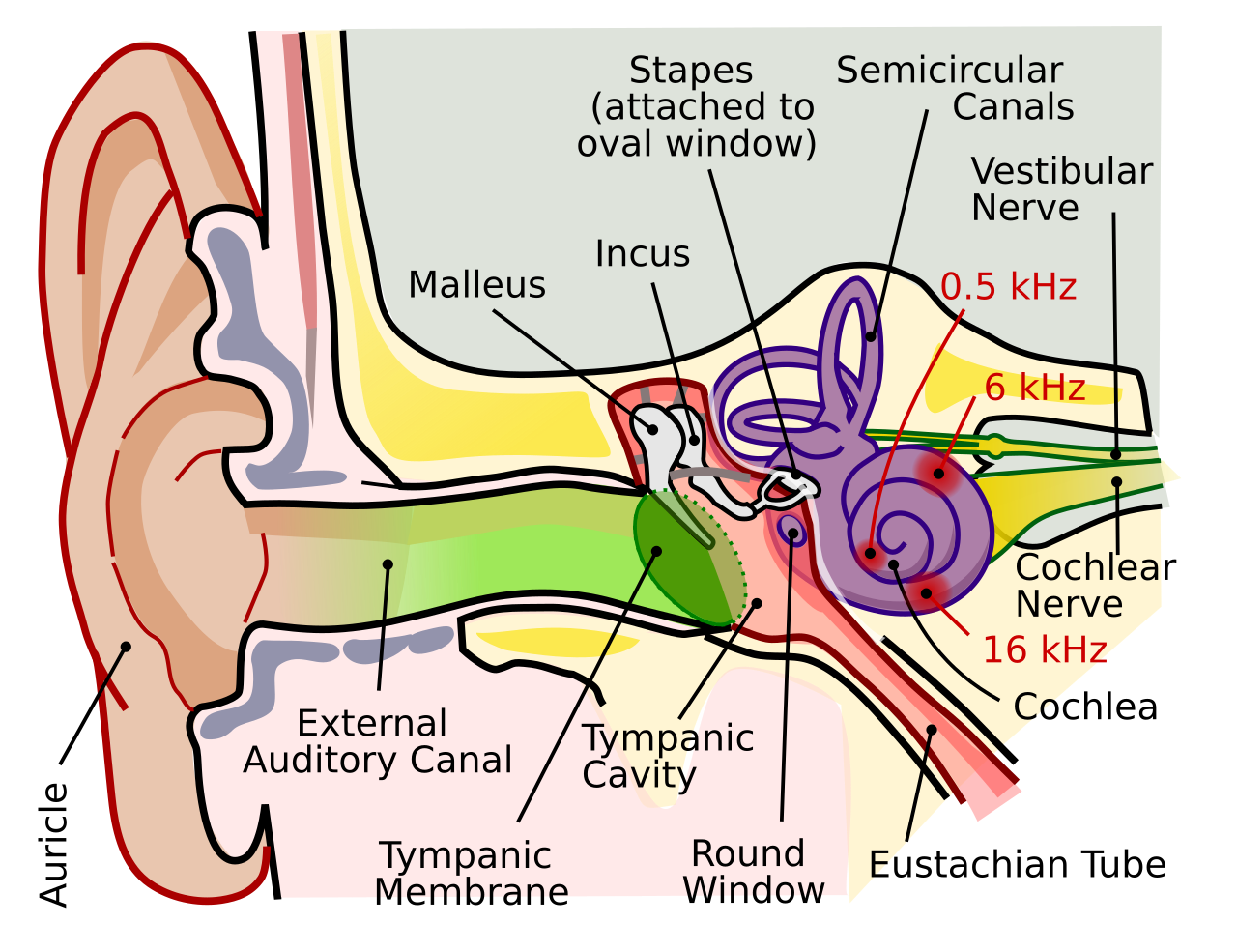
To see why that shortcut matters, you have to meet the cells that fail. Deep inside the cochlea — the snail-shaped, fluid-filled spiral in your inner ear — sit roughly 16,000 microscopic hair cells. When sound waves ripple through the cochlear fluid, these hair cells wave like seagrass in a current, and that motion is what they convert into the electrical pulses your auditory nerve carries to the brain. They are the translators. Sound goes in, nerve language comes out.
The problem is that hair cells are fragile and they do not grow back. Loud noise, certain medications, aging, illness, or simply bad genetic luck can kill them, and once they are gone, they are gone for good. A hearing aid cannot help here, because there is nothing left to amplify to. You can crank the volume as high as you like; if the translators are dead, the message never gets converted. The sound arrives at a closed door.
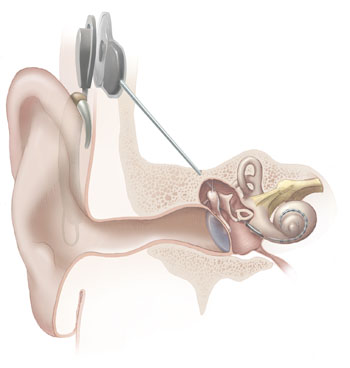
So you skip the translators entirely
This is the audacious idea at the heart of the implant: if the hair cells are dead, don't try to revive them — go around them. A cochlear implant captures sound with an external microphone, has a small processor chop that sound into digital instructions, and then delivers those instructions as electrical pulses directly to the auditory nerve. The dead hair cells are simply cut out of the loop. The implant is doing their job for them, in their own language, electricity.
That bypass is the whole trick. Where a hearing aid says "let me make this louder so your ear can hear it," the implant says "your ear can't hear it, so I'll speak to your nerve myself." It is the difference between shouting at someone behind a locked door and walking around to a window you cut into the wall.
The cochlea is already a piano — the implant just plays it
Here is the part that feels like an elegant cheat. The cochlea isn't a single microphone; it's laid out like a keyboard. Its spiral is tonotopically organized, meaning different positions along the coil respond to different pitches. The base of the spiral handles high frequencies, the tip handles low ones — a smooth gradient of pitch wound up like a clock spring. It is a map of sound written into anatomy.
Surgeons exploit that map. They thread a slender electrode array right inside the cochlea, and each electrode is parked at a different spot along that pitch gradient. Fire the electrodes near the base and the brain perceives high notes; fire the ones near the tip and it hears low notes. The implant is essentially playing the cochlea like a piano, pressing the right "keys" for each sound.
Two halves, talking through your skin
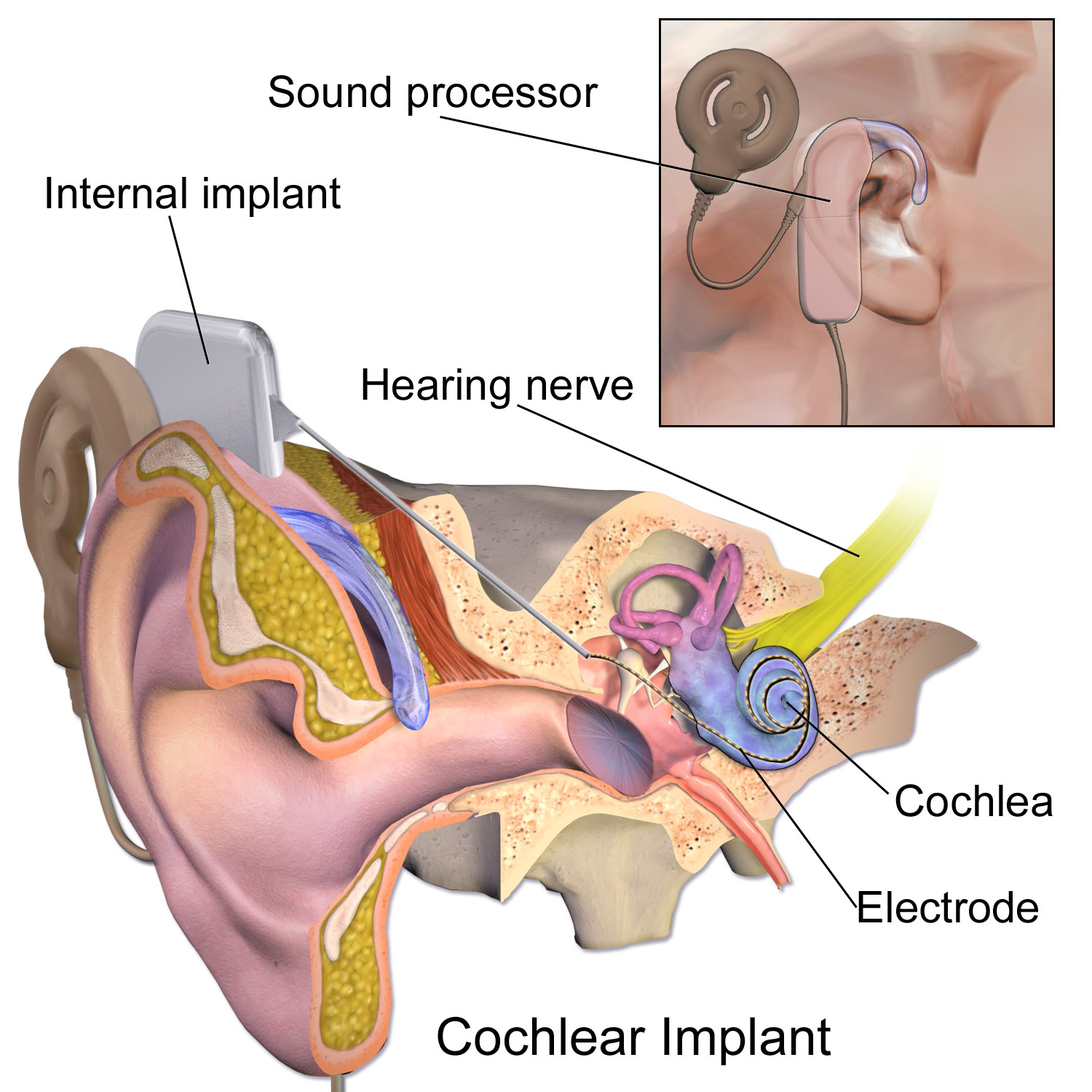
A cochlear implant is really two devices that never physically touch. The external half — the microphone, processor, and a transmitting coil — sits behind the ear. The internal half — a receiver and that electrode array — is surgically buried under the skin and threaded into the cochlea. Between them is a layer of living skin, and somehow the signal has to cross it.
It does so without any wire or plug. Each half carries a magnet, so the external coil snaps into place over the internal one through the skin, like two halves of a magnetic clasp. Then the outer coil beams both the digitized sound and the power across that skin barrier by radio waves — the same inductive trick that charges a phone on a wireless pad. No socket, no cable poking through the body, just an invisible handshake through a few millimeters of you.
A blunt instrument that the brain makes beautiful
Now for the humbling number. A healthy cochlea uses around 16,000 hair cells to render sound in exquisite detail. A cochlear implant replaces all of them with, typically, just 12 to 22 electrodes. That is an almost absurd downsampling — like repainting the Mona Lisa with a box of two dozen crayons.
By rights it should sound terrible, and at first it often does: early recipients describe robotic, cartoonish, underwater voices. But the auditory cortex is a relentless learner. Over weeks and months, the brain teaches itself to read those two dozen crude channels as speech, music, laughter, a name being called across a room. Children born deaf can grow up to speak fluently on the strength of it. The real marvel of the cochlear implant isn't the electrode at all — it's that the brain, handed a wildly impoverished signal smuggled in through a back door, quietly decides it is good enough to call hearing.