
The Axolotl: The Salamander That Grows Back Good as New
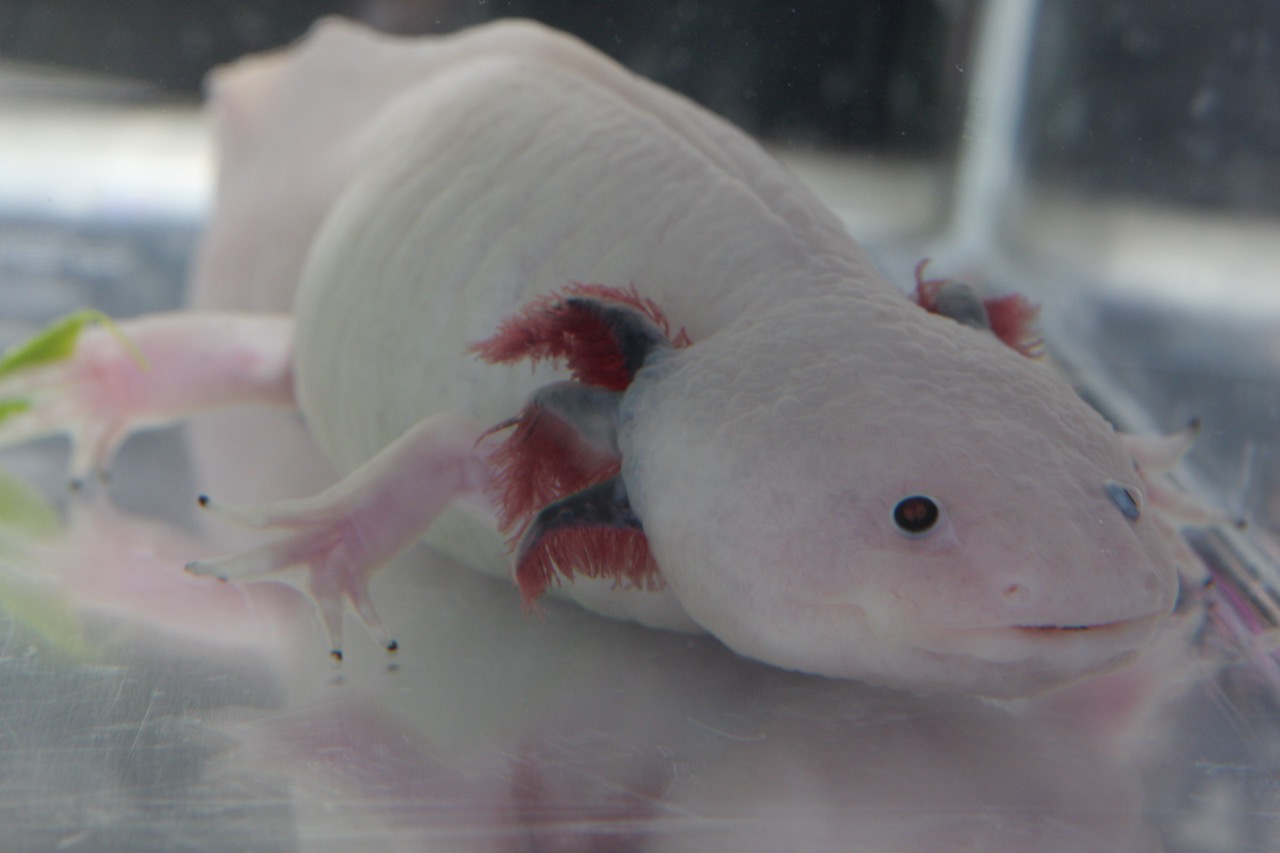
Cut off a salamander's leg and, most of the time, you get a stump and a scar — the same dead-end every other four-limbed animal hits. Cut off an axolotl's leg and something closer to magic happens. Over the following weeks the wound doesn't just close; it rewinds. The animal grows back a whole new limb — bones, muscle, nerves, blood vessels, skin — perfectly sized, perfectly placed, with no scar to show where the old one ended. And it can pull the same trick on its heart, its lungs, its eyes, its spinal cord, even slabs of its own brain. This pink, permanently-juvenile Mexican salamander is the closest thing biology has to a reset button, and it is teaching us how regeneration might actually work.
The body that refuses to scar
When you or I get injured, the priority is speed: seal the breach, lay down tough collagen, move on. That patch is scar tissue, and it's the reason we don't regrow what we lose — the wound is closed before any rebuilding can happen.
The axolotl plays a slower, smarter game. Its immune system is unusually calm; instead of the aggressive inflammation that drives mammalian scarring, it deploys pro-regenerative macrophages — cleanup cells that signal "rebuild" rather than "wall it off." Remove those macrophages and regeneration fails outright, leaving an ordinary scar. So the first secret isn't some exotic growth gene. It's restraint: the axolotl simply refuses to slam the door on healing.
That restraint runs deep. It can regenerate up to about 20% of its heart's ventricle without scarring, regrow parts of its lungs, liver and gut, repair a severed spinal cord, and even rebuild its telencephalon — the front of the brain. Not the whole brain, but real, functional chunks of it.
The blastema: a time machine made of cells
The heart of the trick is a structure called the blastema. After amputation, the wound closes under a special skin cap, and beneath it ordinary adult cells near the injury do something startling: they dedifferentiate. Mature, specialized cells — the cells that "knew" they were part of a finished limb — partly forget their jobs and revert toward a flexible, progenitor-like state, piling up into a blob of regeneration-ready cells.
That blob is the blastema, and what's spooky is how familiar it looks. Under the microscope it organizes itself and switches on genes in a pattern that closely echoes the original embryonic limb bud — the same program that grew the leg the first time, in the egg. The animal isn't inventing a new limb from scratch. It's reopening the blueprint it used as an embryo and running it again.
Retinoic acid: the cells' built-in GPS
Reopening the blueprint raises an obvious question: how do the cells know how much limb to build? Cut at the wrist and you should get a hand. Cut at the shoulder and you need the whole arm — upper, lower, and hand. Somehow the blastema reads its position along the limb and rebuilds exactly the missing part, no more, no less.
The molecule doing much of that bookkeeping is retinoic acid, a derivative of vitamin A. It acts like a positional GPS: its concentration encodes where a cell sits along the limb, and the cells read that gradient to decide what to become. The proof is delightfully weird. Bathe a wrist-level blastema in extra retinoic acid and you fool the cells into thinking they're back at the shoulder — so the animal regrows not just a hand but an entire extra arm segment from the wrist down. Recent work shows the gradient is policed in both directions: cells must actively break down retinoic acid (via an enzyme called CYP26B1) to lock in the right proximal-to-distal identity. Too much signal and the map smears; the limb comes out wrong.
So regeneration isn't one miracle but two working together — a blastema that can become anything, and a chemical coordinate system telling each cell exactly what to be.
Roughly fifty days to a brand-new limb
Put it all together and the timeline is almost calm. For a young axolotl, a full limb — from clean amputation to a finished, functioning leg with toes — regenerates on the order of about fifty days. Adults take longer — a full regrowth can stretch to around three months. Blastema growth peaks a few weeks in, around three weeks post-amputation, and the rest is patterning and refinement. No infection, no scar, no botched copy. Just a leg, where a leg used to be.
Why a perpetual baby holds the answer
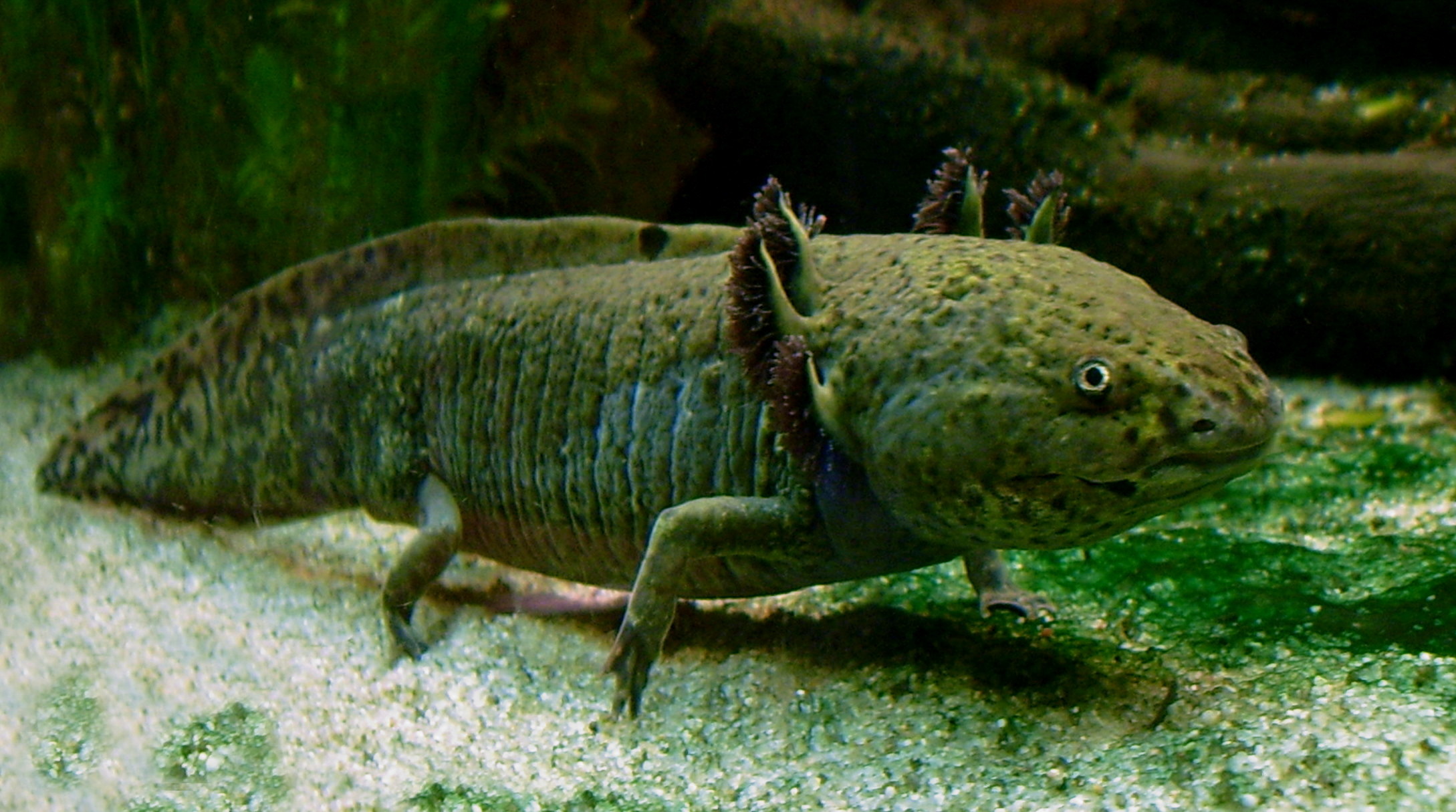
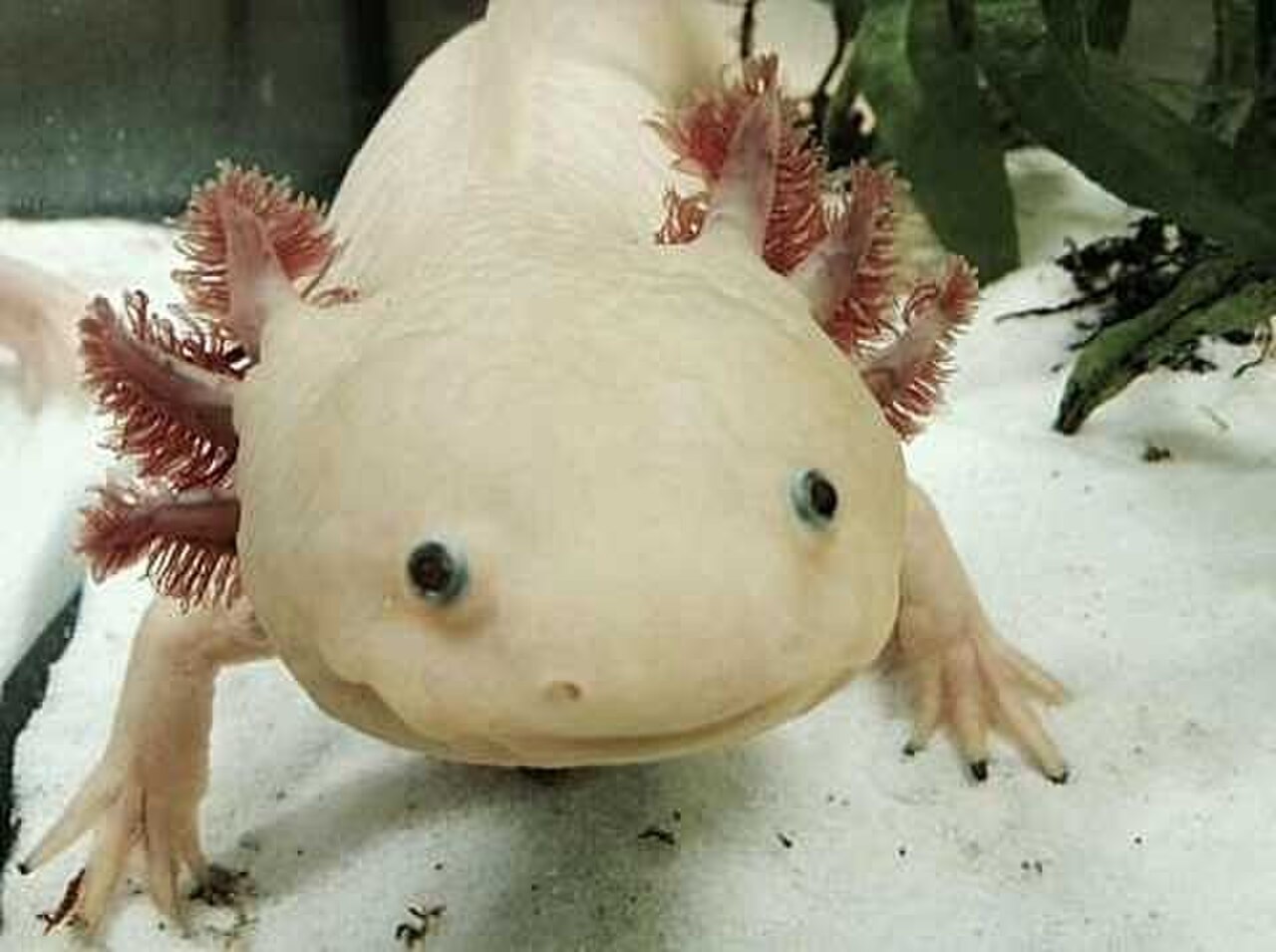
Here's the twist that ties it together. The axolotl regenerates so well partly because it never grows up. Most salamanders metamorphose — they lose their gills, crawl onto land, and largely lose this superpower. The axolotl is neotenic: it keeps its feathery external gills and stays a water-bound larva for its entire life, retaining the open, embryonic flexibility that adulthood normally shuts off.
That's the quiet lesson for us. We almost certainly carry the deep genetic machinery for regeneration too — it's in our embryos, briefly, before scarring takes over. The axolotl's gift isn't a gene we lack. It's a door we close, and one this eternal salamander baby simply never bothered to shut.