
Auto-Tune Was Invented by an Oil Engineer
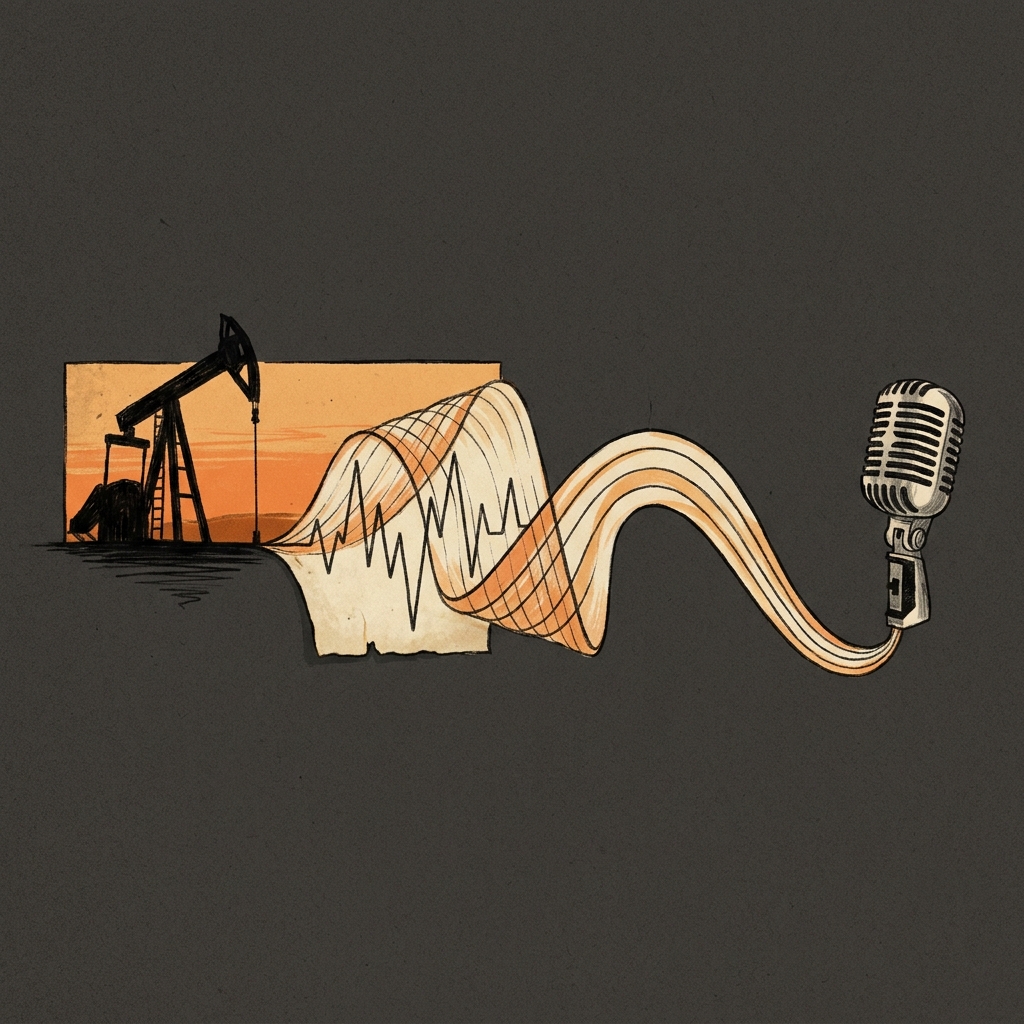
The most divisive sound in modern pop music was born from the search for oil. Before Auto-Tune glazed a million choruses with that glassy, robotic shimmer, the math behind it was busy doing something far less glamorous: listening to echoes bouncing off rock formations buried a kilometer underground, trying to figure out where to drill. The man who built it, Harold "Andy" Hildebrand, didn't set out to change music. He set out to find petroleum — and the tools he sharpened doing it turned out to be exactly what you need to nudge a flat note back onto pitch.
The engineer who listened to rocks
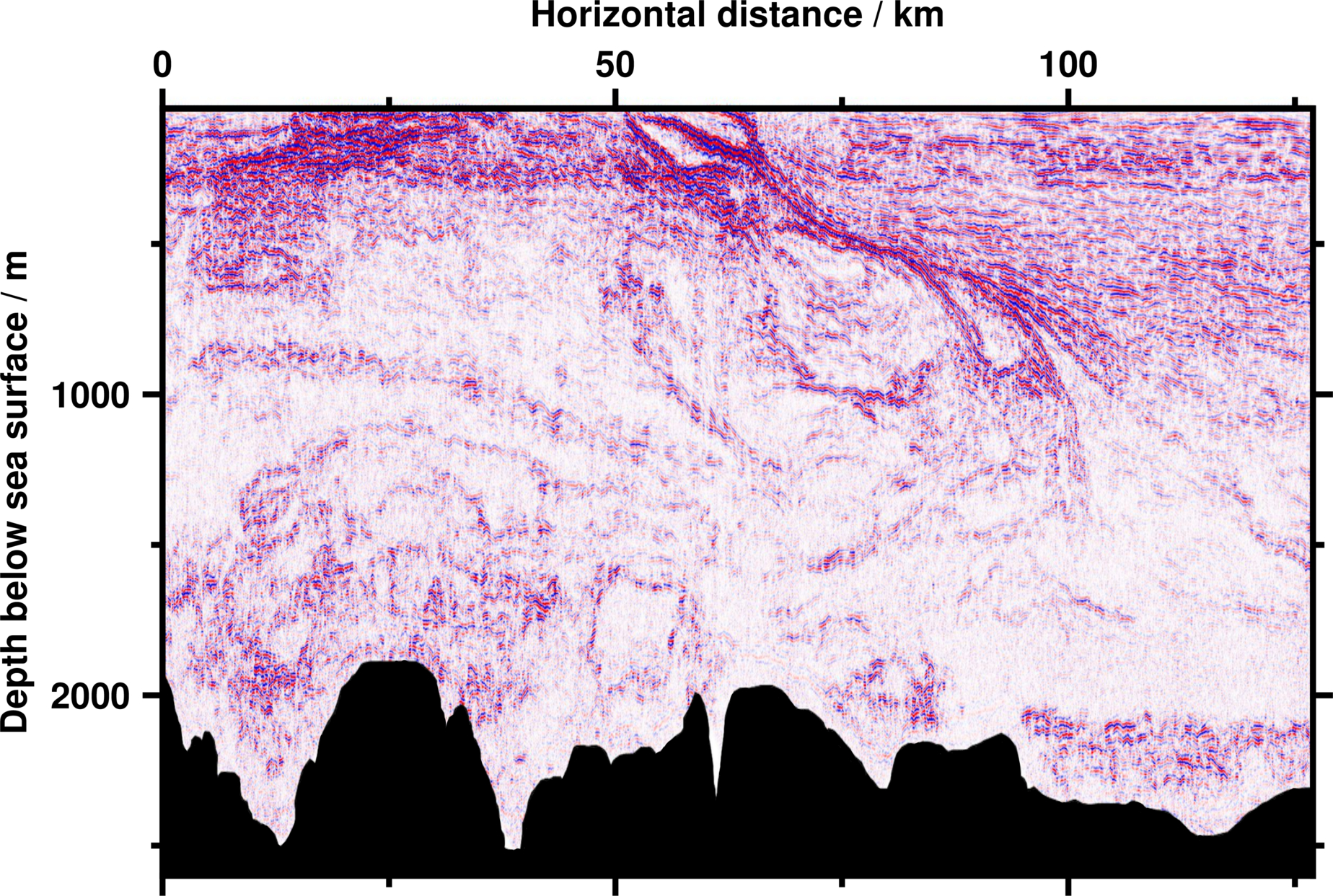
Hildebrand earned a PhD in electrical engineering from the University of Illinois in 1976 and went straight to Exxon, where he spent the next stretch of his career in seismic data interpretation. The job sounds abstract but the principle is simple and a little beautiful: set off a controlled blast at the surface, record the sound waves as they ricochet off underground layers of rock, and from the timing and shape of those echoes, reconstruct a picture of the geology hidden below.
The trouble is that a raw seismic recording is a mess — overlapping echoes, noise, distortion. To pull a clean signal out of that chaos, geophysicists lean on a toolkit of signal-processing techniques: autocorrelation, which measures how a wave resembles a time-shifted copy of itself, and linear predictive coding, a way of modeling a signal by predicting each new sample from the ones before it. These weren't obscure tricks. They were the everyday mathematics of finding oil.
In 1982 Hildebrand co-founded Landmark Graphics, which sold 3D workstations for visualizing seismic data to the oil industry. He was, by any measure, a successful exploration-tech engineer. One story he likes to tell: early at Exxon, he untangled a problem with faulty seismic monitoring that was threatening an Alaskan pipeline project — work that, by his telling, helped save the company a fortune. He retired comfortably, still in his early forties.
A box that makes you sing in tune
Retirement didn't take. Hildebrand had studied music seriously as a young man, and he drifted back toward it, founding a small audio software company that would become Antares. The legend of what happened next is almost too neat. At a dinner around a 1995 industry conference, he asked a table of friends what they thought somebody should invent. One woman, half-joking, said: "Why don't you make a box that will let me sing in tune?"
He dismissed it at first as a lousy idea. Then it wouldn't leave him alone. Because Hildebrand realized he already knew how to do it. To fix a singer's pitch in real time, a machine has to do one thing very fast and very accurately: figure out exactly what note the voice is hitting right now. And detecting the fundamental frequency of a messy, real-world waveform was the same problem — mathematically the same problem — as reading the period of a seismic echo.

His key bet was to use autocorrelation for pitch detection rather than the more common Fourier transform. Autocorrelation looks at the whole waveform rather than a handful of extracted features, which made it more robust — but it was also brutally expensive to compute. Hildebrand's real genius was the simplification. "I realized that most of the arithmetic was redundant, and could be simplified," he later said. "My simplification changed a million multiply-adds into just four." That collapse from a million operations to four is what made the thing run in real time, on the modest computers of 1996.
From a discreet tool to a sound of its own
Auto-Tune arrived at the end of 1996 and was shown off at the 1997 NAMM trade show, where it spread fast. For a couple of years it did exactly its intended job, quietly: it nudged slightly-off notes back to the nearest semitone so gently that nobody was supposed to notice. It was a corrective, an audio spell-checker.
Then in 1998, Cher's "Believe" cranked the retune speed to its most extreme setting, and instead of an invisible fix you got that warbling, inhuman snap between pitches. The "side effect" became the point. T-Pain built a career on it; hip-hop, K-pop, and pop at large absorbed it into their DNA. A tool designed to be inaudible became one of the most recognizable textures in recorded music.

The mathematician's shrug
Hildebrand has watched the love and the hatred his invention provokes with the bemused detachment of an engineer who never planned any of it. People blame him for "ruining" singing; others credit him with inventing a whole aesthetic. He waves both off with the same line: "Sometimes I'll tell people, 'I just built a car, I didn't drive it down the wrong side of the freeway.'"
It's a clean way to put it, and it lands. But there's a richer truth buried underneath, like a layer of rock waiting for the right echo to reveal it. The reason a singer's voice can be snapped to a perfect grid is that, deep down, a human note and an oil-bearing stratum are just signals — periodic patterns waiting to be measured. Andy Hildebrand spent a decade teaching machines to hear the Earth. When he turned that same ear toward the human voice, the music industry never sounded the same again.